

























































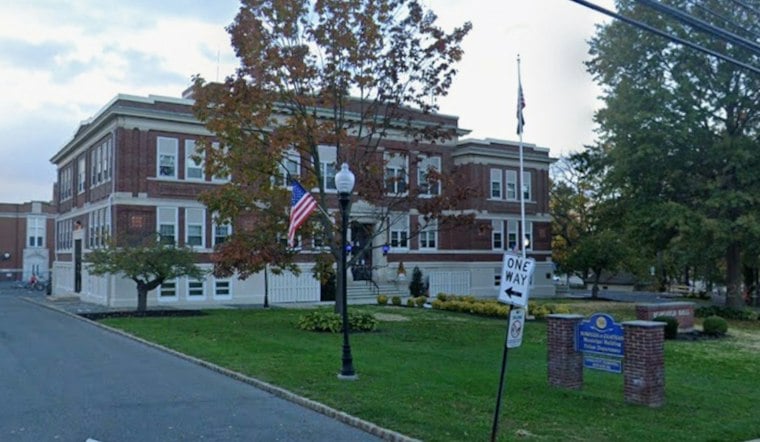
Chatham Borough Council voted 5-1 to introduce an ordinance that would, for the first time, allow the mayor and council members to be paid for their service, setting a salary range of $0 to $3,000 for the mayor, council president and council members. Justin Strickland cast the lone no vote, arguing that residents deserve a say before the borough turns volunteer positions into paid ones.
A Contentious First Reading
The measure, Ordinance #26-17, cleared its first hurdle this week despite pointed objections from council member Justin Strickland and residents, according to TAPinto Chatham. Strickland said a yes vote on the ordinance's first reading would effectively shift elected officials from volunteer status to non-volunteer status, and he said he wanted residents to weigh in on whether officials should remain unpaid or start receiving compensation. Carolyn Dempsey serves as mayor of Chatham, the borough where the proposal is under consideration.
Council member Karen Koronkiewicz pushed back on Strickland's framing, saying the ordinance only establishes a salary range and that a separate resolution spelling out specific payment details would still be required before anyone could actually be paid. She also noted that the mayor and council members would retain the option to refuse the stipend altogether, according to the same report.
Residents Raise Conflict of Interest Concerns
Public comment during the meeting ran heavily critical of the process. Janice Perrone urged the council to strip the stipend language out of this ordinance entirely and place it in a separate measure, and she objected to the timing of the vote coming so soon after an election. Perrone argued that voting to give yourself a raise amounts to a conflict of interest, per the TAPinto account.
Bob Weber echoed concerns about how the measure surfaced, saying the mayor and council positions should remain voluntary and that the pay scale had been inserted into what was otherwise a routine salary-range ordinance without advance notice or discussion. David Andreasen called the proposal to pay the mayor and council troubling and said it would set a bad precedent, the report states.
Supporters See a Path to Broader Participation
Not every voice at the meeting opposed the change. Jocelyn Mathiasen spoke in support of paying council members, arguing that compensation could make running for office more attractive and help offset the cost for members who hold hourly-paid jobs, the TAPinto report notes. Bob Penn said he knew of no volunteers other than certain council members who had themselves asked to be paid, according to the same account.
Chatham’s proposed $3,000 ceiling is modest beside one recent New Jersey example: a 2026 North Brunswick compensation resolution sets annual pay at $10,000 for each council member, $11,000 for the council president and $20,000 for the mayor. North Brunswick’s document says those amounts replace existing annual rates of $7,500, $8,000 and $15,000, respectively, and specifies that the compensation change does not make the officials eligible for health or other employee benefits. The township’s compensation resolution offers a comparison, though it does not establish what Chatham’s eventual salaries would be.
Legal Questions Over Amending the Ordinance
Strickland also raised a procedural wrinkle heading into next month's vote. He said borough attorney Steven Kleinman had confirmed that the mayor and council positions could not simply be removed by amendment at the December 14 meeting while still allowing the rest of the ordinance, including employee salary-range increases, to pass as planned. That detail, attributed to Strickland's account of the attorney's guidance, adds another layer of complexity to how the council might attempt to address public pushback before final adoption.
New Jersey law offers residents a way to seek a direct vote on elected officials’ compensation, but it requires a specific petition process. Under N.J.S.A. 40A:9-168, a petition signed by at least 10% of a municipality’s registered voters can require a ballot question on compensation amounts stated in the petition, at the next general election held more than 40 days after submission. The result binds the municipality for two years. The statute also allows a governing body to decide on its own to send a compensation question to voters.
A public hearing and adoption vote on Ordinance #26-17 are scheduled for December 14, 2026, giving residents another opportunity to weigh in before the council decides whether Chatham's elected officials will remain strictly volunteer or become eligible for pay.





