

























































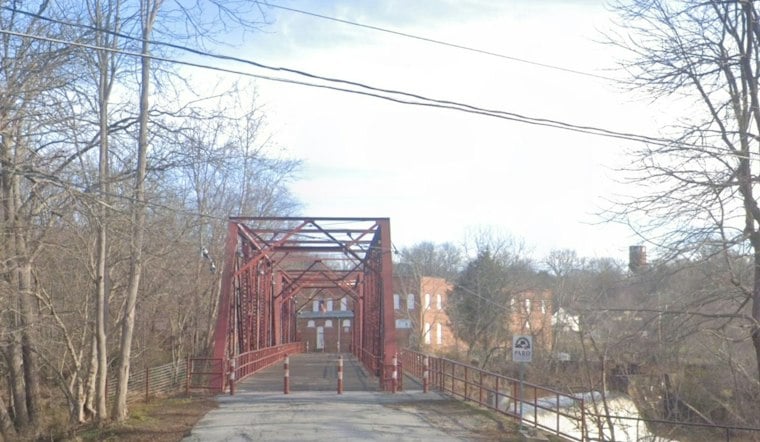
Foam has kept showing up at Glendale Shoals along Lawson's Fork Creek even after state officials declared the source of the problem cut off. The culprit is a chemical called cocamide diethanolamine, which passed through Inman's wastewater treatment plant and into the creek after an unnamed industrial customer discharged it into the city's sewer system.
According to the Post and Courier, Inman officials identified the industrial customer as the original source of the chemical, though the business itself was not named. The city's treatment plant was not able to fully remove the chemical from the water before it was discharged into Lawson's Fork Creek, which runs through Spartanburg and cascades over a dam along the rocks at Glendale Shoals.
A spokesperson for the S.C. Department of Environmental Services said on Nov. 25 that the chemical was no longer flowing to the treatment plant and that the facility had appropriately addressed the issue. The same spokesperson said foam was no longer visible downstream that day. But the newspaper's own reporting undercuts that assessment: a reporter saw foam still pooling atop the waters of Lawson's Fork Creek at Glendale Shoals afterward, and the foam was also visible that same day through the spot's online live webcam, which is operated by Wofford College.
Where the Foam Shows Up and Where It Doesn't
The water was described as clear before the dam, with foam becoming visible just after the cascade — a detail that helps explain why the creek can look pristine upstream while churning up suds below the shoals. Fallen logs in the water have also filtered off much of the foam from the surface, according to the same account. State and local officials have reported that foam has only been spotted at Glendale, not elsewhere along the waterway.
Inman began working to reduce the foam on the morning of Nov. 18, but the volume was more than the plant's defoamer system could handle, the outlet's earlier report noted. The state environmental agency opened an investigation into the cause on Nov. 19, and that inquiry was still described as ongoing as of the most recent reporting.
Health Risk Described as Low, but Caution Urged
Inman City Administrator Joe Lanahan said the foam presented no danger to the public, and the city plans to let it dissipate naturally rather than treat it further, given that assessment. The state environmental agency said it was unaware of serious impacts to people or the environment at the time, and that no dead fish had been reported. Even so, the agency's spokesperson said it was always recommended to avoid contact with discolored or foamy ambient water — standard guidance regardless of the specific chemical involved.
Cocamide DEA, the compound at the center of the incident, is commonly used in soaps and cosmetic products. It is known to cause skin irritation and serious eye damage, is considered likely to be a carcinogen, and is known to cause long-term harmful effects to aquatic life, according to the dossier's sourcing on the chemical itself. Inman's wastewater treatment plant is now running a strong de-foaming agent as it works with the S.C. Department of Environmental Services to determine next steps, and the state agency would determine whether any laws were violated in the discharge.
Not Tied to Spartanburg Water's Separate Outages
The foam situation is not related to Spartanburg Water's separately reported system damage, according to an agency spokesperson. That utility reported substantial damage to its system this month, which led to outages, low pressure and a boil water advisory lasting several days — a disruption that has rattled plenty of local households but is, by the state's account, a distinct problem from the Glendale Shoals foam.
A Creek With a History of Scrutiny
Glendale Shoals has drawn water-quality attention before. A 2016 column published by goupstate.com noted that during and after rainfall events, E. coli levels at the site can spike to levels dangerous for swimmers, though readings generally return to recreational guidelines within one to three days. That same column reported that chemical parameters tested at the shoals had consistently stayed within values acceptable to state and federal environmental regulators, and that the most recent biological sampling cited at the time, from June 2016, was rated excellent.
Separately, the City of Inman's sewer use ordinance, adopted in July 2015, prohibits discharges of detergents, surface-active agents, or other substances that might cause excessive foaming in the city's treatment works.




