

























































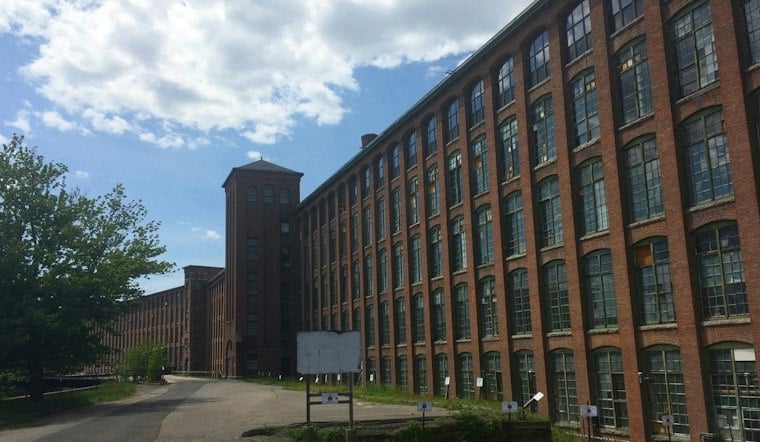
Chicopee city councilors are set to take up a proposal on December 1 to revive a Redevelopment Authority that has sat dormant for more than three decades, a move officials hope will finally give the city real leverage over abandoned properties like the long-troubled Cabotville Mill complex.
The city is pursuing the renewed authority specifically to gain control of and encourage reuse of Cabotville, the former Uniroyal site and other undeveloped properties, according to MassLive. Chicopee has lacked such an authority since former Mayor Richard Kos dissolved it in the late 1990s, after the city had originally formed it roughly 30 years earlier; the board had already been dormant since 1994. Mayor John L. Vieau described the revived authority as a tool, per the same report, as the city looks for new ways to force movement on properties that have sat vacant or unsafe for years.
A Canceled Tour Underscores the Danger
Chicopee city councilors had planned a tour of the Cabotville property for Monday but called it off. Vieau said the visit was considered inappropriate because people should not be on the site, the outlet reported. The city does have court permission to secure the property, and Chicopee firefighters remain responsible for ensuring the building's fire alarms are working.
That caution reflects the mill's recent history. Cabotville Mill was closed to tenants in 2024 because of inadequate fire-safety protections, after previously housing small businesses, workshops and studios in an attempted reuse of the massive complex. Built in 1832 as a cotton mill, the 700,000-square-foot Cabotville complex remains owned by Aaron Papowitz through his company, 4 Perkins LLC, the same report notes.
Years of Code Violations and a Forced Evacuation
The building's troubles stretch back years. The city brought code-enforcement violations against 4 Perkins in March 2022, and tenants later had to evacuate under court order after a judge deemed the building unsafe, a separate MassLive report detailed. Inspectors found building and fire-code violations that same year, and roughly 60 small-business tenants were ordered to vacate, according to the outlet's earlier coverage. By 2024, Chicopee was paying for the mill's around-the-clock fire watch that Papowitz had been ordered to fund.
4 Perkins LLC bought the mill property in 2018 for $7.8 million. Earlier this year, Chicopee began the process for a potential taking of the building over unpaid taxes. The mayor said the building might land in the city’s hands and put the amount owed at about $750,000 plus interest.
A Lawsuit Over Security Costs Heads Back to Court
Chicopee filed a lawsuit against the mill's owners in May 2025 and has continued to incur security costs for the property since then, according to court papers cited in the outlet's reporting. The city says taxpayers have spent $393,000 securing the factory building since 2018, and it is now suing the owners for more than $400,000, with the amount continuing to grow.
Hampden Superior Court Judge Jeffrey Trapani denied a request by Papowitz and 4 Perkins LLC to dismiss the city's case this month. The lawsuit has already proceeded through portions of a non-jury trial and is next scheduled in court on December 7.
Redevelopment Plans Have Repeatedly Stalled
The mill's redevelopment history is littered with false starts. Older special permit proposals approved by the City Council had envisioned converting the building into about 600 units of housing, per the outlet's January reporting. But in October 2024, a developer withdrew an application to convert Cabotville Mill into housing and business space, with City Planner Lee Pouliot saying, “The application was severely deficient and they asked to withdraw,” according to the outlet's coverage at the time.
The council's Zoning Committee allowed that withdrawal without prejudice, meaning the applicant could resubmit at any time. A 2025 report indicated Mark Yunger had filed a new special permit application that spring to renew interest in buying the mill for redevelopment, though the deal between Yunger and Papowitz had fallen through by fall, per the same account.
A Neighborhood Already Reshaped by Urban Renewal
Chicopee has used large-scale redevelopment tools before. The city's 1965 urban renewal plan changed the Cabotville Mill neighborhood, replacing 17 bars that had operated in the Chicopee Falls neighborhood with new buildings including a district court, public safety complex, shopping plaza and post office, according to Republican archives cited in the outlet's reporting. That history looms over the current debate as councilors weigh whether a revived Redevelopment Authority could do for Cabotville and the former Uniroyal site what the 1965 plan did for Chicopee Falls.





