

























































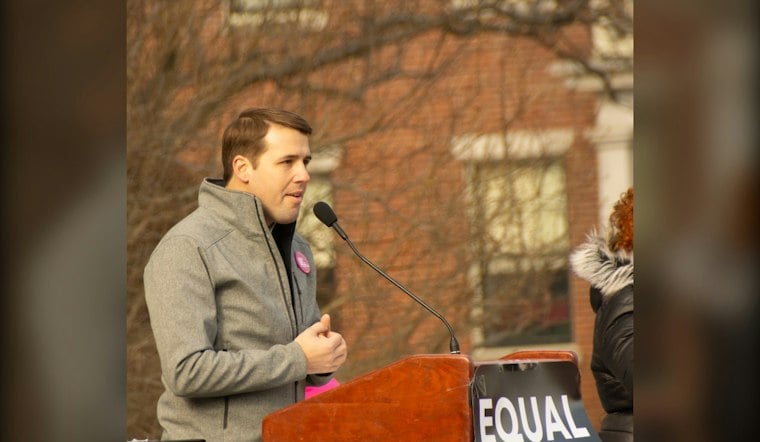
New Hampshire Democrat Chris Pappas has defeated Republican John E. Sununu in the race to replace retiring Senator Jeanne Shaheen, keeping the state's open Senate seat in Democratic hands and making him the first openly gay man elected to the chamber. The win caps a campaign that stayed close enough in the polls to earn a tossup label just two months before Election Day.
The Associated Press called the race for Pappas, confirming that the four-term congressman from New Hampshire's 1st District had defeated the former senator, according to the Associated Press. The victory also carries historic weight beyond New Hampshire's borders: Pappas will be the Senate's first openly gay male senator, as reported by The New York Times.
Pappas's win keeps the seat in Democratic control as both parties battle for a Senate majority, and it closes out the tenure of Jeanne Shaheen, who has held the seat since 2009 and is retiring at the end of her term, according to New Hampshire Public Radio. Before running for Senate, Pappas represented New Hampshire's 1st Congressional District for four terms, from 2019 until this year, per the same broadcaster's reporting cited through The 19th.
A Campaign Built on Costs and a Trump Referendum
Pappas ran on a pledge to deal with high prices and health care costs along with opposition to corruption in Washington, the Times reports. On the trail, he framed the contest in blunt partisan terms, saying the election was about “Team New Hampshire versus Team Trump,” according to NBC Boston.
Financially, Pappas had a clear edge. He outraised Sununu by more than $15 million, according to Open Secrets data cited by The 19th. That spending advantage came even as polling all year found Pappas consistently ahead, but never pulling away, according to The Boston Globe.
From Tossup to Decisive Night
The race wasn't always presumed to be Pappas's to lose. In September, three different closer-than-expected polls prompted the nonpartisan Cook Political Report to label the contest a tossup, the Globe notes. By Election Night, however, the margin had settled enough for the AP and other outlets to call the race in his favor.
Sununu, for his part, conceded gracefully. He said he called Pappas to congratulate him on his victory, according to WMUR. As detailed by Gulf Coast News and Weather in its coverage of Pappas's path to the Senate, the win extends a run for New Hampshire Democrats dating back more than a decade.
A Historic First, With Context
Pappas's election marks only the third time in history that an out LGBTQ+ person has been elected to the Senate, The 19th reports, identifying Tammy Baldwin and former Senator Kyrsten Sinema as the two who came before him. Baldwin became the first openly gay person elected to the Senate in 2012 and took office the following year, according to the Times; The 19th similarly notes Baldwin took office in 2013 as the first out LGBTQ+ senator, with Sinema as the second.
The Times also points to earlier milestones in Congress, including former Representative Barney Frank, who voluntarily came out as gay in 1987 after six years of service in the House. At the same time, the Times notes that LGBTQ rights have faced pushback in some states, part of the broader landscape Pappas's win now enters.
A Familiar Pattern in New Hampshire Politics
A University of New Hampshire political science professor described a longstanding dynamic in the state's politics, observing that New Hampshire sends Democrats to Washington, D.C., but more often than not, they send Republicans to Concord, according to New Hampshire Public Radio. Pappas's win fits that decade-long pattern of federal races breaking blue even as state government often leans red.
The matchup also carried an echo of the past. Sununu previously lost a Senate bid to Jeanne Shaheen in 2008, a race the Globe revisited in its coverage of this year's contest. Nearly two decades later, Sununu's second attempt to reclaim a Senate seat ended the same way, with a Democrat prevailing in a state that has voted for Democratic presidential candidates in every election since 2004.





