

























































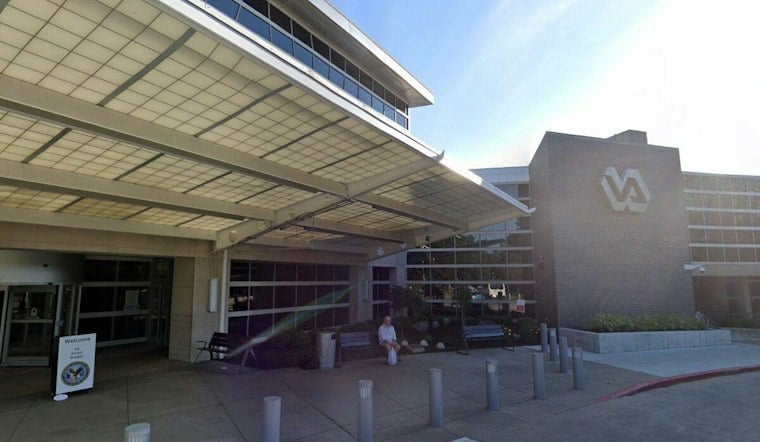
John Wade lost part of his leg in a 2018 semi-truck crash after the brakes failed, and Mike Weston was left with a broken back and paraplegia after an SUV crash in January 2020. Today, both men row on the Cuyahoga River through a free adaptive rowing program built by a partnership between the Louis Stokes Cleveland VA Medical Center and the Cleveland Rowing Foundation — a program they credit with helping them rebuild far more than muscle.
The story, first reported by WKYC as part of its Heartstrings series, traces how Wade, 55, ended up moving to Cleveland to recover near his parents and now cares for his mother. Wade served in the U.S. Army from 1991 to 1998 and again from 2004 to 2012, completing three tours in Iraq. Before his crash, he had survived four suicide attempts tied to military PTSD; since then, according to the report, he has given speeches, written books, and taken on new challenges. Wade also spent four years participating in VA research and became the first above-the-knee amputee in one of the VA's studies.
Weston, 32, was born in Germany and moved to the United States at age 11. He joined the U.S. Army at 18 after high school, training as a combat engineer and serving at Fort Stewart in Georgia and Fort Polk in Louisiana, with a deployment to Iraq and work at the U.S.-Mexico border in Texas. His crash came while he was on leave en route to Fort Drum, New York, leaving him with a broken back and paraplegia. He recovered at Walter Reed during the COVID-19 pandemic, FaceTiming his then-4-year-old daughter every day, and by his own account drank heavily and struggled to move forward for about two years afterward.
How Rowing Became Part of Recovery
A recreational therapist at the VA encouraged Weston to try rowing, and it stuck — he now shapes his gym workouts around the sport and is already looking ahead to the next season, which he hopes will begin in spring, per the WKYC account. The Cleveland Rowing Foundation pairs athletes with coaches and experienced volunteers, and many adaptive rowers start out in a double with an experienced volunteer in the bow seat, according to Karen Busch Schoeniger as cited in the same report.
The foundation describes itself as the home of Freedom Rows, Athletes Without Limits, and adaptive and para rowing more broadly, according to its own annual fund materials. The organization has operated out of Rivergate Park in the Flats since 1989, and its facility there now serves more than 1,500 high school, collegiate and adult rowers, per the WKYC report. Freedom Rows itself supports adaptive and recreational rowing opportunities for disabled veterans and service members, and veterans from the group were expected to take part in the 30th Head of the Cuyahoga regatta in September, an event cleveland.com described as one of the nation's largest single-day rowing events, expected to draw 2,000 athletes with staggered boat starts running from 7:45 a.m. to 4 p.m.
Adding Electrical Stimulation to the Stroke
The adaptive rowing program grew out of stationary rowing research conducted at the VA lab, according to the WKYC report, and it includes adaptive equipment, specialized coaching and volunteer support, tailoring sessions to each athlete's abilities. The program is working to add electrical stimulation that would let rowers with spinal cord injuries use their legs as well as their arms, and the program team has reportedly waterproofed the stimulation device and is developing technology to coordinate the stimulation with oar movement, per the same account.
Separate VA research materials offer some supporting context for that kind of approach without describing the Cleveland program specifically. A VA program page explains that sensors installed in commercial ergometers work with control algorithms that coordinate electrical stimulation so paralyzed muscles contract at the right moment during the rowing motion, according to the Advanced Platform Technology Center. A related VA research brief noted that two paralyzed veteran volunteers found electrical-stimulation-assisted rowing more engaging and reported better results than exercising alone, suggesting the method could improve both engagement and cardiovascular benefit, according to research.va.gov.
Lisa Lombardo, described in the WKYC report as a physical therapist and clinical director of the VA's Motion Study Lab, said the program is supported by a grant from the Craig H. Neilsen Foundation. A VA staff profile separately describes Lombardo as the senior physical therapist and clinical coordinator for the Motion Study Laboratory at the Louis Stokes Cleveland VA Medical Center, according to the Advanced Platform Technology Center's own staff listing. Lombardo encouraged interested veterans to ask the VA about available programs and talk to their therapists and clinicians, per the WKYC report.
A Growing Network Across Northeast Ohio
The Cleveland effort fits into a broader push to formalize adaptive rowing access in the region. The Northeast Ohio Adaptive Rowing Society provides adaptive rowing on the Cuyahoga River for veterans with amputations, spinal cord injuries and strokes, according to WKYC's reporting, and a VA program page describes it as a newly formed community organization created in partnership with the Cleveland Rowing Foundation and the Western Reserve Rowing Association, per the VA's program page for the society.
Cleveland is not alone in building these programs. In Nashville, a veterans' rowing group meets weekly at Percy Priest Lake, weather permitting, using adapted indoor rowing machines that are raised, have locking seats and extra floats to help balance participants with disabilities, according to WSMV. That group started through the Nashville Rowing Club and is led by veteran Don Sullivan. Veteran Bill Thurmond, who took up the sport later in life, told the station, “I started rowing at 61 and I'm not going to stop.”
A separate adaptive-seating study listed by a third-party clinical trial registry describes plans sponsored by the VA Office of Research and Development to test a second prototype of an Adaptive Indoor Rowing Seat with veterans in Cleveland and gather their feedback, comparing it against a Paddle Sport adaptive seating system, according to withpower.com.
For veterans wondering whether a program like this could help them, Lombardo's advice was straightforward: ask the VA and talk with a therapist or clinician about what's available. Veterans in crisis can reach the Veterans Crisis Line 24/7 by dialing 988 and pressing 1. WKYC's Heartstrings series, which produced the original report on Wade and Weston, streams on the WKYC app every Wednesday at 1:30 p.m. local time.





