

























































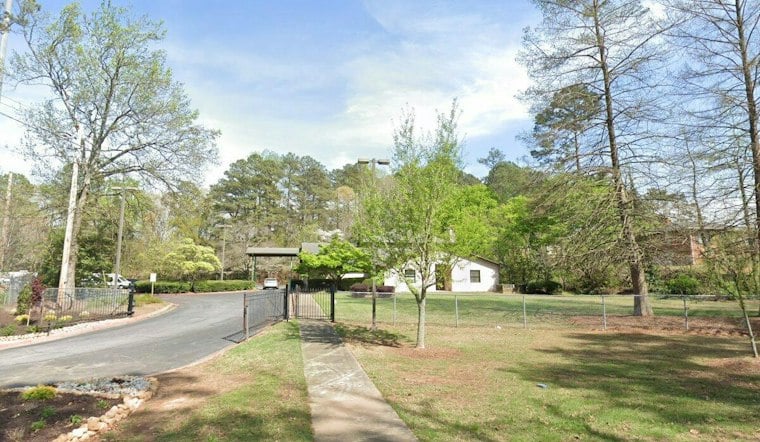
More than a year after breaking ground on a former 4-H camp, crews building the Roderick Gay Botanical Garden in College Park have finished more than half of phase one, with officials now eyeing a 2027 opening for the 40-acre site off Herschel Road. The project has also hit a snag underground, where crews discovered utilities missing from the original drawings and are now weighing whether to reroute a gas line.
A Former Camp Truitt Gets New Purpose
Work on the botanical garden has been underway since 2025, after College Park officials announced plans to transform the former Camp Truitt 4-H site into a public green space named for Councilman Roderick Gay, who toured the construction site with CBS News Atlanta. The site sits on what CBS News previously described as a 40-acre green space, developed through what that outlet called an unprecedented partnership between Fulton County, the City of College Park and the newly formed RG Botanical Garden Conservancy. A groundbreaking ceremony was held at 4320 Herschel Road on October 30, 2025, according to Fulton Neighbor.
The garden is expected to cost $13 million, and officials now say the facility and its planned events should be finished in about three months, Gay said. Phase one is already more than half complete, officials say, with planners meeting weekly to keep the project on schedule.
Underground Surprises Force Design Changes
Not everything has gone according to plan below the surface. The project encountered underground utilities that were missing from the original project drawings, requiring crews to consider rerouting a gas line. Philip Brown said the underground conditions revealed unlisted utilities and that the project's drawings must now be updated as as-builts, with the project team working to properly document the site as construction continues.
Jason Benson said the project is progressing well despite the complications. The pace has been steady enough that officials maintain their 2027 opening target even as crews adjust for what they found underground.
Saving the Trees and the Camp's History
Preservation has been a visible priority on site. Trees marked with silver tags will not be cut down during construction, an effort Roderick Gay credited partly to his wife, who influenced the push to save as many trees as possible. Gay said all the trees on the property were cataloged, and one — a black oak — became the botanical garden's symbol.
Crews are also repurposing many structures and materials from the former 4-H camp rather than clearing the site entirely. The garden conservancy decided to conserve six remaining cabins from the old camp, a choice Brown said will help young people learn Camp Truitt's history and native plant life, along with lessons in gardening and community cooperation.
Waterfalls, Fountains and a Future Gathering Space
The scale of the earthwork has been substantial. Project crews removed 100 loads of dirt to create waterfalls 15 feet wide, part of a broader water feature plan that will also include floating fountains designed for weddings and a dancing fountain. Once complete, families will be allowed to walk around the garden as its water fountains operate.
Plans also call for a facility where families can sit and learn the garden's story, along with space to host galas and fundraising events. The broader goal, organizers say, is a botanical garden that aims to connect people with nature on a site that spent decades serving Fulton County's 4-H community.
Funding Figures and Lingering Questions
How much public money is behind the project depends on which account you read. CBS News has reported the first phase was backed by a $10 million allocation from the city, while Fulton Neighbor separately reported the city committed $5 million toward development and future maintenance, as part of a 50-year lease agreement between Fulton County and the City of College Park approved for the site. Separately, The Atlanta Journal-Constitution has reported that critics are questioning the city's allotment of more than $13 million for a project they say is moving forward without enough transparency. It remains unclear whether these figures describe different phases of funding or overlapping commitments.
That tension between enthusiasm and scrutiny has shadowed the project even as construction presses forward. Supporters point to the planned trails, event spaces and educational areas highlighting native Georgia plants as a long-term community asset, while critics continue to press city officials for clearer accounting of the garden's public cost.




