

























































The Colorado Supreme Court has rejected David J. Gottorff's bid for release from prison for the second time this year, upholding a decision to move his case from Pitkin County to El Paso County while stripping away a filing fee a judge wrongly ordered him to pay. Gottorff is serving a prison sentence following his 2023 convictions in Ouray County, and his challenge to those convictions remains pending before the Colorado Court of Appeals.
The convictions stemmed from a jury trial over threats directed at Ouray County law enforcement personnel. Prosecutors alleged Gottorff posted threatening messages and made calls between October 2022 and January 2023, including a threat to kill a sheriff’s employee; the jury convicted him of three counts of attempting to influence a public servant, felony menacing and stalking. At sentencing, District Judge Cory Jackson imposed an eight-year term, citing concerns about public safety and the seriousness of the offenses, as detailed in coverage of the sentencing hearing.
The latest ruling, issued Nov. 23 in a case titled Gottorff v. Executive Director of the Colorado Department of Corrections et al., caps months of habeas corpus petitions Gottorff has filed with multiple courts seeking release on various grounds, according to the Denver Gazette. The court previously addressed two of his petitions from Chaffee County in June, upholding their dismissal after two trial judges there required Gottorff to pay a $235 filing fee that does not apply to habeas cases.
A Case Bounced Between Counties
After the Chaffee County rulings, Gottorff filed another habeas petition, this time in Pitkin County. That court likewise ordered him to pay the $235 filing fee and issued a notice asking state officials to acknowledge receipt of the case. The state then moved to transfer the matter out of Pitkin County, arguing it had no apparent connection to Gottorff's underlying proceedings or his confinement.
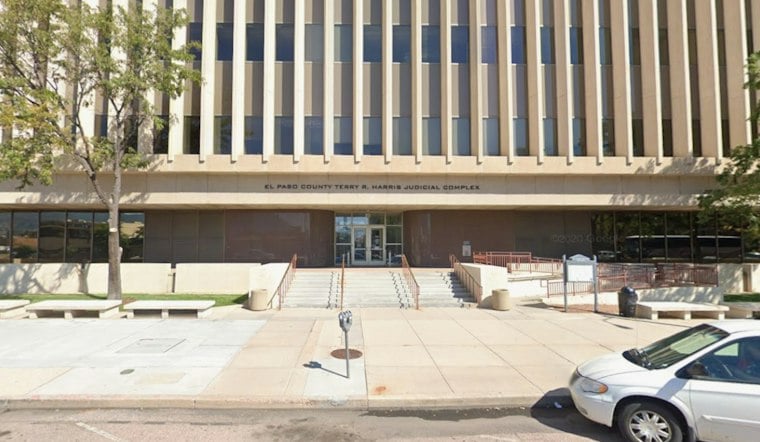
The state pushed for the case to land in El Paso County instead, where the Colorado Department of Corrections has its headquarters. A judge granted that transfer motion. Gottorff, representing himself, then moved to dismiss the case altogether, arguing the El Paso County court lacked jurisdiction to hear it.
Judge Dismisses, Citing Prior Litigation
El Paso County District Court Judge Samuel Evig dismissed Gottorff's petition the day after the Supreme Court rejected his Chaffee County petitions. Evig said the outcome would have been the same whether a Pitkin County or El Paso County judge handled the case, citing Gottorff's pending appeal, his previously litigated habeas petitions, and multiple postconviction-relief petitions as reasons to toss it.
The dispute also illustrates the limits of habeas corpus as a route to challenge a conviction. Colorado law allows people imprisoned in criminal cases to petition for the writ, whose core purpose is to test whether detention is unlawful. But the Supreme Court has said habeas cannot substitute for a direct appeal or reopen issues another court has resolved. In its June ruling on Gottorff’s earlier petitions, the court said his double-jeopardy and evidence arguments were already litigated or better suited to his still-pending appeal, as explained in the court’s opinion.
Gottorff appealed that dismissal to the Supreme Court, which issued an unsigned opinion largely rejecting his arguments again. The justices ruled that judges in either Pitkin or El Paso County were authorized to hear the petition in the first place, and that changing venue required only a showing of good cause.
Justices Side With the State on Venue
The Supreme Court found that Pitkin County had no conduct, witnesses, or parties connected to the case, while El Paso County was the only proposed venue where any of the parties, conduct, or witnesses were actually located. On that basis, the court concluded the Pitkin County court did not abuse its discretion by transferring the case.
The court also rejected Gottorff's argument that state defendants should have responded to his petition before it was dismissed, ruling they had no such obligation because Evig was permitted to dismiss a petition outright when it was clear Gottorff was not entitled to relief. Justices further ruled that the Pitkin County court's initial notice to state officials was not a directive requiring a response, writing in the Nov. 23 opinion that “a notice, after all, is just a notice.”
One Win for Gottorff: The Filing Fee
Despite rejecting the bulk of his appeal, the Supreme Court sided with Gottorff on one point. It acknowledged that a trial judge had incorrectly required him to prepay a filing fee that does not apply to habeas corpus cases, and it overturned the portion of the orders requiring him to pay the $235 fee.
The fee issue had already surfaced in Gottorff’s two earlier Chaffee County petitions. In June, the Supreme Court affirmed their dismissal but vacated orders requiring him to pay fees, holding that Colorado’s inmate-fee restrictions exclude habeas actions. The November opinion applied that same rule to the Pitkin County case: the fee ruling did not change the dismissal or grant release, but removed the payment requirement. The earlier decision, Gottorff v. Lengerich, set out that distinction.





