

























































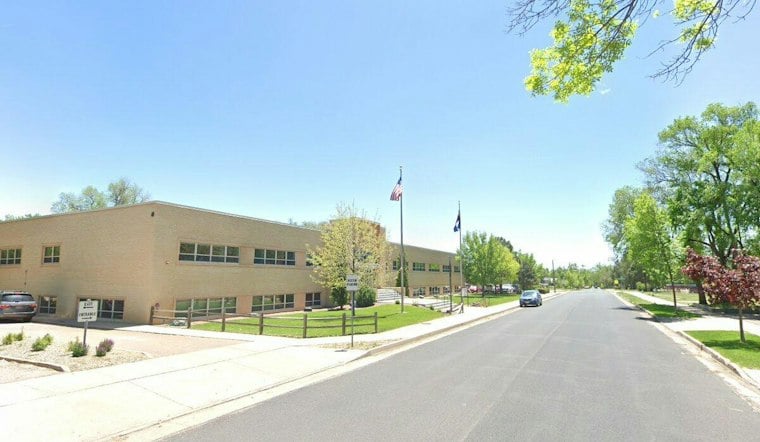
Colorado Springs School District 11 told its board this week that 11 of its buildings now meet the state's threshold for being considered underused, with General William Mitchell High School topping the list at 1,150 open seats. The finding came during a board of education work session on Wednesday focused on enrollment and building capacity during the 2026-27 school year, even as the district reported its first enrollment increase after years of decline.
According to the Gazette, D-11 reported that 11 of its buildings meet the criteria for underuse, with Mitchell having the most open seats at 1,150, followed by the West Campus at 550 and Wasson Academic Campus at 500. The underused list also includes Palmer High School, Saban Middle School, Mann Middle School, Coronado High School, Swigert Middle School, Doherty High School, Galileo Middle School and Twain Elementary School, according to KRDO.
How the District Defines Underused
The Gazette reports that the threshold applies to buildings with unused capacity to accommodate 250 students or more. D-11's own capacity committee built on that standard in its 2025-26 report, filed with the district, which says a utilization rate of 70% or lower raises a flag for underuse and frames the state threshold as at least 250 unused functional-capacity seats.
The 250-seat threshold identifies buildings that meet the state’s definition of underused; it does not, by itself, require a district to close them. State law set that threshold as part of rules for districts with charter schools, while D-11 has said it is not closing schools and is instead exploring shared use of buildings. The distinction matters for families: an underuse designation is a capacity measure, not an announcement that a campus will shut down. The 2016 law establishing the 250-seat definition and D-11’s stated approach draw that line.
A capacity report listed Mitchell High, West K-8 Campus and Twain Elementary as underused. Trailblazer Elementary was reported at 40% utilization.
Enrollment Climbs After Years of Decline
Even with the underuse findings, D-11 has increased enrollment, according to the district. Preliminary Colorado Department of Education figures cited by the Gazette show district enrollment rising from just over 23,200 in October 2025 to more than 23,300 this fall. A district budget guide lists PK-12 pupil membership at 23,458 in 2026, up from 22,265 in 2025.
Presenters attributed both the uptick and the end of the district's yearslong enrollment slide to increased options for families, the Gazette reported.
District officials also pointed to a dynamic that can hollow out specific campuses: high-achieving students leaving lower-performing schools. The district said higher-performing students will often choose a different school if theirs is lacking in various areas, which can then worsen that school's overall performance grades, per the Gazette's reporting. The 2025-26 capacity report separately found enrollment had dropped from the prior year by 82 students at Mitchell High and 71 at Palmer High.
Co-Location Already Underway at Two Schools
Shared campuses are also taking shape elsewhere in El Paso County, though the arrangements vary. District 49 moved Falcon Elementary School of Technology into Bennett Ranch Elementary, describing the move as a way to balance class sizes and expand student opportunities while preserving each school’s identity. Separately, D-11’s James Irwin Elementary–Howard campus is set to use a District 49 building for one school year during asbestos-abatement work. Those examples show co-location can mean a longer-term partnership or a temporary relocation, with different operational and community questions. The county’s other co-location arrangements include both models.
D-11 has already begun addressing underused space through co-location, a strategy the district describes as the shared use of a school facility by multiple schools, programs or educational partners. The district calls it a primary strategy for responsibly managing underused facilities, and has already launched two such arrangements for the 2025-2026 school year: Orton Academy moved into Trailblazer Elementary School, while East Hills Academy opened in a repurposed portion of Horace Mann Middle School, according to the Gazette. Four underused D-11 schools now operate with shared-space partners, per KRDO.
But the rollout has not gone smoothly for everyone. Parents have raised pushback and complaints about the co-locations, and one Trailblazer parent, Sara DeBusk, said she learned about the Orton Academy partnership only after it was announced on social media rather than through direct district communication, according to KRDO. DeBusk said Trailblazer students are now served lunch in separate classrooms because Orton Academy uses the school's cafeteria space, and she questioned the sanitation and cleanup implications of students eating outside and in classrooms instead.
District Says More Communication Is Coming
The district has acknowledged the gap. D-11 recognizes that earlier and additional communication with school communities is needed when co-location is being considered, per the district's own statement reported by KRDO. Meeting documents show the district's 2026-27 recommendations include continuing to investigate co-location options and using a formal school co-location protocol when needed.
D-11, which is based in Colorado Springs, said it is considering co-locating additional campuses going forward, though no decisions on further pairings have been finalized.
Possible future co-locations discussed at the work session included a new medical campus at Wasson in partnership with Pikes Peak State College and a local hospital, and some kind of partnership involving West to serve the Old Colorado City area, the Gazette reported. District officials said any co-location planning would prioritize students at host schools, require community engagement, aim for mutual benefit among participating organizations, and maintain transparency and board oversight throughout the process. The district has stated it does not plan to close any schools.
Districts elsewhere are weighing closures, but closing buildings is not a guaranteed budget fix; research cited in the analysis found savings are often modest and temporary. The national enrollment and closure picture underscores the pressure on districts to match facilities to student numbers.




