

























































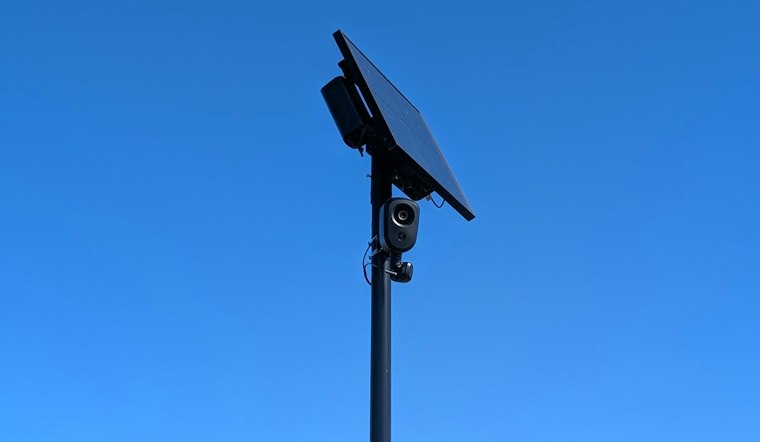
A 36-year-old woman was shot in the back near North Eighth and East Walnut streets in downtown Columbia in the early morning hours of Oct. 31, and within six days police say they had made eight arrests and recovered 11 firearms. Investigators credit a web of automated license plate readers, city-owned safety cameras and private business surveillance footage with helping identify the vehicles and suspects involved, a case now fueling a broader fight over how much surveillance the city should allow.
Gunfire Downtown, A Woman Wounded
Columbia police responded to reports of gunfire near the North Eighth and East Walnut intersection, according to ABC17 News. Officers found a woman with a gunshot wound to her back; she was taken to the hospital and, per a CPD press release cited by the station, is now in stable condition. KRCG reported that close to 30 shots were fired during the incident, which Police Chief Jill Schlude characterized as gang-related.
Court documents reviewed by KRCG state that officers examined Flock video of the area at the time of the shooting, alleging that De’Koryion White fired toward a group of people from an alley off Walnut Street. Federal prosecutors with the U.S. Attorney’s Office for the Western District of Missouri allege that Detravion Coats and Treyvale Cain-Raybon possessed ammunition after a prior felony conviction, allegations that remain unproven in court.
Conflicting Counts On Arrests
Accounts of exactly how many people were taken into custody differ. ABC17 News reported that police used video footage to identify suspects and arrested seven men while detaining a 16-year-old boy, while Schlude separately said the investigation led to eight arrests and the recovery of 11 firearms within six days of the shooting. KRCG’s reporting described detectives using a combination of video from private cameras and publicly owned Flock safety cameras to show that at least seven people fired guns during the incident.
Schlude said investigators received limited help from eyewitnesses, with only one person coming forward with information, according to the station’s report. Because of that gap, she said, detectives relied heavily on video evidence — pulling from automated license plate readers, city-owned safety cameras and surveillance footage from private businesses to identify vehicles leaving the scene and build out leads.
Flock's Growing Footprint In Columbia
Columbia has used Flock automated license plate readers since early 2025, after the City Council voted 5-2 to approve the technology on Oct. 7, 2024, per the same ABC17 account. The readers capture vehicle license plate information and log it into a searchable system, and the city also uses Flock live-view surveillance cameras. A July report from the station put Columbia’s network at 114 Flock cameras, which in a single 30-day stretch detected 988,338 vehicles and recorded 505 searches.
That scale has drawn scrutiny before. The council rejected a separate camera system called Fusus by a 4-3 vote in November 2022 following community pushback, the outlet’s reporting notes. Flock itself has faced controversy nationally over mass surveillance, data privacy and the potential for law-enforcement misuse, concerns playing out well beyond Columbia.
Nationwide Pushback Reaches Flock's Backyard
The debate is not unique to mid-Missouri. Flock says it operates more than 120,000 automated license plate readers across 49 states, and CNN reports that in the company’s home turf around Atlanta — where DeFlock estimates more than 6,000 Flock and non-Flock readers operate across a 29-county area — opposition has grown louder at town halls and city council meetings. In one case detailed by CNN, Atlanta-suburb police stopped driver Alex Wittlin after a Flock camera flagged his similarly styled car as a possible match to a domestic-violence suspect’s vehicle; he was released once officers confirmed he wasn’t the suspect.
Atlanta police have since revised their ALPR policy, clarifying permitted and prohibited searches, spelling out potential criminal and administrative penalties for misuse, and mandating monthly compliance audits, CNN reported. An Atlanta police audit found that just 0.07% of all Flock searches from January to early September were flagged as questionable, amounting to 79 inquiries checked for possible policy violations.
Columbia Officials Defend Safeguards Ahead Of Hearing
Columbia Mayor Barbara Buffaloe said access to the city’s surveillance system is restricted and must be tied to a specific case number, a safeguard intended to prevent unauthorized access and misuse of the technology. She said the broader issue is balancing effective crime investigation and prosecution against residents’ privacy. A July report from the station on Columbia’s Flock policy noted that searches require documented justification or a case number, that user activity is logged, and that data is automatically deleted after 30 days unless retention is extended under agency policy or legal requirements.
The Columbia City Council has scheduled a public hearing on the Flock camera system for 6 p.m. Monday at City Hall, according to a notice from the City of Columbia. Buffaloe expects the session to include discussion of both policing benefits and residents’ privacy protections, and police are expected to present information about how the cameras are used in criminal investigations along with the safeguards in place. City Manager De’Carlon Seewood said he hopes the hearing will dispel rumors and misconceptions about the cameras, adding that the core concern is balancing technology safeguards with protecting both community safety and residents’ privacy. Columbia officials have said the city is looking at other companies offering similar technology should the council decline to continue its Flock contract.





