

























































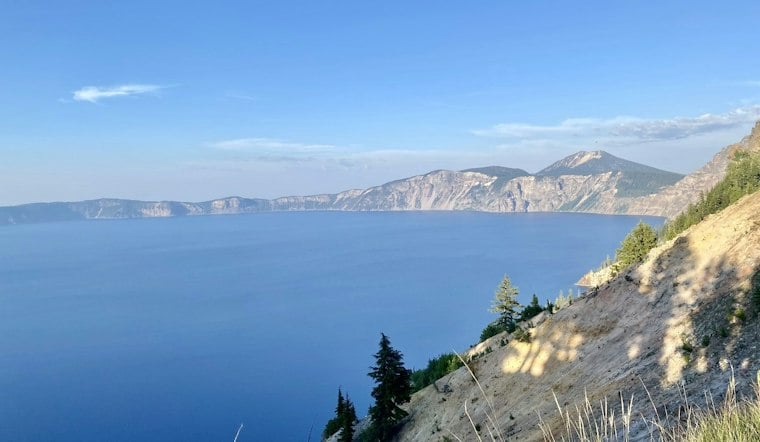
A recent snorkel survey of Crater Lake turned up not a single wild newt. Records obtained by the Center for Biological Diversity show the count has collapsed from 35 newts in 2023 to 13 in 2024, four in 2025, and now zero.
The Center for Biological Diversity says Crater Lake National Park scientists reported finding no Crater Lake newts during the recent snorkel survey, according to records the organization obtained, as detailed in a press release from the Center for Biological Diversity. The newt, also known as the Mazama newt, is a subspecies of the rough-skinned newt found only in Crater Lake, according to KATU. Sitting at the top of the lake's food chain, the newts never evolved any predator-defense mechanisms, the station reports.
A Century-Old Experiment Gone Wrong
The trouble traces back more than a hundred years. Per the station's report, fish were introduced to Crater Lake in the late 1800s to boost tourism, and crayfish followed in 1915 as a food source for those fish. Both fish and crayfish prey on the newts, and crayfish also compete with them for food, the outlet notes.
Crayfish now occupy more than 95% of the lake's shoreline, according to the Center for Biological Diversity's earlier release on the newt's decline. The organization attributes the crayfish population's explosive growth in part to warming lake temperatures tied to climate change, saying the added warmth has fueled the crustaceans' spread while hollowing out the newt population. Crater Lake averaged 54 degrees Fahrenheit in the 1960s and now averages 59 degrees, according to a National Park Service report cited by the same account. The National Park Service notes that warming climate at northern latitudes and higher elevations may allow signal crayfish to invade and survive in lake systems that were previously too cold.
Park Managers Have Tried, and Failed, to Remove Crayfish
Crater Lake park managers have attempted to remove crayfish from the lake, but those efforts have not succeeded, per the Center for Biological Diversity's account. If the newt is protected, federal funding could support crayfish removal and continued captive breeding efforts as the wild population dwindles toward nothing.
That captive breeding push has already produced results elsewhere. The High Desert Museum in Bend took in 20 Mazama newts in August 2024, with 17 reported still alive at the time of a later report from the Statesman Journal. Separately, the Oregon Zoo announced that 20 newtlets have hatched in human care for the first time, and the zoo, National Park Service and Southern Oregon University are preparing a potential release site for zoo-bred newts.
Crayfish Removal Called the Biggest Obstacle to Bringing Newts Back
Even with newts hatching in captivity, getting them back into the wild hinges on dealing with the crayfish first. Oregon Zoo staff told KLCC, “Managing the crayfish, removing them safely and effectively so we can reintroduce the newts, is our biggest challenge.”
Endangered Species Decision Looms, but Which Agency Decides Is Disputed
The Center for Biological Diversity petitioned for Crater Lake newt protection under the Endangered Species Act in 2023. A Federal Register notice shows the petition requested an emergency listing as endangered along with designation of critical habitat, and records indicate the petition was received on November 28, 2023.
Reports disagree on which federal agency agreed to make the listing call. KATU reports that the National Park Service signed a legal agreement in May 2026, while the Center for Biological Diversity says the U.S. Fish and Wildlife Service is bound by the agreement to decide whether to protect the newt by October 30. OPB, however, reported that the U.S. Fish and Wildlife Service agreed in a settlement with the Center for Biological Diversity to decide by October whether to list the newt. A court has since granted a request for more time, pushing the decision deadline to November 20, according to the station's reporting.





