

























































A new 20-page neighborhood newspaper is giving Dayton residents a way to measure what Newark’s development boom delivers—and what it leaves unresolved. Published October 27 after four months of resident meetings and organizing, Dayton Rising lays out priorities for a South Ward community of roughly 3,800 people as a film studio, a rail-station access project and a large industrial redevelopment move forward. The effort was backed by the South Ward Environmental Alliance and Newarkers Organized for Accountable Development, according to TAPinto Newark.
The newspaper’s significance is less a verdict on any one project than a record of what residents want decision-makers to address: access to jobs and services, housing costs, truck traffic, air quality, flooding and safer streets. Those concerns sit alongside formal project commitments, but commitments are not evidence of results. The central question for the neighborhood is whether the benefits promised on paper can be tracked against conditions residents say they experience.
Promises and practical access
Lionsgate Newark, a $125 million-plus studio project on the former Seth Boyden Housing complex site, began construction on December 11, 2025, and is expected to open in 2027, according to NJPAC. The developers’ stated commitments include directing 40% of construction worker hours to Newark residents, awarding 25% of construction contracting to minority-owned businesses and 7% to women-owned businesses. Once operating, 70% of full-time jobs are to be reserved for Newark residents, with local residents also receiving priority consideration for studio positions. The announcement also describes $300,000 in community funding for grants and environmental and green-jobs programs. These are commitments, not reported hiring or spending outcomes.
State film-incentive rules are another reason to distinguish a program from a project award: the New Jersey Economic Development Authority says studio-partner projects are calculated at a 40% tax-credit rate on certain qualified production expenses, but that rule does not establish that Lionsgate Newark received a credit. The available project announcement documents local hiring and contracting commitments; it does not settle how those commitments will be reported or evaluated.
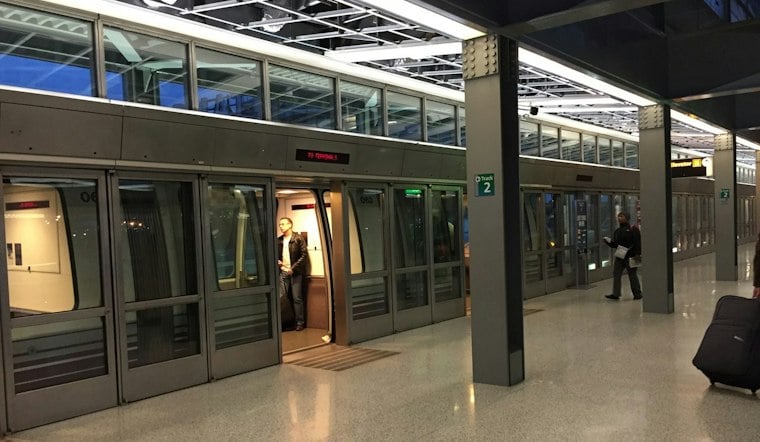
Access is also a measure of who can benefit. The Port Authority’s $160 million Newark Liberty International Airport station project extends the existing pedestrian bridge to a new public entrance on Frelinghuysen Avenue, with elevators, escalators and drop-off space; the agency said it expected the entrance to open in 2026. It projected that train trips between nearby neighborhoods and the airport or Newark Penn Station could take under 10 minutes, compared with bus journeys of up to 40 minutes. TAPinto Newark reports that about one in five Dayton residents lives with a disability, making accessible routes and crossings a particularly relevant test of neighborhood infrastructure.
A baseline for trucks, streets and housing
Truck counts offer one dated baseline, though the counts should not be mistaken for a single continuous trend. A Dayton community count in August recorded 1,333 medium- and heavy-duty trucks passing Frelinghuysen Avenue at Evergreen and Meeker avenues over as much as three hours of daily counting, TAPinto Newark reported. Separately, the South Ward Environmental Alliance has conducted a two-day count at six locations, with repeat counts intended to track conditions at the same places and time slots, according to the Rutgers Climate Resource Center. In an earlier effort, a 2022 count found more than 3,000 trucks at five Newark intersections in one day, Patch reported; the different dates, sites and methods mean the figures are context, not a like-for-like comparison.
The alliance says its real-time particulate-matter monitoring network covers Dayton Street, Clinton Hill and Weequahic. The truck counts and monitors document activity and pollution measurements; they do not, by themselves, establish the cause of any particular health condition. Residents’ concerns also predate the latest projects: Newark’s 2012 master plan identified flooding on McClellan Street and beneath the Meeker Bridge, and a 2014 Dayton Street plan called for stormwater management, greener streets and better access to Weequahic Park, according to TAPinto Newark. The same outlet reports 1,010 crashes in the neighborhood from 2010 through 2020.
Housing costs are another point where a neighborhood benchmark matters. TAPinto Newark reported that Dayton renter Latanya Ross saw her rent rise from $1,450 to $1,800, with proposed increases reaching $2,400. The outlet also reported that another tenant received a proposed 30% increase in a letter that cited Lionsgate; that account does not establish that the studio caused the increase or determine whether it complied with rent rules. Nationally, the U.S. Census Bureau found that 49.7% of renter households for which rent burden was calculated spent more than 30% of income on housing in 2023. That national figure is context, not a measure of Dayton.
Newark’s ordinance says rent regulation and a city Rent Control Board were established in response to a housing emergency, according to the Newark Municipal Code. The cited provision states the law’s purpose; it does not explain how a tenant should challenge a proposed increase or establish whether a particular rent is covered. That distinction leaves an important practical question unanswered by the ordinance excerpt and by the reported rent examples.
The next test is follow-through
Beyond Dayton, the former Anheuser-Busch property is planned for industrial manufacturing and logistics uses. Goodman Group bought the 86-acre site for $360 million, NJ 101.5 reported. Councilman Patrick Council told TAPinto Newark that the redevelopment is expected to become a logistics hub with more than 2,000 jobs and that trucks are expected to use routes primarily along the Turnpike. Those projections make the site relevant to Dayton’s stated interest in jobs and truck traffic, but they do not yet show how many positions will go to nearby residents or how traffic will affect local streets.
State environmental-justice law provides a procedural safeguard for certain permit applications in overburdened communities: for specified new facilities, expansions and major-source permit renewals, the Department of Environmental Protection may not decide an application until at least 45 days after a public hearing. The law does not establish that any particular Dayton-area project is covered. As Dayton Rising puts residents’ priorities into a public record, the remaining work is to identify which promises and rules apply to each project—and to make their results visible to the people who live nearby.




