

























































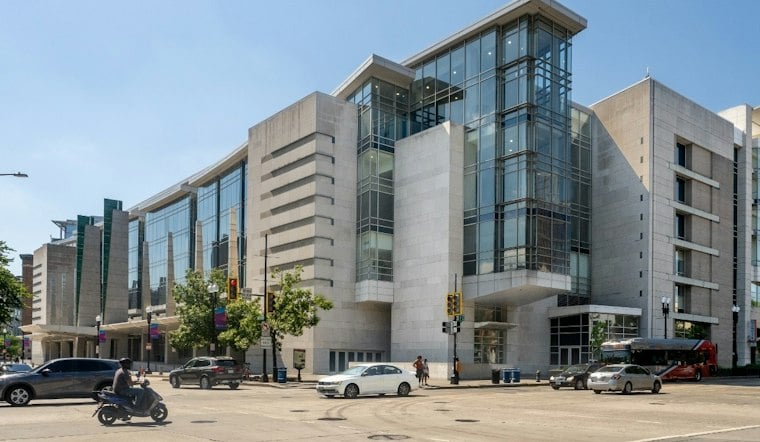
Events DC says it owes the District about $5.1 million in excess cash for fiscal year 2025. The Office of the D.C. Auditor says the real number is more than $50 million. That roughly $45 million gap has stalled a piece of Council legislation and reopened a fight over who controls money generated by the Walter E. Washington Convention Center and the city’s other major venues.
A Second Straight Year of Disagreement
According to WJLA, this marks the second consecutive year the Office of the D.C. Auditor has questioned how much money Events DC should be returning to the city. Events DC is the public authority responsible for operating the convention center, located in the heart of Washington, D.C., along with other major venues, and it draws revenue from taxes on hotel stays, restaurant meals, and alcoholic beverages. Under D.C. law, the agency is required to return certain excess cash to the city’s general fund each year — and the size of that transfer hinges on how its reserve levels are calculated.
The dispute follows an earlier finding from the auditor’s office, which previously reported that Events DC had wrongly calculated excess cash and owed the District $68.7 million for fiscal year 2024, according to dcauditor.org. Events DC acknowledged an error in part of that fiscal year 2024 calculation and recalculated an additional $5.8 million owed, per the same WJLA report. The agency rejected the auditor’s broader recommendation that it transfer an additional $45 million, maintaining that its method complies with the law and reflects longstanding financial agreements, including commitments made to bondholders.
Auditor Points to a Budgeted-Versus-Spent Gap
D.C. Auditor Kathy Patterson sent a memorandum on September 21 to Events DC President and CEO Angie Gates and General Counsel Nicole Jackson, warning that proposed legal changes to the excess-cash statute could significantly reduce the money returned to the District. Patterson has said Events DC bases its excess-cash calculation on what it budgeted rather than what it actually spent, and she has argued the roughly $45 million discrepancy is not simply an accounting mistake. In response, Gates wrote that Events DC disagrees with the auditor office’s interpretation of the statutory requirements governing those calculations.
Patterson has also questioned whether the proposed statutory changes would make an already complicated law even harder to understand, and she has framed the standoff in broader terms: whether elected representatives or the convention center authority should decide how public money gets spent. If Events DC believes it should be entitled to keep all the revenue it collects, Patterson has suggested the agency should ask the Council to eliminate the excess-cash return requirement outright, rather than reshape how the calculation works.
Legislation Pulled Before a Final Vote
At the center of the fight is the Events DC Excess Cash Calculation Clarification Amendment Act of 2026, legislation intended to clarify how Events DC calculates its excess cash. The proposed statutory language would let Events DC calculate certain operating reserves using up to 1.5 times its budgeted annual operating and marketing expenses for the upcoming fiscal year — a formula that could preserve the agency’s existing method of determining reserves for operating expenses and other financial obligations. Under the 1994 law the dispute traces back to, the Council may still approve higher reserve levels when necessary to protect Events DC’s financial condition or to satisfy bond-rating agencies.
Rather than bring the bill to a final vote, the D.C. Council pulled it for additional discussion and delayed action on the measure. Councilmember Zachary Parker said lawmakers should not vote without clear answers on the underlying numbers. Councilmember Janeese Lewis George, who was elected D.C.’s next mayor this month, said she wanted to understand exactly how much money the District would be forgoing under the proposed change and why Events DC needed to retain it. WJLA has not established whether every provision from the September draft of the bill made it into the version lawmakers ultimately considered.
A Fight With a History
This is not the first time Events DC’s reserve calculations have collided with the city’s budget needs. In a prior dispute, the D.C. Chief Financial Officer determined that $48 million in excess reserves should have been transferred to the District’s general fund for fiscal years 2017 and 2018, according to the DC Fiscal Policy Institute, which argued that sum was not needed as a guarantee to Events DC bondholders. The Council ultimately passed a budget that used Events DC funds for public housing repairs and to eliminate a proposed small hotel tax for fiscal year 2020.
Events DC’s own financial statements show the transfer amounts have swung widely year to year. The agency reported no excess-cash transfer at all in fiscal years 2021 and 2022, while a bond disclosure shows it recorded a $9 million excess-cash liability for fiscal year 2023 that it expected to transfer the following year; its eventual fiscal year 2024 summary listed a transfer of $3.322 million. Those same statements attribute a drastic decline in unrestricted reserves in part to an earlier excess-cash transfer made to the District in fiscal year 2019.
The current standoff arrives as D.C. faces a looming budget shortfall and the possibility of cuts to city programs, raising the stakes on every dollar in question. During the earlier fiscal year 2024 dispute, Events DC said it could not sustain its venues or its operations using the calculation the auditor was pushing, according to bizjournals.com. For now, the roughly $45 million gap between what Events DC says it owes and what the auditor says it should owe remains unresolved, with the Council’s next move still to come.





