

























































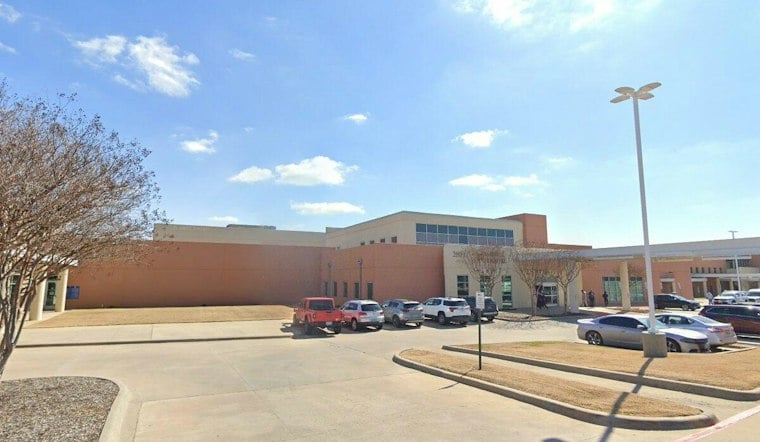
Denton County commissioners voted unanimously on Tuesday, November 10, to spend $12.5 million on a two-story former hospital building, setting in motion a plan to turn the site into a mental health facility aimed largely at keeping people with psychiatric crises out of jail. The 59,800-square-foot building sits on 3.21 acres at 2809 S. Mayhill Road and was built in 2005 as Mayhill Hospital. County officials say the building still needs renovation and outside healthcare partners before it can actually open its doors.
As reported by crosstimbersgazette.com, the county plans to use the building to address mental health needs across Denton County, including as a jail diversion center and a hub for connecting individuals with appropriate resources. Precinct 1 Commissioner Ryan Williams, a law enforcement officer, estimated that as much as 30% of incarcerated individuals could benefit from the new facility, according to Community Impact. “As a law enforcement officer, it will be nice to have a place to take people dealing with mental health issues instead of county jail,” Williams said, per that outlet's reporting.
A Building Purchased, But Not Yet a Facility
United Way of Denton County President and CEO Gary Henderson framed the purchase as a financial and moral win, saying the facility would generate taxpayer savings across the justice system. “Not only are we paying for their time in the jail, there's cost at the [district attorney's] office, there's cost in the courts, the clerks,” Henderson said, according to the same report from Community Impact. He added, “We really are doing a smart thing financially while doing the right thing for people.”
Still, the building purchase is only the first step. The county must renovate the structure and find the right partners before the new facility can open, Williams said in the crosstimbersgazette.com report. The county paid for the purchase entirely out of its Permanent Improvement Fund, which is largely funded by property taxes and which increased by 45.5% for fiscal year 2026-27, per county documents cited in the Community Impact report.
A Countywide Planning Effort Already Underway
The Denton City Council voted unanimously to put $10,000 toward a $75,000 strategic plan for a countywide mental health and jail diversion center, according to dentonrc.com. Denton County itself committed $45,000 toward that plan, and United Way of Denton County contributed $10,000; the outlet also reported contributions from additional funding partners.
Lewisville, Lakewood Village, Oak Point, Bartonville and Hickory Creek have also signed on as municipal funding partners, according to the same dentonrc.com report. The Meadows Mental Health Policy Institute is preparing the strategic plan, which is expected to guide operational models and funding strategies for the proposed center, per Community Impact's account. Eric Morris said the facility's main function would be jail diversion programming, with possible additional options involving other organizations or community members, Community Impact reported.
What the Proposed Center Could Look Like
Under the plan described by dentonrc.com, the countywide center would operate as a 24/7 facility designed to redirect people away from jail and toward short-term stabilization and community-based services. Stays would be expected to range from six hours to 11 days, with services including intake, mental health evaluations, medical triage, case management and service navigation, according to that report. The proposal is the result of cross-sector collaboration among the Denton County Commissioners Court, the Denton County Sheriff's Department, municipalities, Denton County judges, hospital systems, and county behavioral health and housing leadership teams, according to a legislative agenda document from United Way of Denton County. That document lists the center's goals as increasing public safety, helping connect individuals to appropriate resources, and reducing the county's related costs.
The strategic plan was expected to be finalized in November and presented to the 90th Texas Legislature in January 2027 to seek development funding, per dentonrc.com's reporting. Separately, Community Impact reported that the county will prepare its own presentation for the 2027 Texas legislative session to seek additional funding for the Mayhill Road building project. A Denton County commissioner said demand for mental health resources had continued to increase as the county's population has grown, according to the crosstimbersgazette.com report.
Why Officials See a Gap to Fill
The push for a local diversion center follows years of county-level reports flagging unmet needs. A 2015 Meadows Mental Health Policy Institute report discussed justice-system diversion across multiple intercepts. United Way of Denton County has separately cited a pre-pandemic estimate that nearly one in five people experience a mental health condition each year, which it calculated as roughly 188,000 people countywide based on July 2021 population data.
A comparable program in Travis County offers a glimpse of what jail diversion efforts can achieve elsewhere, though its results don't predict what Denton County's facility will produce. Travis County launched a mental health diversion pilot with Integral Care in October 2024, and KUT reported that 94% of people discharged from its psychiatric emergency services component were not arrested within 30 days. Within 30 days of discharge from the therapeutic diversion program, 91% of participants were connected to behavioral healthcare and 80% were not arrested, the station found. That program's 25 beds have created a bottleneck, with Integral Care's director telling KUT that more than 50 people were waiting for admission with an average wait of six to eight weeks.
What Comes Next in Denton County
For now, the Mayhill Road building still needs renovation before it can open. Denton County must still partner with external healthcare providers to operate the facility before it can open, according to Community Impact's reporting. With both the building purchase and the strategic planning process converging on the 2027 legislative session, county officials appear to be betting that state lawmakers will help fund the next phase of a project they've already committed millions of local dollars toward.



