

























































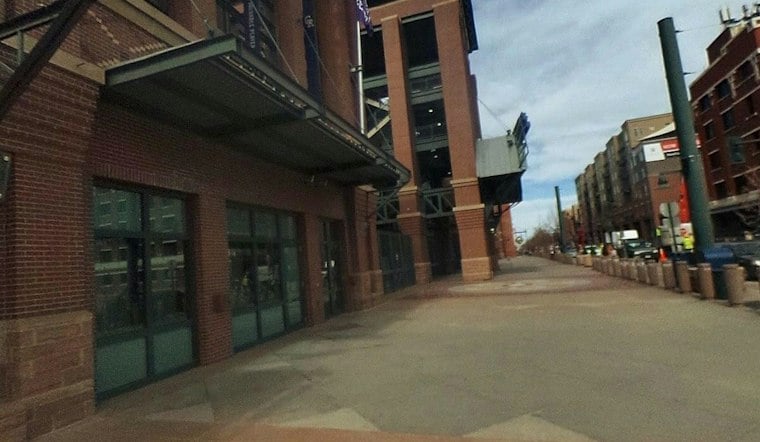
With its lease at a Golden Triangle building running out next month, Denver's Harm Reduction Action Center has spent recent weeks scouting new locations around the city — and residents near the Ballpark and Five Points neighborhoods say they organized to keep it out of their backyard. The nonprofit provides clean needles, drug pipes, and health-care assistance to clients, and its search for a permanent home has put it on a collision course with neighbors who used public-records requests to track the city's internal discussions about where it might land next.
According to CBS Colorado, resident Rachel Diedrich lives near Ballpark and Five Points and said she grew concerned after learning the Harm Reduction Action Center was interested in a site just a few hundred feet from her home. Diedrich used Colorado's open records act to obtain city emails about potential locations, which the station reported showed repeated correspondence between the nonprofit, the mayor's office, and other city agencies. She said that even under the best circumstances, drug users receiving needles, foils, and other materials at a site would affect a neighborhood.
Those emails, per the same CBS Colorado report, included a message in which Evan Dryer offered to engage Councilman Darrel Watson to make him more comfortable with a potential move into his district. In another exchange, HRAC's Lisa Ravelle told Dryer she loved a building near Ballpark and Five Points and was looking to make an offer. Ravelle told the station that HRAC was working closely with the city and the mayor's office on a relocation intended to work for everybody, and said the organization needed to remain near its clients, especially major transportation.
A Former Hotel, Restoration Plans, and a Neighborhood Pushback
Matt Van Sistine, who moved into the Ballpark district nearly 20 years ago, is restoring an old hotel building a block from Coors Field and told CBS Colorado he opposed multiple locations the nonprofit considered in the neighborhood. He said his area already carries the state's largest density of social services, and argued that placing the center among struggling small businesses without a clear benefit was not a good solution. Van Sistine said he wants his restoration project to help improve the neighborhood rather than complicate it.
Diedrich, for her part, said she recalled the mayor promising that service providers would be distributed more equitably throughout the city — a pledge she felt was tested by the prospect of another concentration of services in her area, the station reported. Both Diedrich and Van Sistine told CBS Colorado they believe community opposition is what ultimately kept HRAC from moving into their neighborhood, though they said they remain concerned about transparency and the potential neighborhood impact of wherever the relocation eventually lands.
City Weighs In on Schools and Zoning
City emails cited by the station also showed the mayor's office asking the city planning director to check one building's proximity to a school, since HRAC would need a Board of Health waiver if a site sits within 1,000 feet of one. Two schools were found within 1,000 feet of the building under consideration, but the mayor's office never expressed concern, per CBS Colorado's reporting. A spokesperson for the mayor's office said the relocation process itself belongs to HRAC, while separately telling the station that HRAC was no longer considering those particular locations.
A 2020 report from Colorado Politics described Denver's ordinance and written rules for syringe-access providers, including a cap of three citywide and a 1,000-foot restriction on operations near schools.
Funding Deadlines Add Pressure to the Search
The search for a new building comes with financial urgency. HRAC had received $800,000 from the Denver Opioid Abatement Council to help purchase a building, with that funding set to expire at the end of the year alongside its Golden Triangle lease, according to CBS Colorado's earlier reporting. Separately, Denver City Council approved an amendment on Aug. 31 allowing HRAC to use $489,376 in federal American Rescue Plan Act funding for operating expenses, according to denver.thebadger.news, while preserving a separate pool of opioid-settlement money for a potential building purchase. That amended agreement designated $239,345 in opioid-settlement funding specifically for purchasing a building for behavioral-health and syringe-access services, the outlet reported.
The amendment did not increase the total funding capacity of the city's contract with the Colorado Nonprofit Development Center, which operates HRAC, nor did it extend the contract's term, per the thebadger.news report. The outlet noted that HRAC's revised ARPA performance period ends Sept. 30, 2026. A city proclamation cited in that coverage pointed to 563 drug-related deaths in Denver in 2025, underscoring the stakes officials have attached to keeping the nonprofit's services running without interruption.
A Program Clients Rely On Daily
More than 100 people visit the Harm Reduction Action Center every morning, CBS Colorado has reported, and the organization has said overdose deaths in the city are rising even as national numbers have dropped. A 2020 Colorado Politics report found that Denver auditors who analyzed 17,700 reports of drug activity, overdoses, or sharps between 2016 and 2019 identified elevated reports in the far northeast, southeast, and western sections of the city — areas the existing syringe-access programs did not serve. That same report noted HRAC and the Denver Colorado AIDS Project operated two fixed syringe-access locations at the time, while Vivent Health ran a mobile unit, and that the health department had awarded more than $912,000 in 2020 contracts for syringe-access and kiosk programs.
For now, the search continues. HRAC has said it plans to buy its next location rather than lease, giving it a permanent base after years of operating out of its current Golden Triangle site. Residents near Ballpark and Five Points say they'll keep watching the process closely, even as the nonprofit and city officials look elsewhere for a site that can open before the clock runs out.




