

























































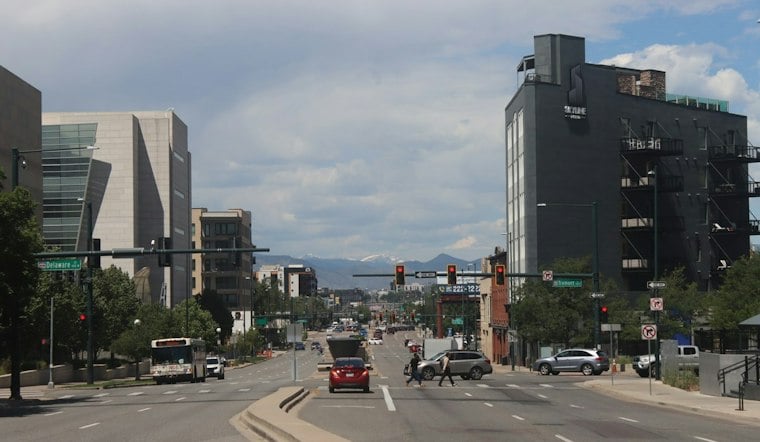
A pothole at the intersection of Colfax Avenue and Trenton Street sent scooter rider Jeffrey Simpson flying over his handlebars in November 2023, fracturing multiple bones and setting off a legal fight over whether Denver can be held responsible. The Colorado Court of Appeals has now ordered another look at whether the city has immunity in the case, sending it back to district court for a hearing on what Denver knew about the hole and whether it played a role in creating it.
The panel's November 19 ruling, reported by Denver Gazette, rejected Denver's argument that the pothole simply did not qualify as a dangerous condition under state law. The Colorado Governmental Immunity Act generally shields public entities like Denver from injury lawsuits, but it carves out an exception when a government fails to reasonably address a dangerous condition on a public roadway, according to the same report.
Judge David H. Yun, who authored the opinion, characterized the hole as a genuine hazard: a pothole measuring three and a half inches deep and twelve inches in diameter presents an unreasonable risk to public safety, he wrote, per the Denver Gazette's account of the ruling. The opinion was issued by a three-judge panel, according to the Leagle-hosted copy of the opinion.
A Fight Over Who Knew What, and When
Before reaching the appeals court, District Court Judge Andrew P. McCallin had already denied Denver immunity under the dangerous-condition provision without holding a hearing, concluding the city should have known about the hazard. McCallin reasoned that the area had been repaved and that reasonable care should have left the water-meter lid level with the street, and he wrote that bicycles, scooters and baby carriages can be expected to pass through this intersection, the Denver Gazette reported.
Denver pushed back hard on that conclusion in its appeal. The city argued it had received no pothole complaint and had no reason to know of the problem, and it pointed the finger elsewhere, arguing Denver Water was likely responsible for the hole because it may have created the hazard while accessing the water meter buried beneath it. Denver Water is responsible for maintaining its own infrastructure, the city noted in its filings described by the Denver Gazette.
Denver's city attorney's office also disputed the strength of Simpson's evidence, writing that the photos he submitted did not establish an unreasonable risk to public safety. Denver backed its position with an October 2023 Google Maps image showing the hole alongside a water-meter lid and a city employee's statement indicating there were no records of Denver doing any work on the area since paving it in 2011. Simpson countered with a 2025 photo of the hole plus a 2014 image showing no depression in the street at all, according to the Denver Gazette's reporting.
What the Appeals Court Left Unresolved
Despite rejecting Denver's core argument that the pothole posed no real danger, the appeals panel said the record still left key questions unanswered. No evidence was presented regarding when or by whom the pothole was created before Simpson's fall, Yun wrote, and the panel found it unclear whether Denver knew or should have known about the condition, or whether the city itself caused it.
Because of those gaps, the panel returned the case to McCallin to hold a hearing and determine the extent of Denver's knowledge and involvement in creating the dangerous condition, the Denver Gazette reported. That means the question of whether Denver is ultimately immune from Simpson's lawsuit remains open, pending further proceedings in district court.
Another Colorado Case
The Colorado Court of Appeals also issued a 2025 opinion in Baugh v. Town of Walden.
Simpson's case heads back to McCallin's courtroom, where the hearing on Denver's knowledge and role in the Colfax Avenue hole will determine whether his lawsuit can move forward at all.




