

























































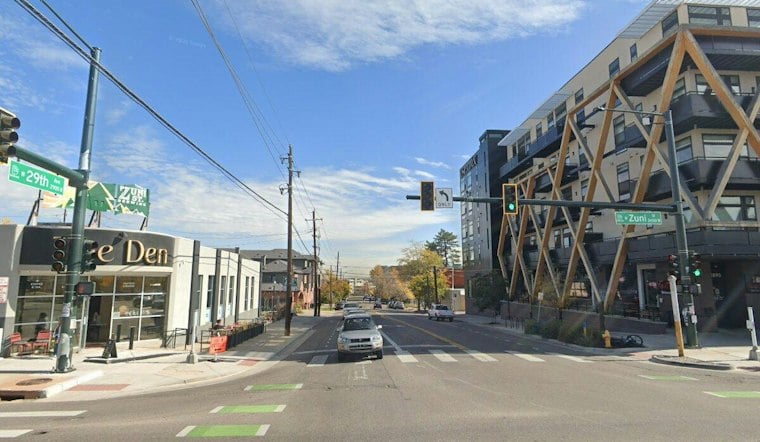
During the year following installation of speed humps, bike lanes and button-activated crosswalk signals on West 29th Avenue between Zuni and Sheridan, the city says crashes on the corridor dropped 57% — and not a single one of them was serious.
The numbers come from a Department of Transportation and Infrastructure study, as reported by Denver7, which found crashes down 57% in the year following installation of the changes, with zero serious crashes recorded in that span. The redesign, completed in spring 2025, followed a string of crashes on the street that pushed the city to act. Along with the speed humps, crews added pedestrian crosswalks with warning lights that activate when a button is pressed, dropped the speed limit to 25 miles per hour from Sheridan to Zuni, and installed a dedicated bike lane on each side of the street.
Neighbors Notice the Difference, Even If They Don't Love Every Change
For longtime residents, the redesign is a visible shift from the street they remember. Paul Gourin, who has lived in the neighborhood since 2003, said the road used to be simpler to navigate behind the wheel but far from safe. “We've been here since 2003 in the neighborhood, and it was easier to drive on it, of course, easier to park. However, there were a lot of crashes,” he said, per the same Denver7 report.
Not everyone is fully on board with the trade-offs. Frances Medalen said she has made peace with the speed humps even if her household hasn't. “I don't mind it because I drive slow anyways. But my husband doesn't like it because he is constantly worrying about what it's doing to the to the car,” she said. Patty Barnes, meanwhile, said the old layout made getting across the street a genuine hassle. “The road was pretty busy before they made the changes, and I think with pedestrians trying to cross, it was a lot harder,” she said.
Bike and Scooter Traffic Jumps Nearly 80%
The study also found bicycle and scooter usage on the corridor increased 79% since the changes went in, a shift riders say they can feel on the street itself. Walter Holak said the new bike lane makes a noticeable difference in how safe he feels riding. “It's well guarded, and the speed bumps. The cars aren't going so as fast, so I feel safer,” he said.
The 29th Avenue project didn't happen in isolation. DOTI's finalized design called for protected bike lanes along most of the corridor while keeping on-street parking and a striped bike lane at two commercial nodes — Sheridan Boulevard to Xavier Street, and Utica Street to Tennyson Street — according to Colorado Community Media. That outlet reported the agency also planned to add more rectangular rapid-flashing beacons and adjust signalized intersections to make crossings safer. DOTI's community survey for the project drew 221 respondents, 68% of whom lived or owned a business within two blocks of West 29th Avenue or traveled the street daily, and 67% expressed interest in removing parking to make room for a protected bike lane, per that report.
How the Changes Fit Into Denver's Broader Bikeway Push
The 29th Avenue results track with patterns DOTI has documented across its wider network of neighborhood bikeways, though the agency's broader figures describe those evaluated corridors as a group rather than 29th Avenue specifically. From 2022 to 2024, the department collected hundreds of data points and more than 1,600 community survey responses to assess its traffic-calming and bikeway designs, according to a Denver Department of Transportation and Infrastructure evaluation. Across those evaluated bikeways, average speeds were down 10% and 75% met their speed targets, cut-through traffic fell 25%, and bicycle ridership rose 48%, with scooter riders not counted in that figure.
The same evaluation found specific crossing treatments tied to sharp increases in driver yielding: rectangular rapid-flashing beacons were associated with 105% more drivers yielding, while pedestrian refuges were linked to 137% more drivers yielding. Colorado Community Media also pointed to outcomes elsewhere as context for Denver's debate over parking versus protected bike lanes, citing a Salt Lake City street where replacing parking with a bike lane was followed by an 8.8% rise in retail sales the next year, and a Seattle corridor where food-service employment rose 30% after a protected bike lane went in.
Denver residents can track the ongoing 29th Avenue analysis themselves: the DOTI study is listed on the department's website under “Ongoing Evaluations” as “Corridor-wide traffic calming.”




