

























































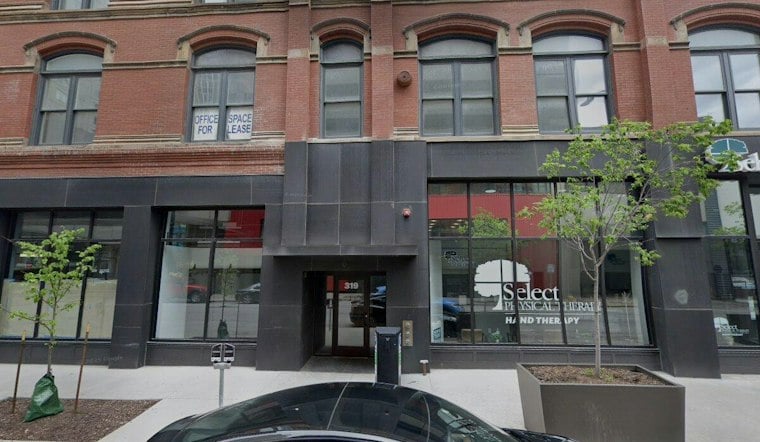
La Mie, the popular bakery tucked into the skywalk at Two Ruan Center, is moving to street level — and Des Moines taxpayers are helping foot the bill. The Des Moines City Council voted Monday to award the bakery $200,000 in city funding to help it relocate to the Griffin Building at Seventh and Locust streets, a storefront that formerly housed a Kum & Go convenience store.
The award, approved November 2, marks the first grant handed out under the city's new Restore the Core program, according to Business Record. The initiative was built to revitalize vacant street-level commercial space downtown, and La Mie's new home had sat empty long enough to qualify.
City staff reports cited by the outlet detail a sizable renovation bill: $170,000 for commercial kitchen work alone, plus roughly $430,000 in associated structural costs. That price tag became central to the council's decision, since the Griffin Building is actually covered by an existing development agreement with the city — an arrangement that normally caps Restore the Core grants at $100,000 rather than the $200,000 ceiling available to properties without such agreements. The council made an exception for La Mie specifically because of those substantial renovation costs.
Why La Mie Needed to Move
La Mie's departure from the skywalk wasn't optional. The bakery's lease at its La Mie Elevate location was terminated because of ongoing construction at Two Ruan Center, where improvements are converting the building into residential units. The grant award does not affect La Mie's separate bakery on 42nd Street, which continues to operate as usual.
Councilman Josh Mandelbaum supported the award, framing the move as something of a silver lining tied to the broader wave of downtown redevelopment. He said La Mie needed a new space partly because of other positive developments underway, and argued the bakery was landing in an even better location than the one it's leaving. Still, he urged restraint going forward. “I hope that this exception does not lead to an erosion of that going forward,” Mandelbaum said, referring to the program's standard funding caps.
Councilman Mike Simonson abstained from the vote.
A Corner the Mayor Wants Activated
Mayor Connie Boesen backed the exception and framed it as a win for a key downtown intersection. “Activating that corner is huge,” Boesen said, adding that she believes La Mie will be a good fit there.
Restore the Core operates as a dollar-for-dollar matching grant program, meaning recipients must put up their own funds alongside the city's contribution, and qualifying projects must carry at least $50,000 in eligible expenses. Des Moines allocated $7 million to the program as a one-time expenditure from the city's Metro Center Urban Renewal Area Fund, and that pool of money will keep funding projects until it runs out rather than being replenished annually.
The Vacancy Problem Behind the Program
The push to fill empty storefronts reflects a vacancy rate that's been a persistent headache downtown. A city presentation from May found that roughly 31% of downtown's ground-floor commercial space sat vacant, and the Des Moines Register reported that about 76% of that vacant space had been empty for a year or more. The same report noted city staff pointing to more than 1,600 housing units currently under construction downtown, representing roughly half a billion dollars in investment — a residential boom the city hopes will eventually fill those empty storefronts with customers.
Eligibility rules for Restore the Core have shifted somewhat since the city first floated the idea. A May presentation proposed that street-fronting, ground-floor spaces vacant for at least 12 consecutive months could apply, but when the City of Des Moines formally launched the $7 million program in June, its materials described a 24-month vacancy threshold within the Downtown Core Program Boundary instead. The city's announcement doesn't explain the change. City Council approval is required before any project receives funding, and the program offers 1:1 matching reimbursement grants for permanent improvements to qualifying spaces.
For comparison, a city presentation noted that similar tenant-improvement programs in other cities typically cap matching grants between $30,000 and $200,000 per commercial unit — putting Des Moines's exception for La Mie at the high end of what peer cities generally offer.




