

























































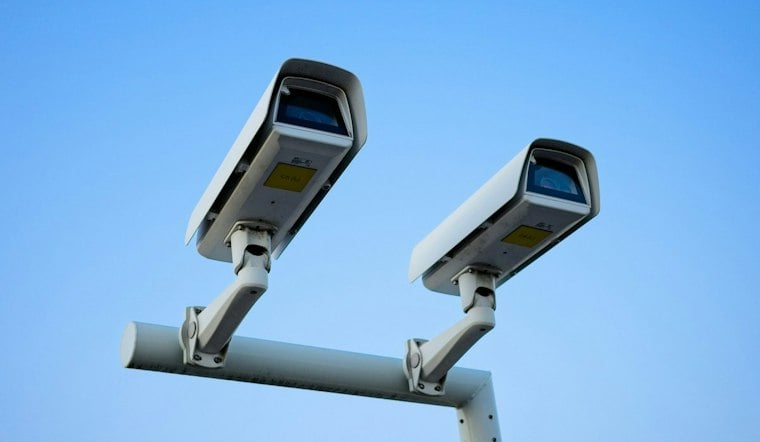
Desert Hot Springs will keep paying $78,000 a year to run 26 police license plate cameras after the City Council unanimously approved the cost Tuesday night. But the vote came with a catch: several council members said they still don't have enough information about how the cameras work, what they catch, and who else gets to see the data before they're ready to sign off again.
The approval, reported by NBC Palm Springs, rolled three separate camera purchases into a single annual bill. Those individual purchases had previously been approved by the city manager without ever coming before the council for a vote, according to the outlet's reporting. This time around, the full council weighed in, but members said they want more information about the system's effectiveness, its potential drawbacks, and how other police departments are putting similar technology to use before the next contract lands on their desks.
Council Members Push for a Fuller Briefing
One council member went further, calling for a broader discussion before the next budget year that would include hearing directly from police about both the benefits and any negative experiences tied to the cameras, per the same report. Council members also said they want to better understand the technology itself and its regional data-sharing practices before the next contract comes up for consideration.
That data-sharing question is a real one. The Desert Hot Springs Police Department says camera data is retained for 30 days and shared with more than 300 agencies across California, a scale that includes police departments in Palm Springs, Cathedral City and Indio, along with district attorneys' offices, fire departments and social services agencies throughout Riverside and San Bernardino counties, according to the NBC Palm Springs report.
What Police Say the Cameras Are For
Desert Hot Springs Police Chief Steven Shaw has said the cameras help officers solve crimes, recover stolen vehicles, locate missing people and generate investigative leads, according to KESQ. Shaw has also said the technology is not used for immigration enforcement and is not intended to monitor the daily activities of law-abiding residents, the station reported. The department maintains it follows state and federal law, limits camera access to trained personnel, and publishes its policies online for public review.
Police have pointed to at least one concrete example of the cameras at work. In a hit-and-run case that left a pedestrian in critical condition, investigators said the Flock Safety license plate readers helped them quickly identify the suspect vehicle, obtain its plate number, and develop critical investigative leads, KESQ reported at the time.
Desert Hot Springs Joins a Crowded Valley Trend
Desert Hot Springs is far from alone in adopting the technology. A 2023 count from the Coachella Valley Independent found that automated license plate readers were already in use in eight of the nine Coachella Valley cities, with Coachella the lone holdout. The outlet noted the cameras can scan 2,000 license plates per minute, and cited research from the Electronic Frontier Foundation estimating that more than 99.9 percent of the data collected is unrelated to any crime or public-safety interest.
Nearby Palm Desert's system illustrates how quickly these costs can scale: the city added 53 cameras to the 49 already in operation, pushing its first-year bill to $291,100, with $258,500 due annually after that, per the same Independent report, which estimated each camera runs roughly $2,500 to $3,000 a year.
Palm Springs Offers a Model for Oversight
Palm Springs, which runs a larger network of 55 automated license plate readers and 159 video cameras across about 55 intersections, has tried to get ahead of the transparency concerns that have dogged this technology elsewhere. The department reported 138 arrests supported by its camera system between March 10 and September 30, 2026, according to KESQ's coverage of a city presentation last month. Palm Springs police also reported a 70 percent drop in vehicle thefts comparing the same April-through-June stretch in 2024 and 2026, though the department was careful to say the decline cannot be attributed to the cameras alone, citing other crime-prevention efforts underway at the same time.
Palm Springs police say license plate data is automatically deleted after 30 days and that sharing is generally limited to California law enforcement agencies, KESQ reported. The department has also committed to regularly auditing system use and providing quarterly updates to its City Council on usage, outcomes and accountability — the kind of ongoing check-in that Desert Hot Springs council members now appear to be asking for themselves.
Other valley cities have gone through similar public airings. Cathedral City and Indio both held council presentations on automated license plate readers, with Cathedral City's session covering public safety protocols, privacy protections and accountability measures, and Indio Police Chief Brian Tully expected to walk through his department's camera policies and safety measures at a meeting there, according to NBC Palm Springs. As the cameras have become increasingly common among law enforcement agencies across the region, that same outlet has noted, they've also drawn growing scrutiny over privacy, data access and the potential for misuse — scrutiny that now appears to be landing squarely on Desert Hot Springs' council chambers.





