

























































Jose Velasquez has lived in his Meridian Street apartment in East Boston for 20 years, but the 70-year-old now faces a stark choice: accept a rent increase of nearly 38 percent or be forced out. His housing court case is headed to a jury trial set to begin next week, a fight that will decide whether he, his wife, daughter, and grandchild can stay in the only home they've known for two decades.
Velasquez's landlord, a company called Groma, purchased his building last year and terminated his existing three-year lease before offering a replacement with the steep increase attached, according to The Boston Globe. Velasquez lives with his 67-year-old wife, their adult daughter, who suffers from epilepsy and schizophrenia, and their adult grandchild, and he has said his retirement savings simply cannot cover what Groma is asking. It isn't his first brush with displacement — he also received eviction notices back in 2017 during a mass clear-out after a different company took over the building, and outlasted those former owners without ever going to court.
Rally Outside Groma's Downtown Offices
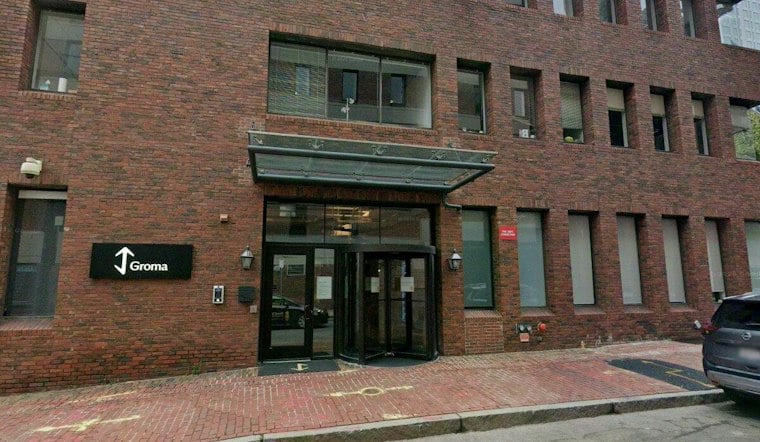
Tenant organizers and supporters gathered outside Groma's downtown Boston headquarters on Tuesday, dispersing around 10 a.m., to back Velasquez as he prepares for trial. Grace Holley, a spokesperson for City Life/Vida Urbana, joined the rally and remarked that Velasquez was probably the one who ended up paying for the donuts and coffee served that morning — a quip Groma co-founder Chris Lehman later addressed, saying the refreshments were simply offered as a gesture of hospitality, per the same Globe report.
Tenants at the rally accused Groma of forcing renters out so it can renovate neglected units and then charge higher rents to new tenants, the Globe reported. Some described mold, rotting floors, and rat infestations in their units. According to Boston Real Estate Times, tenant advocates say Velasquez does not owe any rent, and he and his family are seeking a multi-year lease with annual increases capped at 5 percent rather than the terms Groma has proposed.
Groma's Response
Lehman, who co-founded Groma, rejected the notion that the company is extorting tenants and maintained that virtually all of its conversions are priced at market rate, which he said still runs cheaper than new luxury developments. He conceded that many of Groma's properties, according to the station's report, have not gotten adequate care over the past few decades, but said the company always honors its existing leases and tries to help tenants relocate while renovations occur when a unit fails its quality standards.
Founded in 2020, Groma describes itself as a data-driven, tech-forward real estate start-up that uses an artificial-intelligence-driven property management tool. The company operates dozens of properties across Greater Boston, concentrated mostly in East Boston, Roxbury, and Mission Hill, and it also runs a rentvestment initiative meant to let renters build equity through their monthly payments, along with its own cryptocurrency called Gromacoin. Boston Real Estate Times reported that Groma owns more than 155 properties across Greater Boston and purchased Velasquez's building in fall 2025, filing the no-fault eviction case against him in April after he declined its proposed lease.
A Broader Fight Over Rent Control
Nikki Stone, a renter in Mattapan who also attended the rally, said Boston and Massachusetts tenants need stability and rent control, calling on tenant-rights advocates to renew efforts for a rent-control ballot question. That push has already hit one major setback: a campaign that gathered more than 124,000 signatures for a measure capping most annual rent increases at 5 percent or the rate of inflation, whichever is lower, was struck from the ballot by the Massachusetts Supreme Court on June 23 because it included a clause exempting religious institutions, according to Shelterforce. Tenant advocates are now pursuing rent-stabilization legislation in the statehouse instead, including a proposed compromise that would let individual cities opt into controls with increases capped at inflation plus 5 percent, up to a maximum of 10 percent.
The pressure on renters has been building for years. Shelterforce reported that rents in Suffolk County, which includes Boston, rose 28.5 percent between 2020 and 2024 — a figure cited in testimony as 34 percent above the rate of inflation — while a 2025 report found Massachusetts lost 163,000 low-rent units priced under $1,400 between 2012 and 2022. The Globe separately reported that more than 39,000 eviction cases were filed in Massachusetts courts over the past fiscal year, including a closely watched Somerville case in which tenant Gary A. Rogers has spent two years fighting an eviction after his landlord sought to raise his rent from $1,150 to $2,200 — an offer of cash and a free month to leave that Rogers rejected.
East Boston has seen this pattern before. A 2015 case documented by WBUR described tenant Olga Pasco, who had lived in her Maverick Street apartment for 25 years before a building sale triggered a no-fault eviction notice and a rent hike from roughly $800 to $2,000 a month. WBUR also reported that East Boston's median home sale prices jumped 120 percent between 2014 and 2015, a surge that helped fuel the neighborhood's long-running fight over displacement.
For now, Velasquez's fate rests with a housing court jury, which will determine next week whether he and his family can remain in the Meridian Street apartment they have called home for 20 years.





