

























































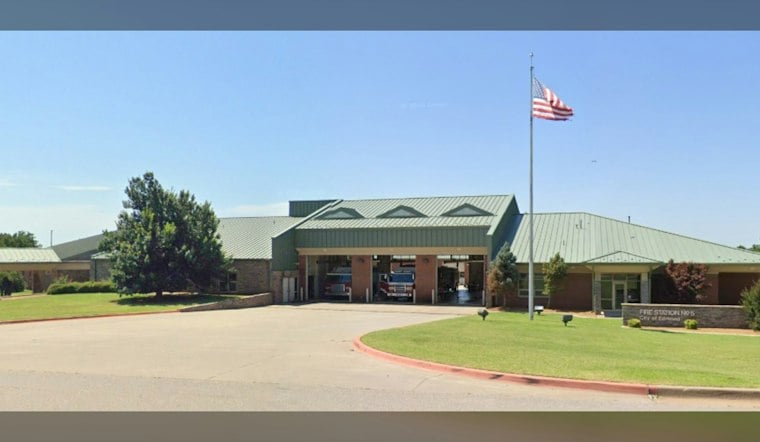
Edmond's fire department is pushing a community wildfire protection plan as new subdivisions creep into brushy, cedar-covered land east of Interstate 35, where firefighters say some streets and lots are still tough to reach in an emergency. The push comes as development moves into areas where it meets unmanaged vegetation, and officials have emphasized the need to prevent future tragedies.
Edmond fire officials are advocating for the plan specifically to address growing wildfire risks as the city expands east of Interstate 35, according to KOCO. The city covers 93 square miles, and nearly half of that area falls within what's known as the wildland-urban interface — the zone where homes and development meet unmanaged vegetation, per the same report. Newer developments are expanding directly into wildland-urban interface areas east of I-35, and firefighters currently lack access to some of those spots, a gap the city hopes electrical easements could help close by opening up routes into previously inaccessible terrain.
Jesse Benne, identified by KOCO as Edmond's chief of fire prevention, said it's time to take wildfire seriously. The seed report also attributes to Benne the claims that Oklahoma ranks seventh nationally for total acreage burned and fourth nationally for total wildfire frequency. Separately, in a report from Edmond Inbox, Benne — described there as assistant chief of prevention — said Edmond's wildfire risk is higher than 79% of the rest of the United States.
What the Plan Would Actually Do
The proposed plan includes clearing eastern red cedars, along with educating residents about wildfire prevention, according to KOCO's reporting. It also aims to help homes better withstand flames and improve firefighter access to hard-to-reach neighborhoods. A viable plan must recommend reducing structural ignitability and removing invasive species like eastern red cedars, and it has to be formulated jointly by local, municipal and state agencies, including the forestry service, per the same report.
Edmond Inbox's account from 38 days earlier described the wildfire protection plan as still a draft, with officials gathering public feedback before pursuing formal adoption. That outlet reported the draft is meant to create a framework for preventing fires, reducing potential damage and improving the city's response. Citizen Portal, reporting separately on a fire marshal's presentation of the draft to an Edmond commission, said the plan recommends collaborative forest restoration, community risk reduction, prescribed burning and possible adoption of wildfire-related building codes.
Accounts of what happened at that commission meeting diverge. KOCO's report states that Edmond's Planning Commission voted to recommend the plan to the City Council, while Edmond Inbox's account from the same period says the commission took no action and had no questions or comments. Hoodline could not determine from the available reporting how those two versions of events fit together.
Why City Hall Is Watching the East Side
The push toward a formal plan isn't happening in a vacuum. Edmond's growth east of I-35 is also the subject of the city's own long-range planning: the East Edmond 2050 Plan, a visioning document the City of Edmond describes as looking at the next several decades of growth specifically in that corridor. Fire officials say a formal wildfire protection plan could also help Edmond qualify for state and federal grants, giving the city financial incentive to move the draft forward.
National mapping work backs up the basic concept driving the proposal. The U.S. Geological Survey defines the wildland-urban interface as the area where urban development occurs in close proximity to wildland vegetation, and its national maps are built from more than 125 million building locations. That's the same basic hazard zone Edmond officials say now covers nearly half the city.
Edmond fire officials have framed the effort as proactive rather than reactive, emphasizing the need to start the conversation now to prevent future tragedies. Fires have also occurred in Hawaii, California and around Stillwater.




