

























































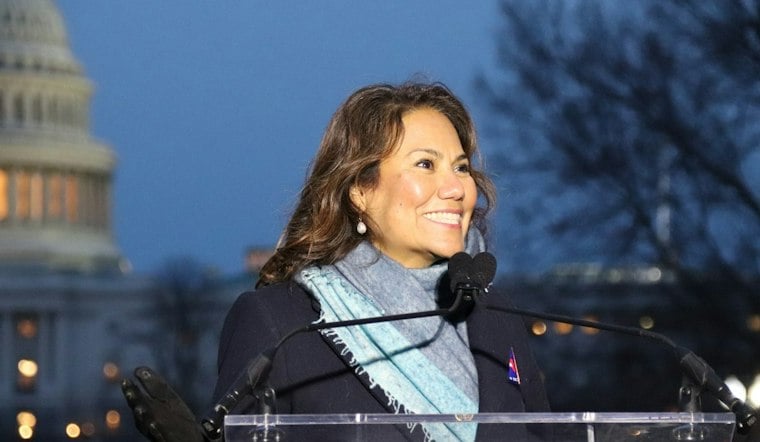
El Paso could lose its FBI field office designation entirely, with leadership of the office shifting to Albuquerque, more than 250 miles away. U.S. Rep. Veronica Escobar says she's demanding answers from the Bureau and pushing to stop it before it happens.
Escobar sent a letter to FBI Director Kash Patel saying the agency plans to eliminate the special agent in charge position at the El Paso Field Office, a move that would downgrade the office to a resident agency, according to KVIA. A resident agency is typically a smaller operation found in smaller cities and towns, managed by a supervisory special agent rather than the kind of leadership structure El Paso has had for generations, according to KTSM 9 News. The congresswoman said leadership of the office would instead shift to Albuquerque, per the same KVIA report.
A Century of History on the Line
The FBI's presence in El Paso dates back to 1908, and the office formally became a field office in 1911, meaning it has operated in some capacity for well over a century, per KTSM's reporting. The outlet notes that FBI field offices generally function as major metropolitan divisions responsible for investigations, crime-threat assessments and coordination with partner agencies, and that the Bureau maintains 55 field offices nationwide. El Paso is one of only two FBI field offices located along the entire southern border, a distinction Escobar says underscores the stakes of any downgrade.
Escobar escobar.house.gov sent a letter to Director Patel urging the FBI to reverse the decision, reinstate an El Paso special agent in charge, and preserve the office's field-office status, according to KVIA. Her office separately said the letter followed confirmation that the Bureau plans to eliminate the SAC position and place the El Paso office under different management, though that confirmation has not been corroborated by any public FBI statement.
Escobar's Concerns About Cross-Border Security
In her letter, Escobar said El Paso plays a critical role in addressing regional and national security challenges that require cross-border partnerships, according to KVIA. She warned that removing dedicated El Paso leadership could undermine relationships, weaken regional understanding, and disrupt ongoing investigations and operations, per KTSM's reporting. The congresswoman argued that local context and concerns should inform decisions about field-office leadership, since that leadership is responsible for building working relationships with federal partners, local law enforcement and elected officials.
She also raised a specific worry about geography: an Albuquerque-based special agent in charge splitting time between two regions may lack the knowledge and relationships needed to effectively serve El Paso, KTSM reports. Escobar warned the change could leave both El Paso and Albuquerque more vulnerable to threats and less responsive to organized crime. She questioned how the shift would affect new and ongoing operations and investigations in El Paso, and requested detailed information about the new chain of command, the responsibilities of a resident agency, and what resources would ultimately be allocated to the city.
A Deadline and a Comparison From Virginia
Escobar has asked for a member- and staff-level briefing explaining the decision and its implications, and requested a reply by Dec. 3 to coordinate scheduling, according to KVIA. KTSM reports it reached out to the FBI's El Paso Field Office for comment on the matter.
A similar restructuring has already played out elsewhere this year. The FBI consolidated its Norfolk Field Office under Richmond's supervision effective Oct. 1, according to The Virginian-Pilot, with Norfolk's special agent in charge, Dominique Evans, leaving her role at the end of September as the change took effect. Five former Norfolk FBI office leaders wrote in a guest column that the region's geography, including limited bridge and tunnel crossings, could hinder a Richmond-based response to a major crisis, noting that Hampton Roads is home to 18 military installations and that a single incident could paralyze transit routes. The same column argued that downgrading an office could change the perceived authority, immediacy and significance of its national-security relationships, pointing out that Norfolk had operated with nearly 10 investigative squads providing specialty response, training and interagency coordination.
Despite those warnings, Norfolk reportedly retained its local personnel, investigative teams and emergency-response capabilities after the consolidation, according to Yahoo News. That report said the FBI plans to establish a second counterintelligence squad in Norfolk and expand its violent-crime squad, with both staffing increases expected to be completed before the end of 2026, though the Bureau did not specify how many additional personnel would be assigned. Whether El Paso would see a comparable arrangement remains unknown, and it is not clear whether the FBI has responded to Escobar's letter or scheduled the briefing she requested.





