

























































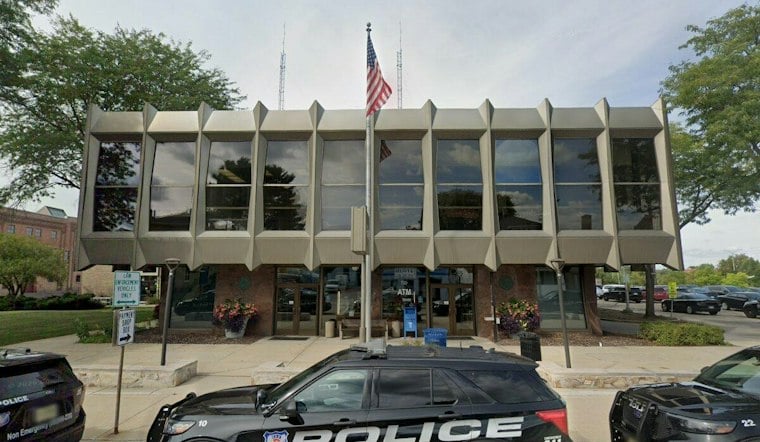
A 30-year-old former Racine police officer has been charged with second-degree sexual assault after prosecutors say he forced a tattoo artist he knew to have sex with him inside a Racine County tattoo parlor on August 22. Caleb McKenzie, who resigned from the department in September 2025 after six years on the force, faces up to 40 years in prison if convicted.
According to TMJ4 News, court records describe the tattoo artist telling investigators that McKenzie exposed himself after the tattoo session and said, “I need an extra service.” When she said no, prosecutors allege McKenzie forced her to have sex anyway. TMJ4 did not name the tattoo business or its location in Racine County in order to protect the woman's identity.
Court records cited in the report say the woman repeatedly told McKenzie to stop but did not yell or try to run, because he was much stronger than her and she knew he was a former police officer. McKenzie, for his part, told investigators the encounter was consensual and that the tattoo artist had initiated it, the same report states.
Bond Raised After Initial Release
McKenzie was initially given a $5,000 signature bond following his arrest, but that was later replaced with $20,000 cash bail after the Racine County District Attorney's Office asked the court commissioner to reconsider the terms of his release. As of the report, court records show McKenzie has not entered a plea, and he is due back in court for a preliminary hearing in January.
A Brady Flag Before the Charge
The sexual assault case is not McKenzie's only brush with scrutiny. Racine County District Attorney Patricia Hanson said he was added to the county's Brady list in January for a separate incident involving alleged dishonesty, and the station's report notes Hanson identified McKenzie as one of three former Racine Police Department officers currently on that list. The Racine Police Department declined to explain what McKenzie was allegedly untruthful about when asked about the matter, and per the same report, Wisconsin Department of Justice records show McKenzie resigned before an internal investigation into that separate incident was completed.
A Brady list, named for a U.S. Supreme Court case, flags officers with alleged credibility concerns, including dishonesty, bias, or crimes, so that prosecutors can disclose the information to defense attorneys. The TMJ4 investigation found McKenzie is one of roughly 140 officers who are Brady-flagged across 10 counties in southeastern Wisconsin.
A Patchwork System Statewide
McKenzie's case lands amid broader reporting on how inconsistently Wisconsin tracks officer credibility problems. Records requests to all 72 counties turned up more than 360 names in 31 counties, while 17 counties did not provide the requested information at all, according to Wisconsin Watch. That outlet also reported that the state has no uniform system for tracking Brady information, with methods and transparency varying widely from one district attorney's office to the next — and that law enforcement lobbyists have been working behind the scenes to make it easier for officers to be removed from such lists.
Other counties illustrate just how uneven the record-keeping can be. In Milwaukee County, one TMJ4 report put the Brady list at 191 total officers, while another TMJ4 report described the county releasing a list of 192 officers; the Milwaukee list skews toward entries for criminal charges or convictions, which TMJ4 found make up about 80 percent of cases there. Dane County's list, by comparison, contained 25 names, four of whom were still employed with agencies in the county, according to WMTV 15 News. Wisconsin Watch's reporting identified Colorado as the only state to have built a statewide system for tracking these records.





