

























































Fairfield’s Representative Town Meeting approved funding this week for an Adaptive Recreation Center and Miracle Field, along with new artificial-turf fields at Fairfield Warde and Fairfield Ludlowe high schools. The decisions advance long-planned recreation projects but leave questions about the center’s future operating costs and the health concerns raised over turf materials.
Colony Street Site Gets $6.3 Million Green Light
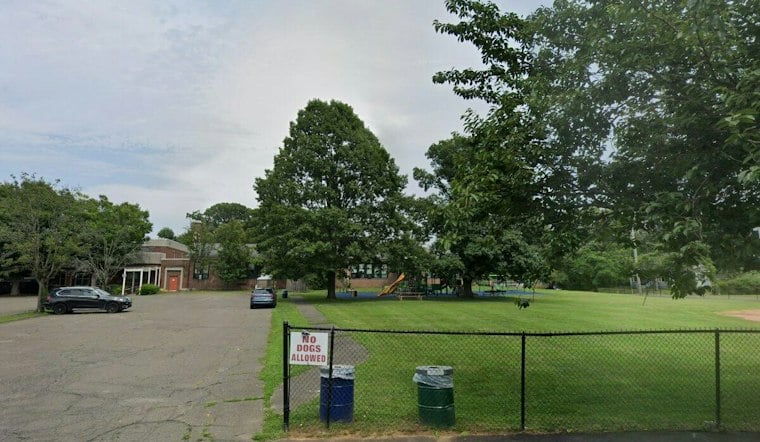
The RTM approved about $6.3 million for the Adaptive Recreation Center and Miracle Field by voice vote, according to CT Insider. The facilities are planned for the 5.05-acre property at 224 Colony St., formerly known as the Pilot House. Miracle Fields use flat surfaces designed to produce more even ball bounces and accommodate athletes who use wheelchairs or have visual impairments, the outlet reported.
The Colony Street plans have developed over several years. Fairfield received $2.5 million from the State Bond Commission for the adaptive recreation center, previously reported by CT Insider. The proposed facility is nearly 6,000 square feet and would replace the existing Pilot House building. In March, the town’s design team was still working with the Parks and Recreation Department on the program and final design, according to information posted on fairfieldct.gov. By September, the building had gone out to bid, with a contract award expected around November and a target completion by May, Citizen Portal reported. That report also noted that several Fairfield playgrounds already have adaptive elements.
Members Debate Costs and Community Value
Operating costs were a key concern in the center debate. Chris Carroll and other RTM members questioned the long-term expenses, including staffing; Carroll called it irresponsible not to detail those future costs. He nevertheless voted for the allocation, saying facilities of this kind matter to parents of children with special needs, according to CT Insider’s account.
Supporters emphasized the projects’ potential community benefits. Eric Treschuk described them as an outstanding addition to Fairfield, while Dru Georgiadis called the proposed facility a “one-of-a-kind facility” that could become a “real gem.” Sharon Pistilli said people with disabilities often have fewer opportunities for socializing and recreation and characterized the investment as among the most important uses of public funds. First Selectperson Christine Vitale said the center could offer job-training opportunities and possibly generate revenue if officials eventually rent out its gym.
Turf Fields at Warde and Ludlowe Spark Health Debate
The RTM also approved funding for artificial-turf fields at the two high schools: $2.675 million for Warde and about $2.9 million for Ludlowe, according to CT Insider. A separate Patch report described the Warde project as a $2.3 million undertaking approved through the Board of Education’s 10-year capital planning program, with construction expected to be completed by midyear 2027. The available reports give different Warde cost figures, and the information here does not resolve the discrepancy.
Turf prompted debate about health risks and whether grass would be preferable. Representative Peter Ratzki, D-10, said he could not in good conscience vote for the fields because of concerns that artificial-turf materials could harm athletes. Some members also questioned whether the town should invest in grass instead. Angelus Papageorge, the school system’s executive director of operations, said grass-field plans would need to provide proper drainage and argued that grass would limit sports use because it takes longer to recover after heavy rain.
Representative Michelle McCabe, D-4, said the RTM could still request a study of what a comprehensive shift from turf to grass would involve; she voted for artificial turf because such a study had not been done. Fairfield’s plans also have a precedent in Vernon, where a nearly $1 million Miracle Field project broke ground in 2023. The barrier-free baseball field has synthetic turf, wheelchair-accessible dugouts and ADA-compliant bathrooms. Organizers raised roughly $700,000, with funding also including a $175,000 town contribution and a $150,000 donation from the Cal Ripken Sr. Foundation.
What research says about turf and access
A Connecticut Department of Public Health assessment found no inhalation health concern at the outdoor crumb-rubber fields it tested. The agency’s finding applies to those fields and that exposure route; it does not establish a conclusion for every turf material or type of exposure, according to the Connecticut Department of Public Health. Accessibility needs extend beyond Fairfield. The state’s 2023 Municipal Officials Survey found accessibility issues or inadequacies at 17% of local outdoor recreation facilities; 44% of respondents said they could not currently meet the needs of people with disabilities regarding access to those facilities. Those are statewide, not Fairfield-specific, findings in Connecticut DEEP’s statewide outdoor recreation plan. Separately, the Town of Fairfield announced in 2023 that it planned to install an ADA-compliant outdoor fitness center beside the Bigelow Center for Senior Activities using grant funds.




