

























































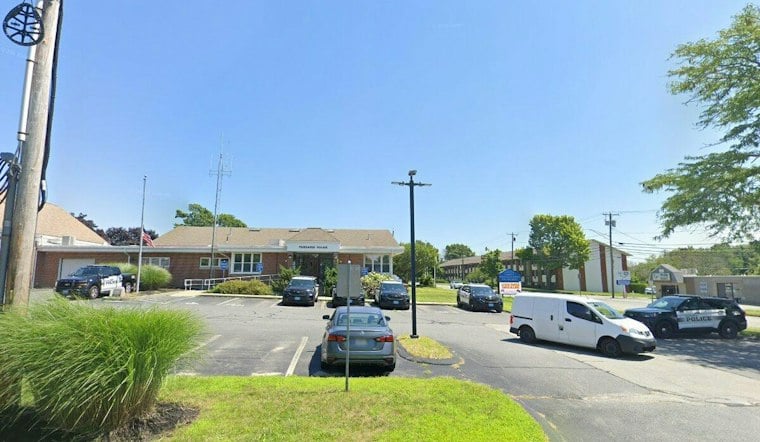
Fairhaven Town Meeting voted 92-77 to approve a citizen petition banning future use of automated license plate readers, a measure that would also force the removal of six Flock Safety cameras currently used by the town's police department. But the vote doesn't settle anything just yet — the proposed bylaw now heads to the Massachusetts attorney general's office, which has the power to approve it, reject it, or strike parts of it down.
What the Bylaw Would Actually Do
The measure, detailed in reporting from The New Bedford Light, would bar the town from purchasing, installing or operating license plate reader systems going forward, prohibit renewal of Fairhaven's existing Flock contracts, and require the six cameras now deployed by Fairhaven police to come down. Under the bylaw's own terms, any cameras would need to be removed within 30 days of their contracts expiring. Chief Daniel Dorgan has said those agreements run through September 2028.
Resident Joseph Russell submitted the citizen petition and told Town Meeting that residents — not police alone — should decide whether Fairhaven keeps using the technology. He argued that the cameras record every vehicle that passes regardless of whether anyone is suspected of a crime, and warned that oversight of the system depends entirely on the honesty of the officers logging searches. “A log only protects anyone if what gets typed into it is true,” Russell said, according to the same report.
A Contested Vote and a Deeper Legal Fight
The outcome wasn't immediately clear. An initial show of hands indicated the article had been defeated, before seven Town Meeting members objected to that result, triggering the recount that ultimately produced the 92-77 tally. Massachusetts state representative and Fairhaven's elected town moderator Mark Sylvia told Town Meeting the vote carries weight well beyond Fairhaven. “This vote is setting precedent,” Sylvia said, adding that the attorney general could approve the bylaw outright, reject it, or find only some provisions enforceable.
Town Meeting member Cameron Durant raised a separate, thornier question: whether Town Meeting even has the authority to restrict equipment that falls under the police chief's own management. “I believe article 9 raises a serious legal question, not simply about the license plate readers, but about the division of authority within our town government,” Durant said. Attorney Heather White echoed that concern, noting that a so-called strong police chief statute gives chiefs authority over departmental property, and said the statute may allow Dorgan to keep using the existing cameras even if the ban takes effect. White added that no court or state authority has definitively ruled on whether a town can adopt this kind of ban in the first place.
Police Defend the Cameras' Track Record
Chief Dorgan has pushed back against the Light's broader investigation into how his department uses the cameras, calling it “a little misleading.” He argued the cameras have helped identify suspects in an illegal firearm case and in a fatal road-rage incident, and pointed to one example in which a camera captured a truck carrying 55-gallon drums along Sconticut Neck Road, then recorded the same truck passing again later without them. Dorgan has maintained that a camera hit is only ever a starting point. “The camera reading the plate is a lead. It's not proof,” he said, adding that a match alone is never enough to make an arrest, since the cameras cannot identify who is actually behind the wheel.
About half of the department's 38 sworn officers have been trained to use the Flock system, per the Light. Dorgan has also confirmed that one officer logged more than 750 searches as “welfare checks” between January and August, which the chief said was done to protect the integrity of ongoing narcotics investigations rather than to obscure them. Dorgan said the searches involved multiple vehicles.
A Statewide Pattern of Pushback
Fairhaven's vote lands amid a broader reckoning over the technology. The ACLU of Massachusetts, Data for Justice Project reports that more than 80 police departments across the state have contracted with Flock Safety, spending over $2 million in taxpayer funds on the systems over three years. Nationally, NPR has reported that at least 30 localities, including Flagstaff, Cambridge, Eugene and Santa Cruz, deactivated their Flock cameras or canceled contracts starting in 2025.
Other communities are weighing similar moves right now. Providence's council committee has unanimously advanced a citywide ALPR ban that still needs two full council votes before reaching the mayor's desk, according to WPRI, which also reported that six Rhode Island municipalities have recently terminated their own Flock contracts. In Wisconsin, Oshkosh's Common Council voted 5-2 to restrict ALPR use for criminal investigations and general surveillance, per WBAY, while Fountain Hills, Arizona, passed an outright ban on Flock and similar readers in a 5-2 vote, as reported by AZFamily. Not every town has gone that far — Springfield's Public Safety Committee considered a purchase-and-use ban but declined to send it to the full city council, according to WWLP.
Underlying the debate is a question of how much good the cameras actually do. A 2026 working paper examining fixed Flock deployments across 216 law enforcement agencies, per CrimRxiv, found an 11% drop in motor vehicle theft after deployment, alongside a 15.9% rise in arrest clearance rates — though the paper cautioned that the clearance increase had already begun before cameras went in, undercutting a direct causal link. The same paper found only a modest improvement in recovery times for vehicles that were recovered, with no aggregate improvement across all stolen vehicles.
What Comes Next
Under Massachusetts General Laws, Chapter 40, Section 32, a town bylaw generally cannot take effect until the attorney general either approves it or lets 90 days pass without acting after the town clerk submits it, a review window Dorgan referenced simply by saying, “We'll see what the attorney general will do.” Fairhaven's own investigation into search practices found that a vague “investigation” label accounted for more than 70% of the department's Flock searches through 2025, and that officers ran more than 3,600 searches this year through mid-September alone — trading data with agencies in other states just as those states pull from Fairhaven's network. During a single month, the Light's investigation found, more than 3,000 agencies across 44 states searched Fairhaven's system. Resident Kevin Grant told Town Meeting that the potential for abuse outweighs whatever crime-solving benefit the cameras provide, while resident James Anderson warned that advances in artificial intelligence could eventually make Flock's stored data vulnerable. Flock records are automatically deleted after seven days unless an investigation requires they be kept longer — a safeguard that will matter little to Fairhaven if the attorney general's office simply lets the town's ban stand, or decides the chief's authority over his own equipment overrides it.





