

























































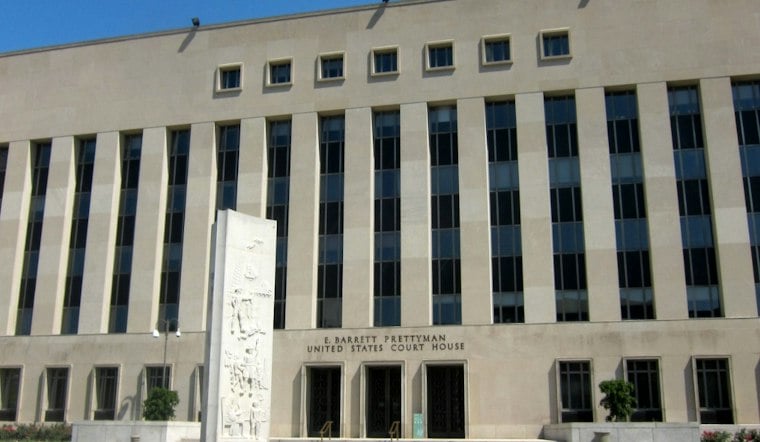
A federal appeals court has temporarily paused a Drug Enforcement Administration policy that was set to restrict which businesses could supply Utah’s medical cannabis pharmacies. The pause came shortly before a November 29 deadline that could have split the state’s supply chain based on whether companies met the DEA’s initial registration deadlines.
The U.S. Court of Appeals for the District of Columbia Circuit issued an administrative stay, according to Marijuana Moment. The court said the stay “should not be construed in any way as a ruling on the merits” of the legal challenges. The underlying dispute over the DEA’s authority therefore remains unresolved. As The Salt Lake Tribune reported, Utah Attorney General Derek Brown has joined cannabis companies seeking to block the rules permanently.
The immediate dispute concerns a DEA directive setting November 29 as the date medical cannabis businesses would have to begin sourcing only from companies that had registered, or applied on time, with the federal government. The directive followed the DEA’s April 2026 announcement that it would reclassify medical marijuana from Schedule I to Schedule III. Utah established its own medical cannabis system after voters approved the program in 2018.
What the stay means for Utah patients
The administrative stay pauses the challenged DEA policy, not the legal dispute over the agency’s registration requirements; the court expressly said it was not ruling on the merits. Utah’s state program remains the framework for patients: according to the Utah Department of Health and Human Services Center for Medical Cannabis, patients must be registered in the Electronic Verification System and may buy medical cannabis at any licensed pharmacy in the state.
A Narrow Application Window Left Businesses Scrambling
The deadlines did not line up: pharmacies had a June deadline to apply for DEA registration, while the application window for producers and manufacturers opened October 5, more than three months later, according to Marijuana Moment. Seven of Utah’s 12 cultivators and marijuana product makers missed the first deadline, as did two of the state’s 14 pharmacies.
The DEA’s October position would have restricted business between companies that missed the initial deadline. As a result, producers that had not applied could have sold to only two pharmacies, while pharmacies that applied on time could have bought from only five producers. The court’s stay paused that policy before the November 29 deadline.
The Salt Lake Tribune reported that Dragonfly Wellness, a Salt Lake City-based dispensary operating since 2019, said the policy would have prevented sales at its Salt Lake City and Price pharmacies. The company’s chief growth officer, Narith Pahn, said Dragonfly and other producers had been unable to apply for production permission until the DEA reopened its application portal.
Pharmacies Say They Would Keep Serving Patients Regardless
Pahn told The Salt Lake Tribune that thousands of patients with debilitating medical conditions depend on Dragonfly. He said the company did not plan to halt sales while awaiting federal approval and was prepared to continue operating despite the potential business risk. Other Utah cannabis companies also said they would keep serving patients rather than stop sales under the new directives.
The Salt Lake Tribune also reported that Beehive Farmacy CEO Bijan Sakaki had applied for a retail permit but missed the production permit deadline. Sakaki said the DEA had not clarified how it would enforce the policy or what it would mean for businesses like his. He planned to continue operating as before and said Utah’s opposition to the rules reassured him.
States And Industry Push Back In Court
Standard Wellness sued in federal court in Washington, D.C., seeking to block the changes before they took full effect. The company and other plaintiffs argue the DEA rules would disrupt supply chains and state programs. On November 24, Utah Attorney General Derek Brown and attorneys general from North Dakota and West Virginia filed a brief supporting Standard Wellness’s request for an injunction. They argue the DEA exceeded its authority and imposed arbitrary restrictions that would divide licensed businesses and disrupt Utah’s market. North Dakota, Utah and West Virginia had also filed an earlier brief supporting cannabis companies in the broader case, according to Marijuana Moment.
Brandon Forsyth, director of Utah's medical cannabis division, said state and federal officials were engaged in seeking a more flexible solution to protect Utah patients and operators, though he said the DEA had shown no sign of modifying its approach. Narith Pahn said he appreciated the attorney general's office for supporting Utah businesses in the fight.
The U.S. Justice Department has pushed back hard against the industry's arguments, contending that Congress authorized the federal government to regulate marijuana and that businesses are responsible for failing to apply when given the opportunity. The department also contends that blocking the DEA rule would interfere with law enforcement and public protection. Separately, the DEA has argued in related filings that the challenges to its new rules are without merit and should be denied, according to a separate Marijuana Moment report.
A Broader Fight Playing Out Beyond Utah
Utah's standoff is part of a wider legal battle. Four vertically integrated Pennsylvania medical marijuana companies asked the D.C. Circuit on November 19 to block the DEA guidance, arguing it could force them to overhaul their supply chains within weeks, close facilities and lay off employees, according to MJBizDaily. A day earlier, Standard Wellness Utah, Verde Americano in Arizona and NW Confections OK in Oklahoma had filed a similar challenge, and the court has since consolidated the two cases.
The DEA’s first registrations, issued October 30, went only to dispensaries in seven states, not Utah. Under the rule published in the Federal Register in April 2026, businesses that transfer marijuana to patients, including dispensaries, must register with the DEA as “practitioners” under federal drug law. The agency could reject pending applications from businesses it finds in violation of the rule, a decision that could affect their state licenses. For now, pharmacies awaiting federal registration review may continue operating under state guidelines.
Evan Vickers, Utah's incoming state Senate president and a traditional pharmacist who was largely responsible for refining the state's medical marijuana program after the 2018 ballot initiative, said the DEA's action places Utah pharmacies in a new arena. The DEA has generally not enforced federal laws violated by medical marijuana businesses in the past, a fact that has shaped how operators like Dragonfly and Beehive have approached the uncertainty. The agency's push follows an executive order on medical marijuana and cannabidiol research that President Donald Trump issued in December 2025.
The D.C. Circuit’s order temporarily pauses the policy, but it does not resolve whether the DEA can impose the challenged requirements. The court is still expected to hear arguments from industry groups and states seeking to block the regulations permanently. Until then, the effect of the federal rules on Utah’s medical cannabis supply chain remains uncertain.





