

























































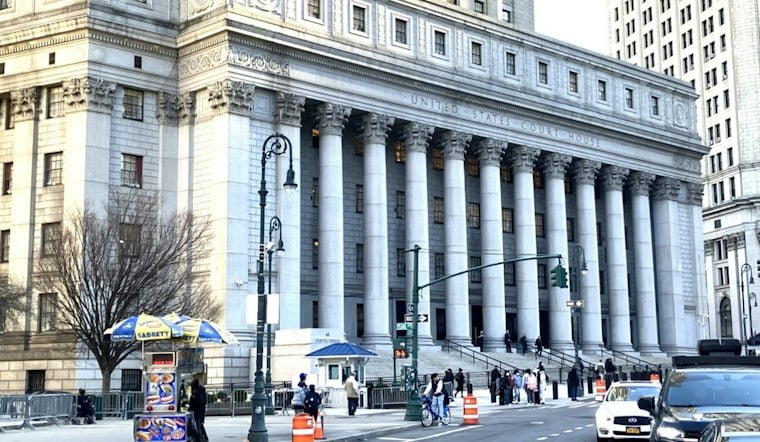
A federal court has denied a request from 15 New York sheriffs who sought to block the state's ban on 287(g) agreements, the arrangements that let local law enforcement assist U.S. Immigration and Customs Enforcement with federal immigration duties. New York Attorney General Letitia James' office announced the ruling Wednesday, framing it as a win for the state's effort to keep local police out of federal immigration enforcement.
The announcement came from the official account of NY AG James
, which posted that a federal court had denied the sheriffs' request to block the ban. The office argued that local law enforcement should be focused on keeping New Yorkers safe rather than, in its words, carrying out the Trump administration's mass deportation agenda, and said it would continue defending the state's laws in court.
How the Sheriffs Ended Up in Court
The legal fight traces back to the Local Cops, Local Crimes Act, which took effect on August 25, 2026, and effectively nullified every 287(g) agreement in New York, according to The American Prospect. The statute, codified under the state's laws, bars local governments, law enforcement agencies, correctional facilities and their agents from entering into, modifying, renewing, remaining in, or extending any agreement under section 287(g) of the Immigration and Nationality Act, according to the New York State Senate's published text of the law.
NPR reported that 15 sheriffs sued the state over the law banning local agencies from signing cooperation deals with ICE, and that they later filed an emergency motion seeking to block New York from voiding agreements already in place. The American Prospect's reporting adds detail to that count, noting that 14 county sheriff's departments joined Rensselaer County in the federal lawsuit. Court filings cited by the outlet show Judge Mae D'Agostino issued an order to show cause on August 27, expediting her review of the sheriffs' injunction request.
A Partnership Boom, Then a Reversal
The dispute reflects how quickly 287(g) participation grew in New York before the law took hold. The American Prospect reported that Rensselaer County was the only county in the state with a 287(g) agreement at the start of President Trump's second term, after which a dozen other law enforcement agencies across New York formed their own partnerships. News From The States reported that 12 agencies ultimately held 287(g) agreements and that seven had housed ICE detainees in recent years.
Once the Local Cops, Local Crimes Act took effect, that expansion reversed quickly. NPR reported that a dozen of the New York sheriffs who had signed ICE cooperation deals had their agreements dissolved or planned to dissolve them, as the new law requires, even as the 15 plaintiffs pressed their case in federal court.
Other States Are Fighting Similar Battles
New York is not alone in confronting sheriffs who want to preserve ICE partnerships. NPR reported that 17 sheriffs in Maryland sued their state over a comparable 287(g) ban, a fight playing out on a similar timeline to New York's. In Virginia, the outcome diverged: a federal judge temporarily blocked the state from enforcing key provisions of a law restricting local cooperation with federal immigration authorities, allowing existing 287(g) agreements to continue while the legal challenge plays out, according to the Virginia Mercury. That outlet noted the four-page order did not resolve the lawsuit or permanently strike down the statute, leaving Virginia's law in legal limbo even as its sheriffs keep their agreements for now.
New York's outcome this week points the opposite direction, at least for the moment. The attorney general's office cast the court's denial as validation of the state's approach, with James' account reiterating that the office intends to keep defending the law as the underlying case continues.



