

























































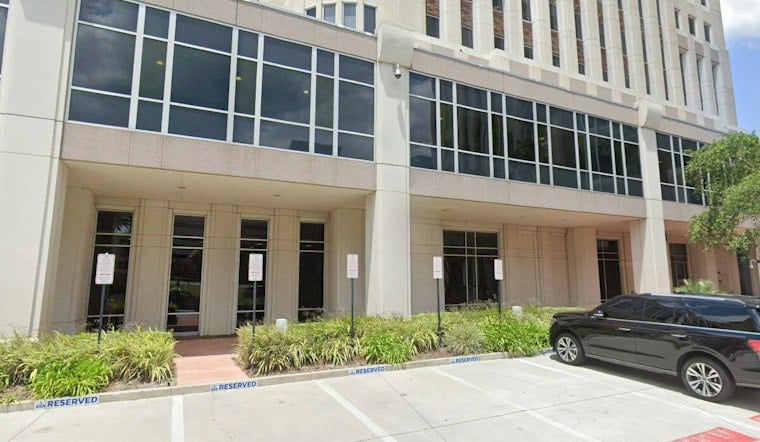
Orlando's municipal utility had already written Stanton Unit 1 a near-term exit. In its April ten-year plan, the Orlando Utilities Commission said it anticipated placing the coal unit into extended cold shutdown by the end of May.
That timetable did not survive the summer. On June 4, the U.S. Department of Energy ordered OUC to keep Unit 1 at the Stanton Energy Center available to operate through September 1, and the utility said it would comply. OUC's notice says the directive was issued under Section 202(c) of the Federal Power Act.
What the Directive Actually Required
The order was narrower than a permanent reprieve and broader than a suggestion. It directed OUC to ensure Unit 1 remained available to operate, beginning June 4 and running through September 1. While it was in effect, OUC said, the utility would not be able to place the unit into extended cold shutdown.
Available is not the same word as retired, converted, or even running at full tilt. The documented requirement was readiness: the unit had to be there if the grid needed it, for a window that closed on the first of September. Planning documents had treated the cold shutdown as anticipated, not as a completed act.
OUC's 2026 plan describes Stanton Unit 1 as a 453-megawatt net coal-fired facility. Utility Dive, covering the same June 4 order, described it as a 465-megawatt coal unit. Either way, it is a large machine for a municipal system, and the federal instruction was to keep that machine on the available list rather than in the shutdown the utility had penciled in for late May.
A Conversion Date That Already Slipped
The May shutdown was not the first timetable attached to this unit. OUC's integrated resource plan, adopted in late 2020 and restated in the 2026 ten-year site plan filed with the Florida Public Service Commission, called for converting Stanton Unit 1 to natural gas no later than 2025. The same plan set a later date for the other coal unit: Stanton Unit 2, no later than 2027.
By April 2026, the paperwork had shifted. The ten-year plan still anticipated converting Unit 2 so it could operate only on natural gas by the end of 2027. For Unit 1, the stated anticipation was extended cold shutdown by the end of May 2026, not a completed gas conversion. Neither outcome is established as finished. The documents describe plans. The June order then blocked the shutdown path for the months it covered.
OUC describes natural gas as the bridge in its move from coal toward renewable sources. On its generation page, the utility says air sampling has shown Stanton Energy Center emissions are among the lowest of any coal-fired plant in the nation. That is the utility's account of the plant it operates, sitting next to a planning record in which the cleaner-burning conversion for Unit 1 was supposed to have happened no later than last year.
Less Output, and a Disputed Monthly Bill
The unit was already producing less power before the emergency order landed. Utility Dive reported that Stanton Unit 1 generated 296,856 megawatt-hours in the first quarter of 2026, down 32 percent from 436,796 megawatt-hours in the same quarter of 2025. A plant headed for cold shutdown does not have to be silent to be winding down. It can simply matter less to the daily mix, until a federal order says it still has to be available.
What that availability costs is contested, and the contest is not settled by a utility spreadsheet in this record. An Environmental Defense Fund analysis cited by Earthjustice estimated that Stanton Unit 1 costs $6.2 million each month to run. The same analysis said keeping the plant open could add more than $20 to monthly electricity bills if those costs were assigned solely to OUC customers. That "if" does a lot of work. It is a scenario in which local ratepayers carry the whole tab, not a finding that bills have already moved by that amount.
Utility Dive reported that OUC did not respond to questions about its estimated compliance costs.
The Same Emergency Tool, Far From Orlando
Stanton was not a one-off use of Section 202(c). CBS Colorado reported that in 2025 the Department of Energy directed a dozen coal-fired plants in 10 states to remain operational. Colorado's Craig Generating Station Unit 1 had been scheduled to retire on December 31, 2025, under the state's Regional Haze Implementation Plan. DOE renewed an emergency order requiring that unit to keep generating through the end of the year.
The pattern has continued into this month. On November 13, DOE issued a seventh emergency order directing operators to keep Michigan's J.H. Campbell coal plant online beyond its planned retirement, according to Utility Dive. The latest order covers another 90 days for the 1,420-megawatt plant, into mid-February. The Environmental Defense Fund, cited in that reporting, said emergency orders had repeatedly kept six coal plants operating beyond retirement since May 2025, and that those plants had accumulated around $600 million in losses.
Those are national tallies and other utilities' plants, not a ledger for Stanton. They do show how the same statutory tool has been used to hold coal capacity past dates that states and owners had already set. Craig had a haze-plan retirement date. Campbell has now been ordered back for a seventh time. Orlando had a cold-shutdown date at the end of May and, before that, a 2025 gas-conversion date that the 2026 plan no longer describes as done.
Where the Paper Trail Stops
For Orlando, the firmly documented federal window is the one OUC published: available to operate from June 4 through September 1, and no extended cold shutdown while that directive was in effect. The June order's own terms ended more than two months ago. What any later Stanton directive requires, if one is in force, is not established in the utility notice or the planning filings used here.
What those filings do establish is a unit still described as coal-fired, a sister unit still aimed at gas-only operation by the end of 2027, and a 2020 promise to convert Unit 1 no later than 2025 that gave way to a 2026 anticipation of cold shutdown. The shutdown was then postponed through September 1 by an emergency order the municipal utility said it would follow.
The practical question for OUC customers is no longer whether May 2026 arrived on the calendar. It is whether the exit written into successive plans is a date the plant actually meets, or another date a federal availability order can move. The $6.2 million monthly estimate and the more-than-$20 bill scenario remain advocacy figures; the latter is conditioned on who pays. Utility Dive reported that OUC did not respond to questions about estimated compliance costs. The generation drop in the first quarter is a measured one: nearly a third less output than a year earlier, from a unit the government still wanted on call.



