

























































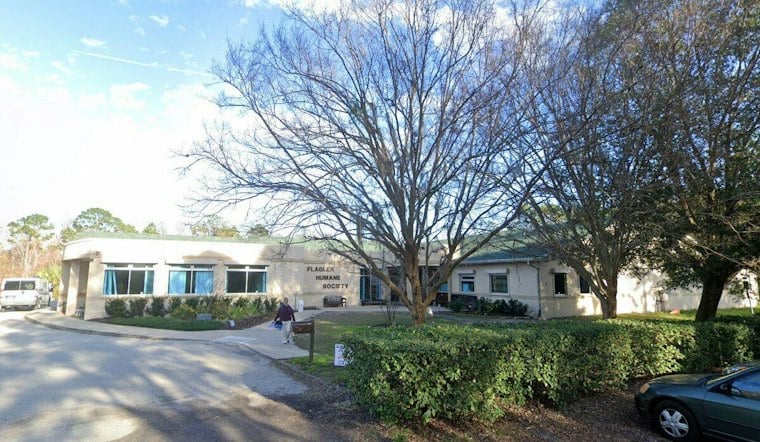
Flagler County commissioners approved a one-year, $350,000 contract with the Flagler Humane Society on Monday evening, Nov. 16, replacing a per-animal fee with a fixed monthly payment and writing the shelter's discretion over additional services into the deal.
The approval, reported by FlaglerLive, came the night before Theresa Pontieri was scheduled to be sworn in. The Palm Coast council member elected to the County Commission opposed the contract. The board that passed it rejected her push for a six-month term and an audit.
A Fixed Fee, Paid by the Month
The new contract drops the per-animal bill for a fixed fee, paid in monthly installments of $29,167. Under the previous county contract, the Humane Society charged $132 per impounded animal, with shelter housing costs based on a five-day stray/holding period.
That rate was already the fight. Before Monday's approval, the News-Journal reported, the shelter proposed an approximately $300 per-animal fee for fiscal year 2026-27, with some additional costs, while its executive director estimated care at about $500 an animal. The society has also said the actual cost of caring for an animal can exceed $500, Observer Local News reported.
A fixed sum changes who carries a busy year. The county's base payment does not rise automatically when more strays come in, and the society does not get the per-animal increase it had proposed. The parties have already said the number will not last. FlaglerLive reported that the county and the society acknowledged $350,000 is insufficient to cover surrendered and stray services for the full year. The society is continuing to shelter those animals anyway.
What the Shelter Must Still Take
The society is responsible for regular and emergency services. That duty has a list, and the list is not the same thing as every animal a resident might want picked up.
The contract requires the society to shelter animals involved in neglect investigations, dogs involved in dangerous-dog investigations or prosecutions, and animals collected from incarcerated people. It must also shelter animals belonging to people displaced during a declared emergency. The county reimburses that displacement cost separately.
A collection of 25 or more animals in one event is an extraordinary circumstance, and that cost is reimbursed separately too. Those payments sit apart from the $350,000 base. A large collection, or animals belonging to people displaced in a declared emergency, is not folded into the monthly installment.
Additional services are where the contract gets blunt. Contract language reported by FlaglerLive states that "FHS retains absolute operational discretion to accept or cease the provision of Additional Services," tied to county funding thresholds. The society may decline intake, impoundment or capture. Required sheltering can continue while the everyday decision to take an animal, hold it or go get it is the shelter's call once that threshold is the issue.
Older Contracts, Different Totals
The relationship has been priced in pieces. A 2024 agreement set an annual payment of $208,349 for animal-control services and allowed up to $90,000 a year for sheltering and spay-neuter costs. It was written to run from Oct. 1, 2024, through Sept. 30, 2027, with two additional two-year renewals available by agreement.
Either party could terminate that agreement without cause on 120 days' written notice.
Commissioner Kim Carney described a single figure. She said the county paid the society $335,000 in 2025, and she cast the new $350,000 as exceeding that amount by a small margin. FlaglerLive has also reported the contract cost at $237,000 in 2021, and said it had increased 28 percent since.
The county has a number for leaving the arrangement. The same reporting put the cost of a county-run animal-control operation at $420,000 in the first year and an average of $333,000 a year after that. Monday's contract is above that estimated average and below the startup figure. The operation remains the society's.
Files the County Does Not Get
The monthly invoice will not include an individual case file. The contract calls for aggregate data instead, while the society keeps individual animal case files internally. It may deny access to records that are not public. A commissioner reading the bill will see totals, not the history of a particular animal.
County Attorney Michael Rodriguez distinguished public records from records the society may keep private under state law, and the commission modified the contract language to clarify the definition of a public record. Adam Mengel said the society may deny access especially to non-financial records.
Some records stay open. The county and the public can access records related to dangerous-dog investigations and other emergency services. A look at the building is slower. County officials must give at least 24 hours' advance notice for a shelter tour.
Florida law already assigns the request, if not the file cabinet. For service contracts entered into or amended on or after July 1, 2016, state statute requires the contract to include provisions that the contractor comply with public-records requirements. A request to inspect or copy public records relating to the contract has to be made directly to the public agency.
Pontieri recommended giving the county authority to require an audit, called for an independent audit, and recommended removing the society's discretion to determine what constitutes a public record. She also wanted the agreement limited to six months. The commission did not agree to the audit requirement or the six-month term. She has said she witnessed disturbing animal-control-related events that she planned to discuss publicly later.
An Exit Ramp and a Joint Operation
Chair Leann Pennington said, "we can pull out in 90 days if we have to." A six-month contract did not get the votes. A 90-day withdrawal, as she described it, did not need one. The 2024 agreement's without-cause notice ran 120 days.
Two weeks before Monday, there was no new contract. Observer Local News reported that the county had proposed cuts to Humane Society animal-control services as talks stalled. At the Nov. 2 meeting, commissioners unanimously approved a $20,963 budget transfer for outstanding expenses from the previous fiscal year and did not approve a fiscal year 2026-27 contract.
Carney said she looked forward to considering additional services. She also said joint animal-control discussions are aimed at meeting community needs. Ray Royer, whom Pontieri defeated for the commission seat, criticized the conflict over who is responsible for animal care.
Palm Coast's City Council seats a new majority on Nov. 17, including Ray Stevens, Darlene Shelley and Tony Amaral. Pontieri was scheduled to be sworn in that afternoon, after a vote she opposed and could not cast. The commission she was set to join had already chosen a one-year payment and declined her audit, with its chair describing a 90-day way out. The other path on the table is a city-county animal-control operation largely independent of the Humane Society. Until that exists, the funding threshold decides whether intake, impoundment or capture continues.



