

























































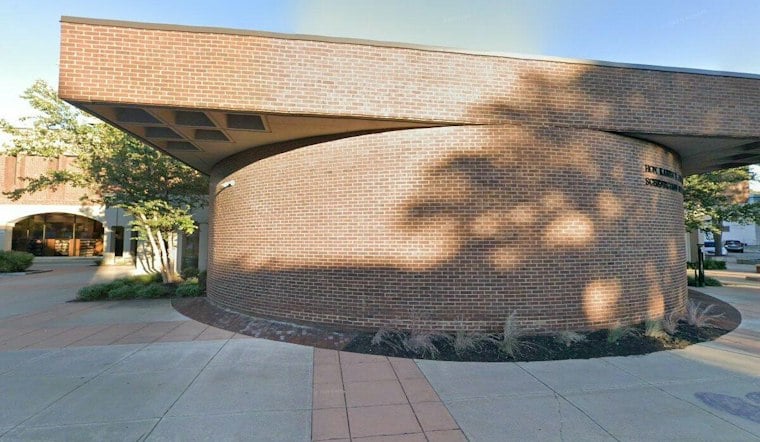
Lisa Monfils spent years as a Head Start teacher before financial hardship left her homeless at the start of the decade, and now she relies on the Hon. Karen B. Johnson Library in downtown Schenectady for the basic resources most people take for granted. She is 56, and alongside her partner Lee Shanty, she has become one of the faces of a debate that has consumed city politics this fall, after Schenectady County asked unhoused people sleeping near the library to relocate during a weekend deep cleaning.
The request, confirmed by Schenectady County Legislature Chair Gary Hughes, came amid growing friction over how the library handles people who use it for shelter from the elements and resources ranging from bathrooms to internet access, according to WAMC. Hughes said at the time that no arrests were made, and none were planned, as reported by the Daily Gazette. But accounts of what people were actually told diverge sharply, and that gap has become its own flashpoint in an already heated city council race.
Conflicting Accounts of an Arrest Threat
An unhoused woman identified as Christine told the Daily Gazette she was warned she could be arrested for sleeping outside the library, and that the warning left her “terrified.” City Hall, according to the seed reporting behind this story, initially threatened arrest for anyone sleeping at the library again, though the county has since said that was never the plan. A county spokesperson told WAMC that any threats of arrest may have resulted from miscommunication or misunderstanding on both sides, and separately said no one was arrested as part of the relocation process.
Schenectady Police Behavioral Health Navigator Lauren Pierce called the arrest threat inhumane. The effort to temporarily remove homeless people from the library sparked protest, with All of Us co-founder Jamaica Miles telling the Daily Gazette that people sleeping outside the library had said services weren't accessible enough to them. The county has pointed to its engagement of the Outreach Hub, a multi-agency system meant to connect unhoused people with wrap-around services and help them secure permanent housing, per the Daily Gazette.
Finding the Library After a Summer at the Cemetery
Monfils and Shanty began staying at the Vale Cemetery pavilion in the summer of 2026 before police directed them toward the library as a more appropriate place to be. The downtown library offers indoor refuge, toilets, handwashing facilities, reading materials and Wi-Fi, which the couple uses to call and text since they cannot afford phone plans. The Hub allowed Monfils and Shanty to remain as long as their conduct wasn't problematic, and during the day they could use the back area of the library without leaving their belongings outside, where a photo taken September 30 showed belongings tucked into a bike rack outside the main library.
Monfils has taken on something of a caretaking role among the people who gather there. She has helped other library visitors find places to hide their belongings, and she and Shanty regularly pick up trash around the building. She told WAMC that she once washed her hair with a hose behind a church and still felt equal in worth to the well-dressed patrons walking into the library beside her. Inside, she reads books on crafts, furniture restyling, wildlife, food and music, while Shanty reads Architectural Digest.
A Political Flashpoint in a City Council Race
The library's homeless presence has become a central issue in this year's sole Schenectady City Council race, a contest involving Justin Chaires, Rachael Ward and Sarojanie Ibrahim, according to WAMC. Ward has pointed to a sharp rise in calls for service at the main library, from 105 in 2024 to 245 in 2026, as evidence of worsening conditions, per the Times Union. Schenectady Police Chief Brian Whipple has pushed back on that framing, cautioning that the raw number of calls for service alone should not be interpreted as an accurate measure of crime, disorder or safety concerns at the library, since the same report notes that calls can include activity unrelated to crime.
The life of the downtown library went on around the debate; the city held a Greek festival and hosted young orchestra musicians during the same period people were temporarily moved from outside the building. Both the Albany and Troy library systems have responded to homelessness in the past, the Times Union reported, though the specific steps those systems took were not detailed. In Schenectady, First United Methodist Church opened earlier than usual on the Sunday people were temporarily asked to leave the library grounds, offering a room where people could sit, charge a phone or sleep, the Daily Gazette reported.
A Shelter System Already Stretched Thin
The pressure on the library reflects a broader strain on the county's shelter capacity. The county's social services commissioner has said the Code Blue shelter is usually full by 5 p.m., forcing officials to outsource to other available options, according to the Daily Gazette. The Times Union reported that the City Mission planned to open 30 additional shelter beds on November 1 to coincide with Code Blue, while the Daily Gazette separately reported the county expected to add 30 Code Blue beds at First Presbyterian Church; it is not clear from available reporting whether these refer to the same beds or separate efforts.
Homelessness figures for the county tell a similarly complicated story depending on the measure used. The 2024 Point-in-Time count recorded 362 people experiencing homelessness in Schenectady County, a 15.8% decrease from the 430 counted in 2023, according to the Schenectady Community Action Program. The Times Union, citing a state comptroller's office report, separately noted that homelessness in the county increased 41.7% between January 2022 and January 2024. The two figures describe different time periods and measures and should not be read as a single trend line.
For now, Monfils and Shanty remain fixtures at the library that gave them somewhere to go when the cemetery pavilion no longer could. Their presence, and the policy fight swirling around it, is detailed further in WAMC Northeast Public Radio's reporting on the standoff over who belongs at Schenectady's downtown library, and under what terms.



