

























































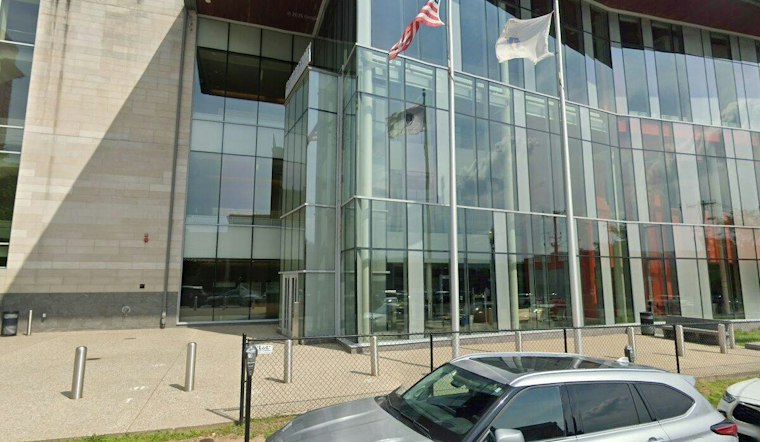
Nearly $10 million in federal grant funding is coming to Franklin County and the North Quabbin region to expand addiction treatment, reentry services and overdose response, with roughly $6.2 million going to the regional Opioid Task Force and $3.75 million heading to the Franklin County Sheriff's Office. Franklin County leaders, including Interim Sheriff Lori Streeter and representatives from U.S. Rep. Jim McGovern's and Sen. Ed Markey's offices, gathered Friday at the Franklin County Justice Center in Greenfield to mark the announcement.
The funding comes as regional overdose numbers have held stubbornly flat even as the state's figures have improved. According to the Greenfield Recorder, the Opioid Task Force of Franklin County and the North Quabbin Region's two grants come from the Health Resources and Services Administration's Rural Communities Opioid Response Program (RCORP) and the First Responders—Comprehensive Addiction and Recovery Act (FR-CARA). The RCORP grant will fund a four-year initiative called RESTORE, short for Rural Engagement and Substance-Use Treatment through Outreach, Recovery and Education, at $750,000 annually. The FR-CARA grant, also running four years, will send $800,000 annually to an initiative called CONNECT — the Community Outreach, Network, Navigation, Engagement and Care Team.
What RESTORE and CONNECT Are Meant to Fix
RESTORE is designed to support coordinated care, community outreach, data-informed planning and workforce development, and to strengthen connections among community partners, according to the Opioid Task Force. The program specifically targets systemic barriers rural residents face in getting addiction treatment, including transportation access and provider shortages. CONNECT, meanwhile, focuses on strengthening overdose response and follow-up, supporting overdose prevention education and the distribution and training of overdose-reversal medications.
FR-CARA funding is notably scarce: only 37 communities nationwide received it, the task force noted, putting Franklin County and the North Quabbin region in select company. Other Massachusetts recipients of FR-CARA funding include Northampton, Fall River and the Massachusetts Department of Public Health, per the same report.
A New Push Inside the County Jail
The Franklin County Sheriff's Office received its own award: a five-year, $3.75 million Rural Jail-to-Community MOUD and Recovery Continuity Program grant. The effort, carried out in partnership with The Salasin Project, aims to expand access to medication for opioid use disorder for incarcerated people at the Franklin County Jail and House of Correction. The Sheriff's Office also plans to use the grant to strengthen reentry services and care coordination for inmates both inside the House of Correction and after their release, the outlet reported.
One of the main goals across all three grant programs is building a connected system of care so people facing addiction do not fall through the cracks between the organizations meant to help them, according to the report. At the Greenfield gathering, Aaron Saunders said the grants are not the finish line, calling it a good day to celebrate. Allison Van der Velden said the funding will facilitate and accelerate the work of the task force and its partners.
Local Officials Frame the Stakes
Heather Bialecki-Canning said the work requires everyone and affects everyone. Lori Streeter described the grants as a shared investment across the region, crediting staff and community partners for making them possible. Debra McLaughlin said the task force's work honors people lost to overdose. U.S. Rep. Jim McGovern called the day extraordinary and said the region's work is a model for the rest of the state, while Jesse Lederman, reading a statement from Senator Markey's office, said the task force sets a standard for addressing substance use disorder.
The urgency behind those remarks is reflected in the region's overdose data. Franklin County and the North Quabbin region have recorded 12 opioid-related overdose deaths in both 2024 and 2025 — a plateau that stands out against a statewide drop, according to separate Greenfield Recorder reporting. Massachusetts recorded 978 opioid-related overdose deaths in 2025, down roughly 27% from 2024. The region's 12 deaths in 2025 do represent a 75% decline from a peak of 48 deaths in 2021, even as the number has stalled the past two years.
Accounts differ on exactly how long the region has been counting its toll. One Greenfield Recorder report states that since the Opioid Task Force formed in September 2013, 304 people in Franklin County and the North Quabbin region have died from opioid overdose, while an earlier Greenfield Recorder report put the same 304-death figure at since 2012. Since 2021, roughly 6,000 naloxone kits have been distributed across Franklin County through about 50 public pickup locations, and in 2024, 87.5% of opioid-related overdose deaths underwent postmortem toxicology screening, with fentanyl detected in 88.6% of those screenings.
Building on Earlier Federal Support
This is not the task force's first federal award. It previously received a one-time $300,000 RCORP grant for The Archway Program, a joint effort between the CONNECT program and the HUB Project aimed at reducing fatal and nonfatal opioid overdoses among unhoused people across 27 rural communities in Franklin and Worcester counties. The Archway Program is one of 38 initiatives funded nationally through the Rural Communities Opioid Response Program.
Housing instability remains tightly linked to the region's addiction crisis. The 2024 Point-in-Time Count found 252 people in Franklin County sleeping in shelters or outside, more than double the 104 counted in January 2023. Other efforts in the area include a mobile, home-based treatment service established by Greenfield-based Baystate Franklin Medical Center and the Franklin County and North Quabbin Bridge Clinic.



