

























































Two Atlanta men are facing federal fraud charges after prosecutors say they impersonated a Detroit trucking company to obtain fuel cards, then used them to buy gas across 23 states without ever paying the bill. The unpaid balance, including accrued interest, reached $760,320.19, according to the indictment against Zachary Walker and Mario Bailey.
A federal grand jury indicted Walker and Bailey on Sept. 23 on charges of trafficking in an unauthorized access device, wire fraud, and mail fraud, according to MLive. Both men are listed as Atlanta residents. The indictment outlines how Bailey allegedly assumed the identity of the owner of Voyager Express Inc., a Detroit-based interstate motor carrier and logistics provider, in August 2025.
How the Scheme Allegedly Unfolded
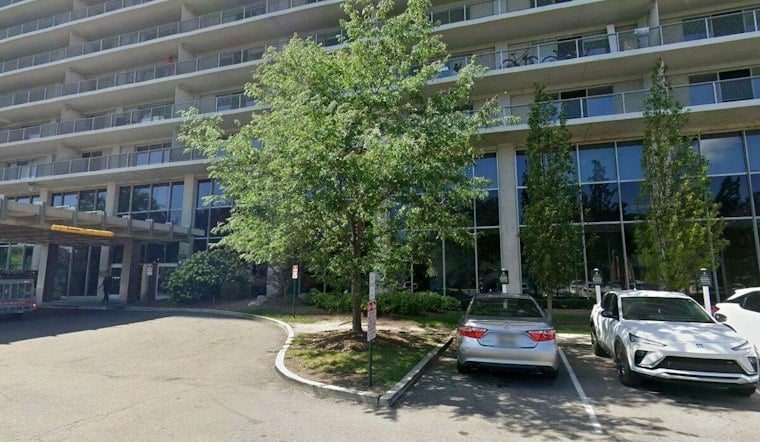
Court documents described in the MLive report say Walker rented a unit at the Jeffersonian Apartments at 9000 E. Jefferson Ave. in Detroit in July 2025. The following month, Bailey allegedly submitted a credit application to Coyne Oil & Propane, the Mount Pleasant-based fuel supplier, using a fake email address containing “voyagerexpress” that the real company never authorized or knew about.
Coyne Oil approved that credit application in September 2025 and mailed eight fuel cards to Walker's Detroit apartment, per the indictment detailed by the station's report. Apartment staff later granted Bailey access to Walker's unit at Walker's request, and Bailey retrieved the fuel cards from the apartment on Sept. 13, 2025, according to the same account.
Fuel Purchases Spanned Nearly Two Dozen States
Once in hand, the cards were used to buy fuel in 23 states through January, the indictment states. Coyne Oil never received payment for a single purchase, and the unpaid balance, swollen by accrued interest, ballooned to $760,320.19.
Walker made his initial appearance before U.S. District Magistrate Judge Patricia T. Morris in Bay City on Tuesday. He asked Morris for a court-appointed attorney, and the judge released him on a $10,000 unsecured bond. As conditions of that bond, Walker must relinquish his passport and limit his travel to the northern district of Georgia, the eastern district of Michigan, and points in between. Walker's and Bailey's next court dates remain pending, the outlet reported.
What the Charges Could Mean
The charges carry steep potential penalties. Trafficking in an unauthorized access device is a 10-year felony, while both wire fraud and mail fraud each carry a 20-year felony exposure, according to the indictment cited by MLive.
Fuel-Card Fraud Schemes Elsewhere in Trucking
The Michigan case echoes other fuel-card fraud schemes that have surfaced in the trucking industry this year. In West Virginia, truck driver Jeffrey Jeffers admitted to generating $510,465.19 in fraudulent fuel-card charges between November 2022 and July 2024 by creating fictitious service stations on online payment-processing platforms and routing fraudulent transactions through their merchant accounts, according to FreightWaves. Prosecutors in that case noted that Jeffers' normal delivery routes almost never required refueling away from his employer's distribution facility.
Jeffers pleaded guilty to one count of wire fraud in the U.S. District Court for the Southern District of West Virginia in July, and a judge scheduled his sentencing for Nov. 9. He faces up to 20 years in prison, a fine of up to $250,000, and owes $510,465.19 in restitution, per FreightWaves.
A separate case out of California illustrates a different flavor of trucking-related financial fraud. Hasan Korkmaz, owner and operator of San Diego Logistics Group Inc., pleaded guilty in federal court on Oct. 15 to all 18 counts of an indictment charging him with bank fraud, money laundering, and aggravated identity theft, according to Commercial Carrier Journal. Korkmaz admitted to running a credit-card bust-out scheme in 2022 and 2023 that caused more than $2.1 million in losses to two banks, using the fraudulent cards to incur charges at various businesses including his own trucking company. His sentencing hearing is scheduled for Jan. 8, 2027.



