

























































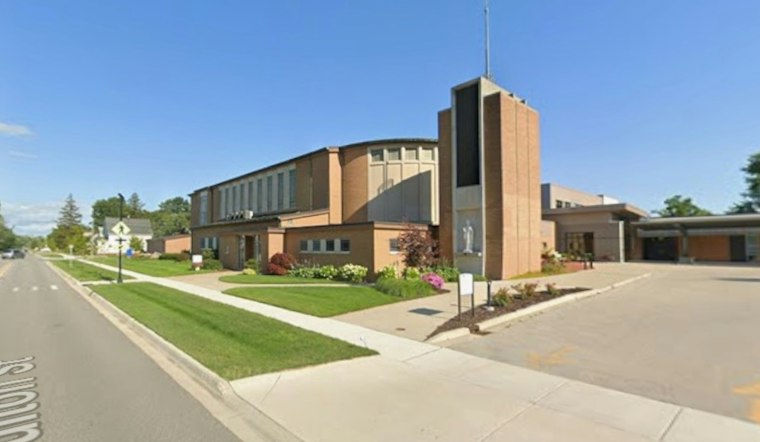
Hundreds of people were expected to pack the Community Center at St. Patrick's Church in Grand Haven Thursday for soup, a raffle and a cause that organizers say has grown more urgent this year. Homeless Prevention Partners hoped to raise $50,000 at its 23rd annual Soup for All fundraiser, money the group says is needed now more than ever as requests for help pile up faster than usual.
The nonprofit has already helped more than 60 families this year, well above the 40 to 50 it typically assists annually, according to FOX 17 West Michigan News. “We would help probably 40 to 50 families per year,” Homeless Prevention Partners President Stacey Ruwe said. “This year we're already over 60, and I have an inbox full of requests right now.” In just the three weeks before Thursday's event, the organization says it provided more than $10,000 in assistance.
That kind of help tends to come in modest, targeted amounts rather than large lump sums. The group typically does not give more than about $2,000 to any one family, and it generally does not hand out cash at all — instead making payments directly toward rent and utility bills, and connecting households with budget counseling, food assistance and other community resources, per the same outlet's reporting.
A Low-Overhead Operation With No Office
Homeless Prevention Partners has no brick-and-mortar office, running instead as a lean, volunteer-driven operation built around preventing eviction and utility shutoffs before they happen. Ruwe said the group keeps overhead to a minimum. “We pride ourselves on only having about 3% overhead annually, which means 97% of what we raise goes right back into the people here, right in our community,” she said, as the station's report notes. The organization began as simply the Soup for All event 23 years ago before incorporating as its own nonprofit in 2020.
Families who qualify are often just one bad break from falling behind — a missed paycheck, a medical bill, or a car that needs an unexpected repair. The sudden expense can snowball into missed rent or utility payments, which is the gap the nonprofit tries to close before a family loses housing altogether.
Soup, Raffle Tickets and 18 Restaurants Pitching In
The fundraiser itself leaned on the whole community to pull it off. Eighteen local restaurants donated soup for the event, with other businesses chipping in bread, cookies and coffee, according to the Grand Haven Tribune. The 23rd annual Soup for All ran from 11:30 a.m. to 1 p.m. Thursday, with $15 admission covering an all-you-can-eat soup buffet; schools and corporate to-go orders were also available for $15, as the Grand Haven Tribune reported.
A raffle ran alongside the meal, with $10 tickets offering a chance to win up to $2,000, and tickets were also sold online for people who couldn't make it in person. In a typical year, Soup for All — the nonprofit's largest annual fundraiser — serves about 400 people in person plus a couple hundred to-go orders, though this year's final turnout and total funds raised were not immediately available.
Housing Instability Shows Up in Grand Haven Classrooms
The strain on local families is also visible in schools. Grand Haven Area Public Schools has students affected by housing instability, and the district's McKinney-Vento liaison, Sarah Elliott, has watched the numbers climb over her roughly nine years in the role — from about 94 identified students when she started to more than 300 at any given time in recent years. Elliott has said newly homeless families can suddenly find themselves without basic necessities while not qualifying for government assistance, and that affected students may be doubled up with others, staying in hotels, vehicles or campgrounds.
Federal protections under the McKinney-Vento Homeless Assistance Act are meant to soften that disruption. Students covered by the law have the right to remain in their school of origin or enroll immediately in a new district after a move, and Grand Haven's own guidance for families spells out what that looks like locally. A district handout for families, published by Grand Haven Area Public Schools, states that children experiencing homelessness may enroll without proof of residency, immunization records, school records or other typical documents, and that eligible students may choose between the school where they currently live and the one they attended before becoming homeless, when feasible. The district also provides transportation support, including gas cards or vans, to help students stay enrolled at a stable school despite a housing move.
A Statewide Pattern Behind the Local Numbers
Grand Haven's rising school caseload tracks with a broader statewide trend. Michigan reported 35,495 students experiencing homelessness during the 2023-24 school year, about 2.5% of the state's 1,429,895 students, and an increase of 2,733 from the 32,762 counted the year before, according to MLive. The outlet's data also showed Muskegon Public Schools among the ten Michigan districts with the most students experiencing homelessness that year, and 25,813 Michigan students counted as doubled up with another family or individual.
National reporting suggests even those figures likely understate the problem. A Center for Public Integrity analysis of federal education data, cited by Chalkbeat, estimated that roughly 300,000 students entitled to protections for homeless students nationwide were never identified by their school districts, with about 2,400 districts reporting zero homeless students despite financial-need levels that made those figures improbable. Families seeking assistance in West Michigan can submit a request directly through the Homeless Prevention Partners website.




