

























































Gwinnett County is running out of room to grow, with just 9% of its land still undeveloped, and that scarcity is pushing county planners toward an unlikely source of real estate: church property. Officials say they plan to take a more targeted approach in 2027 to partnering with congregations that have unused land, as the county looks for new ways to add affordable housing.
The idea surfaced publicly on Nov. 2 at a town hall on hidden homelessness hosted by District 3 Commissioner Jasper Watkins III, according to WSB-TV. A leader with Family Promise of Gwinnett County asked whether anyone was reaching out to churches sitting on undeveloped land, prompting a candid answer from the county's side of the table.
Eric Osakowski, who is affiliated with Gwinnett County, acknowledged that no coordinated outreach has happened yet, saying, “So there hasn’t been a consolidated effort.” He indicated that kind of organized push toward churches might be roughly a year away. Even so, the county's report notes that several churches already reached out to planners on their own in 2026, and those conversations are still ongoing.
A More Targeted Push Coming in 2027
Matt Elder, deputy director of Gwinnett County Planning and Development, said talks with interested churches are continuing and that the county intends to be more deliberate about the outreach next year. The station's report quotes him describing the shift as “stepping it up in 2027 in terms of a more targeted approach.” Elder also said the county wants to keep evolving its overall housing strategy and keep searching for different kinds of solutions.
The push comes as a separate county homelessness task force works toward its own set of proposals. Per the same account, that task force expects to send its recommendations to commissioners by the middle of 2027.
One concrete example already in motion: the county rezoned an old athletic field behind a former United Methodist church on Jimmy Carter Boulevard to make way for possible apartments, and it has applied for a low-income housing tax credit tied to that site, according to Elder's account in the report. The exact status of that tax-credit application has not been disclosed.
Land Squeeze Has Been Building for Years
The shrinking supply of open land isn't a new concern for county planners. A Gwinnett County Open Space and Greenway Master Plan has previously described large open properties along the I-85 corridor, and near the I-85 and Highway 316 split, as limited. That scarcity has pushed the county to experiment elsewhere, including an $18 million Affordable Housing Development Fund launched in 2024 that drew 26 funding requests totaling $75 million, according to the Atlanta Real Estate Forum. The county ultimately funded 12 of those projects, expected to deliver 780 new affordable units, and separately updated its development ordinance to allow tiny homes, accessory dwelling units and cottages by removing minimum square-footage limits.
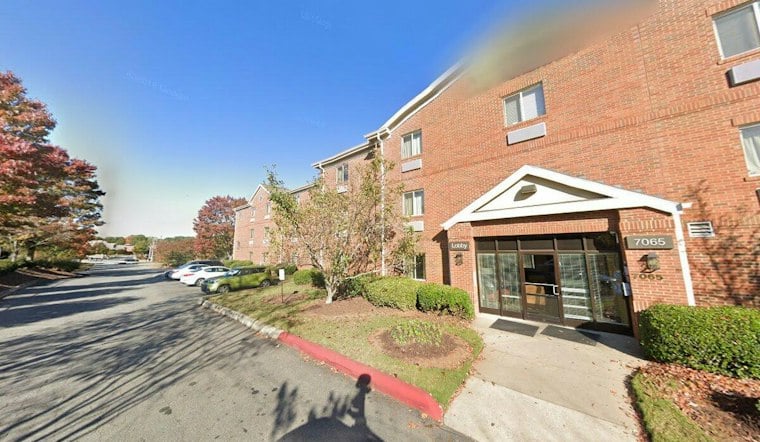
Gwinnett has also already shown it can repurpose unconventional buildings for housing. The Gwinnett Housing Corporation converted a former extended-stay hotel in Peachtree Corners into apartments for seniors and young adults, completing the hotel-to-apartment conversion in under two years. That $14.5 million redevelopment of the old Spring Swallow Lodge, detailed in a separate WSB-TV report, will include 45 units for young adults ages 18 to 24 and 28 units for seniors age 55 and older at what's now called Crest Point Village.
Karen Ramsey of the Gwinnett Housing Corporation, reflecting on what it takes to pull off that kind of project, said simply, “it takes a village” — a line that applies just as much to any future church-land partnership, which would similarly require cooperation among county planners, congregations, nonprofits and developers.
How Other Cities Are Already Doing It
Gwinnett wouldn't be the first place to turn to church land for housing. In Houston, Trinity East United Methodist Church broke ground in July on 90 units of senior housing for residents 55 and older, built on land across the street from the church, according to CNN; the project is expected to be up and running next year. CNN also reported that nine states have passed or considered so-called YIGBY legislation designed to make it easier for religious institutions to build housing on their own property, citing research from the NYU Furman Center.
Houston has gone further still, identifying roughly 414 acres of church and other institutional land as potential housing sites, enough, a city councilmember said, for as many as 1,000 single-family homes or up to 7,200 apartments, according to KPRC 2 / Click2Houston. One Houston nonprofit, Boynton Houston CDC, received 13 lots from the city through its affordable housing development program, per that report.
In Washington, D.C., Emory United Methodist Church spent 11 years developing its property before opening 99 units of fully affordable housing in 2019, CNN reported. And in Atlanta, the Capitol Hill Neighborhood Development Corporation teamed with Radiant Development Partners to propose Trinity Central Flats, a 218-unit affordable housing complex, with at least 20 of those units reserved for people needing permanent shelter through Partners for Home, according to the Georgia Bulletin.
For Gwinnett, those examples offer a glimpse of what a more organized church-land strategy might look like once the county's targeted 2027 outreach gets underway — though for now, the conversations with individual congregations remain a work in progress.





