

























































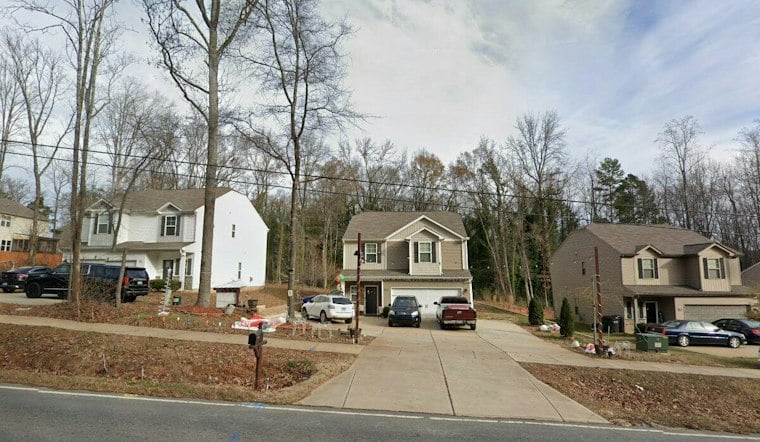
Twenty-two duplex homes are rising on Robinson Church Road in east Charlotte, part of a Habitat for Humanity project aimed at families who have been squeezed out of the region's housing market. The development, called Zion Hill, sits on a 4.96-acre site and is designed specifically for homebuyers earning below the area's median income.
According to WCNC, construction on the homes was already underway as of this week. Habitat for Humanity of the Charlotte Region says the development is located at 6806 Robinson Church Road and will feature 22 new-construction duplex homes, per the organization's project page. Each home is planned to offer between 1,251 and 1,410 square feet of living space, with three to four bedrooms and two to two-and-a-half bathrooms, the nonprofit says. Habitat reports that horizontal construction at the site began in summer 2026.
City Review Describes Project as 11 Duplexes, 22 Units
A City of Charlotte environmental-review notice offers a slightly different count, describing Zion Hill as 11 three- and four-bedroom duplexes totaling 22 units, matching the overall unit count Habitat cites. The same notice says the project is proposed to serve families with household incomes below 80% of the Area Median Income, and confirms the 4.96-acre site size. The city determined the project would have no significant impact on the human environment and that a full environmental impact statement was not required, according to the filing. The notice also indicated the city planned to authorize Habitat to submit a HUD funding-release request on or about March 10, 2026, with public comments on the record due by that same date.
Habitat's homebuyer program lays out who can apply for homes like these. The organization says applicants must earn at least $45,000 annually and no more than 80% of HUD's Area Median Income, and that the path from application to move-in typically takes 12 to 24 months depending on a buyer's readiness and home availability.
Charlotte's Affordability Squeeze
Zion Hill arrives as homeownership grows further out of reach for many Charlotte-area families. A 2025 housing report from UNC Charlotte's Belk College of Business found that just 1.88% of homes sold in the region last year went for under $150,000, and only 17.8% sold for less than $300,000. The region's median home price climbed to $443,850 in September 2025, up 3.24% from a year earlier, according to the same report. Researchers calculated that a family would need $146,280 in annual income just to afford a median-priced house in 2025.
The report also found that the Charlotte metro area added 28,951 housing units in 2024, outpacing household growth by roughly 4,114 units, yet construction slowdowns from 2022 and 2023 are expected to curb deliveries in 2026 and beyond. Separately, a 2024 figure cited by QCity Metro found more than 75% of Charlotte-area households could not afford a median-priced home of $415,000.
Part of a Broader Pattern of Habitat Projects
Zion Hill isn't Habitat Charlotte Region's only recent push into denser, affordable homeownership. The nonprofit's Cultivate Homes development in East Charlotte includes 17 affordable townhomes built on 2.5 acres donated by a local family, land that QCity Metro's report notes would have supported only 8 to 10 detached single-family homes under a conventional layout. Habitat is also working with developer True Homes on Duke's Ridge, a West Charlotte community planned to include 56 for-sale townhomes, four of which will be set aside for qualified families through Habitat's homeownership program.
Together, the projects reflect a strategy of building more units on less land to stretch affordability further across the region. For Zion Hill, that means 22 homes replacing what might otherwise have been a handful of market-rate houses on Robinson Church Road, aimed squarely at buyers the current market has largely left behind.




