

























































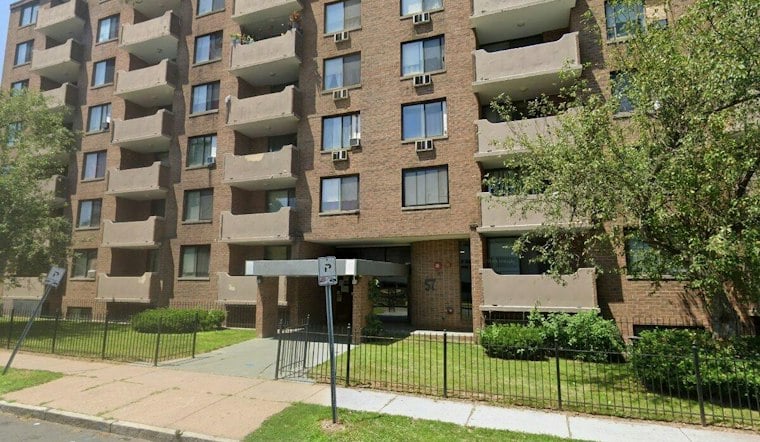
Hartford officials have asked the State's Attorney's Office to pursue criminal charges against Shlomo “Sam” Sarot, the landlord of a Sumner Street apartment building where tenants describe mice droppings on the floor, roaches climbing out of kitchen sinks, and a roof that collapsed from water damage. The city says it has already fined Sarot, ordered him to make repairs and revoked his rental license, but officials contend those measures have not fixed conditions inside the building.
According to The Connecticut Mirror, the city's filing now sits with the State's Attorney's Office, which has to review Hartford's referral and decide whether to pursue legal action. Sarot bought the Sumner Street building in July 2025 and owns four other properties in Hartford, according to reporting from WFSB. Mayor Arunan Arulampalam has said the Sumner Street building had problems from the start.
Mice, Roaches and a Roof That Gave Out
Four tenants showed WFSB apartments with mouse droppings and traps on the floors, roaches in kitchen cabinets, and even a mouse found inside a closet. One tenant told the station, “We got mice droppings on the floor,” while another said worsening conditions made it impossible to store food in cabinets, leading to frequent DoorDash orders because a roach had come out of their sink.
The mayor's office said it had documented code violations including substandard heating and rodent and insect infestations, as reported by NBC Connecticut. The building's elevator has been broken since summer 2026, and tenants have also reported a sewage leak and flooding, per WTNH's coverage of the case.
Roof Collapse Displaced Dozens
Over the July 4 weekend this year, water damage caused the building's roof to collapse, according to the mayor's account relayed by The Connecticut Mirror, leaving the fifth, sixth and seventh floors uninhabitable. WFSB reported the building now has three uninhabitable top floors, and about 80% of tenants have moved out, leaving the property roughly 20% occupied.
WTNH reported that the city declared a structural emergency across those floors and that 33 units housing 40 adults and eight children were displaced. The city helped pay for tenants on those floors to relocate to other housing, the same outlet's earlier report noted. Sources differ on the building's exact height, with WTNH describing it as seven stories and the Hartford Business Journal describing the Sumner House as eight stories.
City Says Its Earlier Enforcement Fell Short
Hartford had already fined Sarot, ordered him to make changes, and revoked his rental license before escalating to a referral for prosecution, according to WFSB's reporting. The city has said its prior enforcement actions had not worked. Sources also give conflicting timing on the license suspension: The Connecticut Mirror reported the city suspended Sarot's rental license in October, while Patch had reported in mid-July that Hartford had already suspended the landlord's rental license.
Arulampalam did not mince words describing the situation. “The acts and the negligence we've seen in this building are criminal and the impacts on the residents are criminal,” he said, according to WFSB's reporting. He added, “If you fail to acknowledge basic humanity and dignity of our residents, the city will come after you, hold you accountable to the max allowable extent of the law including criminal prosecution.”
Judith Rothschild, with the Hartford Department of Development Services, said Sarot had made some effort to treat the building for pests, but that activity continued and the infestation had not been eliminated. Arulampalam also alleged that Sarot was trying to raise rents for some tenants even as he bought additional properties in Hartford while problems at the Sumner Street building continued.
Tenants Fear Retaliation, Landlord Pushes Back
Several tenants told WFSB they fear retaliation from Sarot, including rent increases or eviction, if they speak to the press or show their faces. One tenant said, “He can't evict me for having an opinion or using freedom of speech. It is what it is.”
Sarot told WFSB the mayor's announcement was shocking and that he was working to fix the issues, and he said he disagreed that he had ignored the problems. In a statement, Sarot said, “We provided the city with our treatment plan and a schedule for professional pest control every two weeks, covering apartments and common areas. The conditions you describe indicate that more work is needed, and we remain committed to resolving the infestation.” He told The Connecticut Mirror that efforts to replace the broken elevator have begun, though he does not yet have a firm completion date.
What Charges Could Mean
State building code violations carry a maximum penalty of $1,000 in fines and up to six months in prison if a landlord is convicted, according to WFSB's reporting on the referral. Connecticut's statutory text, cited by the Connecticut General Assembly, specifies a fine of not less than $200 nor more than $1,000, imprisonment of up to six months, or both — though the evidence reviewed does not establish what, if anything, the State's Attorney's Office will decide in Sarot's case.
Part of a Broader Hartford Crackdown
This is not the first time Hartford has pushed for criminal prosecution of a landlord. In 2024, Arulampalam recommended GreyHill Group, owner of 105 Sherbrooke Avenue, to the State's Attorney's Office for prosecution after more than 100 tenants there were displaced by a fire, according to WFSB's earlier reporting. The city said at the time it was working on arrest warrant applications tied to alleged violations of housing ordinances under Hartford's Municipal Code and the Municipal Powers Act.
City officials have pointed to broader enforcement gains alongside these individual cases. Rothschild told Connecticut Public that notices of violation rose 31% from 2024 to 2025, that the number of property owners receiving citations tripled, and that the city saw a 20% drop in 311 calls over the prior couple of years, which she tied to stepped-up enforcement and the rental licensing program. Residents in other buildings tied to Hartford's expanded problem-landlord list have complained of similar issues, including rodent and insect infestations, mold and unreliable heat, per the same Connecticut Public report.
The enforcement push comes as Hartford's rental market tightens. The average asking rent in the Hartford area climbed to $1,777 in May after five straight months of growth, according to CoStar data cited by the Hartford Business Journal, with area rents rising 2.5% in the first five months of the year compared with 1.5% nationally.



