

























































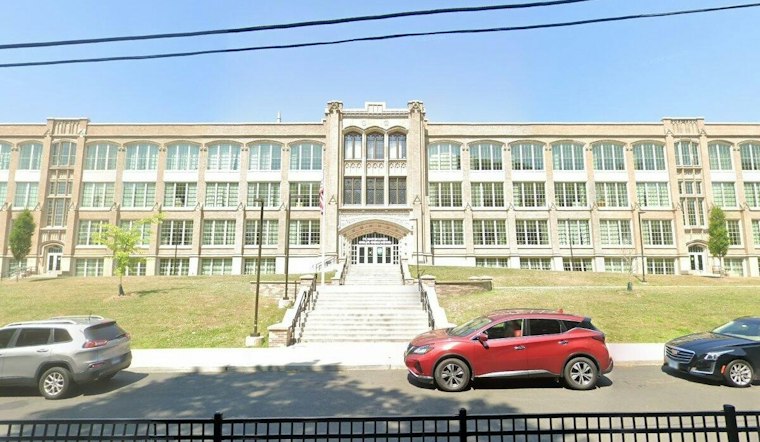
Hartford Public Schools says it has slashed its special education staff vacancy rate from 25% to 9% over the past year, with a dozen schools now fully staffed and 13 full-time positions still open across the district. The improvement comes after years of reported strain on the district's ability to serve students with disabilities, who make up a larger share of Hartford's enrollment than the state average.
According to Hartford Public Schools, the previous opening on its Language, Speech and Hearing team was also filled with a new hire. The district says it closed the gap through a mix of strategies: increased pay differentials, earlier recruitment timelines, targeted outreach for hard-to-fill roles, expanded certification and university pathways, improved candidate sourcing, and tighter coordination across departments. Twelve schools — including Naylor Elementary, Wish Elementary, the Sport and Medical Sciences Academy, Pathways to Technology Magnet, Moylan Expeditionary Learning Academy, Dr. Martin Luther King Jr. Middle School, Great Path Academy, Betances STEM Magnet, Parkville School, Montessori Magnet at Batchelder, Bellizzi, and Renzulli Academy — now report zero special education vacancies, the district said.
Superintendent Andraé Townsel said the focus going forward is on keeping those gains. “Our focus now is on sustaining full staffing by recruiting earlier, developing local talent, and creating the conditions that encourage strong educators to stay,” he said, per the district's release. In a statement to WTNH, Townsel credited the turnaround to “the intentional work of our Human Resources and Special Education teams, in collaboration with school principals and the educators who choose to serve Hartford students.”
Why the Staffing Gap Mattered
The vacancy reduction follows a period in which outside reviewers flagged Hartford's special education staffing as a significant problem. A 2025 report from New Solutions K-12 found the district had 47.5 special education teacher vacancies as of that February, according to the Hartford Courant. That same report found 21% of Hartford's K-12 students are identified as students with disabilities, compared with 17% statewide — a gap that helps explain why staffing shortfalls hit the district especially hard.
The Connecticut State Department of Education had hired New Solutions K-12 to review Hartford's special and general education supports and services, as reported by CT Insider in 2025. Hartford's situation also reflects a broader statewide pattern: the Connecticut Education Association has said most districts are struggling with high special education vacancies, and a School + State Finance Project official pointed to rising special education and transportation costs as financial pressures squeezing school budgets statewide, the Courant reported.
What's Driving the Improvement
The district says stronger internal staffing can reduce reliance on agency, temporary, or emergency hires, which it describes as more costly over time. Daniel Pearson, executive director of Educators for Excellence-Connecticut, told WTNH that targeted pay is a proven lever: “Shortages are often concentrated in specific roles and schools, and higher pay for hard-to-staff schools and subjects is one of several approaches that are backed by research and aligned with what teachers want.” Pearson added that Hartford's results could offer other districts a template to follow.
National data backs up that approach. The National Council on Teacher Quality found that 111 of 148 large districts it reviewed now offer compensation incentives for hard-to-staff subjects, and 84 of those districts specifically named special education as eligible for extra pay — up from 72 the prior year, according to NCTQ. The organization says differentiated pay has been shown to attract and retain teachers in high-need schools and subjects.
How Other Districts Have Tackled the Same Problem
Other school systems have leaned on similar financial incentives. NCTQ reported that Hawaii's public school district pays special education teachers an annual $10,000 incentive, a move it says helped cut the share of open special education roles filled by unlicensed teachers by 35%. Oklahoma City Public Schools pays special education teachers an additional 5% on top of base salary and offers recruitment stipends to general education teachers who support students with disabilities, per the same NCTQ analysis. Anchorage Public Schools goes further still, offering up to 6% extra pay for special education teachers in self-contained classrooms, plus a $5,000 signing bonus for a two-year commitment or up to $10,000 in relocation assistance for a four-year commitment.
Connecticut's own Educator Vacancy Dashboard, maintained by the state, defines a vacant position as a budgeted role that a district is actively working to fill — a baseline that underscores how far Hartford's reported rate has fallen in a year. With 13 full-time special education positions still open, the district says sustaining this year's progress will depend on keeping up the earlier recruiting push and building a steadier local pipeline of certified educators.



