

























































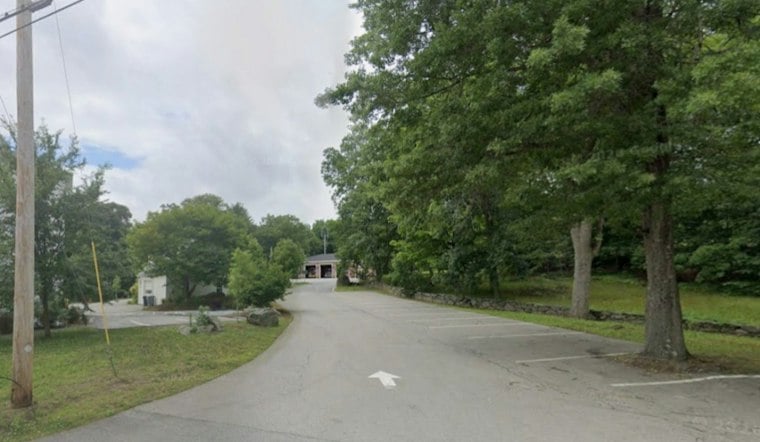
Harvard’s Conservation Commission voted unanimously to pursue $400,000 in public funds to permanently protect roughly 15 acres of Willard Farm, land that could otherwise be carved into three new house lots along the Nashua River. The vote sets in motion a process that, if it clears two more hurdles, would keep the farmland, forest and wetlands off the Willard property out of developers’ hands for good.
According to The Harvard Press, the Commission applied for Community Preservation Act funds to purchase a conservation restriction on the property, a legal tool that would limit how the land can be used while letting the owner keep title to it. The restriction would cover about 15 acres of farmland and open space but would carve out the house itself and the land immediately surrounding it, leaving that portion free of the new limits.
The Willard Farm land has deep roots in town history. The Willard family has owned land known as Still River Farm on the east bank of the Nashua River since 1659, and the property today is held by a trust with family members serving as trustees, the outlet reports. A narrow strip off Still River Road connects the farm to the river itself, a path that earlier generations of Willards once used to walk their cows down for water.
A Decades-Long Priority for Open Space Advocates
The Commission’s application called the property one of Harvard’s most significant remaining opportunities to secure meaningful open space along the Nashua River, per the same Harvard Press account. Eve Wittenberg said the Willard land had been on the Open Space Committee’s top-priority list for years, underscoring how long conservation-minded residents have eyed the parcel.
Part of that appeal comes from what surrounds the farm. The land sits within an area Massachusetts has designated the Central Nashua River Valley Area of Critical Environmental Concern, and a University of Massachusetts assessment found that it provides habitat for a wide range of species, some of them rare, the report notes. Protecting the Willard acreage would also link the Oxbow National Wildlife Refuge with the Bolton Flats Wildlife Management Area, knitting together a larger corridor of protected land.
Liz Allard has worked with the Willard family — particularly Paul and Wendell Willard — since 2023 to negotiate a conservation restriction agreement, according to the Harvard Press report. Stu Sklar, who chairs the town’s Community Preservation Committee, said he was thrilled the Willards and Allard had reached an agreement on the restriction.
How the Numbers and Timeline Stack Up
A 2025 appraisal valued the proposed restriction at $370,000, but the Conservation Commission is seeking $400,000 in Community Preservation Act funds, with the remaining money earmarked to cover surveying and legal fees. A conservation restriction payment like this one compensates the landowner for the reduction in fair market value that comes with permanently limiting the property’s possible uses.
Sklar said protecting land through a conservation restriction costs the town less than buying it outright, since the owner keeps the land and the title while the town pays only for the development rights given up. The town has used this approach before: the Commission previously sought $400,000 for a conservation restriction on 34.7 acres at Three Penny Farm on Old Littleton Road, a deal jointly funded with a $150,000 contribution from the Sudbury Valley Trustees after a 2025 appraisal valued those development rights at roughly $500,000, the Harvard Press has reported.
Harvard’s Community Preservation Committee was scheduled to review the Willard funding application at its Nov. 18 meeting and plans to vote on the proposal in December. If the committee signs off, the matter moves to the town’s May 1, 2027, Town Meeting, where voters would decide whether to approve the funding. Harvard adopted the Community Preservation Act in 2001 and collects a 1.1% surcharge on local property taxes for its Community Preservation Fund, according to the Town of Harvard code hosted by eCode360, the funding source behind the Willard proposal and similar preservation deals around town. Earlier this year, the committee recommended $676,750 for five town projects, with a treasurer estimating more than $1.5 million would be available for preservation work at the start of fiscal 2027, per the Harvard Press.
What a Conservation Restriction Actually Does
Under Massachusetts law, a conservation restriction is a right that can be held in perpetuity or for a set number of years, created through an instrument such as a deed, restriction, easement or covenant, according to Massachusetts General Laws, Chapter 184, Section 31. In practice for Willard Farm, that means the land’s fair market value would be reduced by the restriction, with the town’s payment meant to offset that loss for the family trust while the farmland, ponds and wetlands remain intact and off-limits to development.





