

























































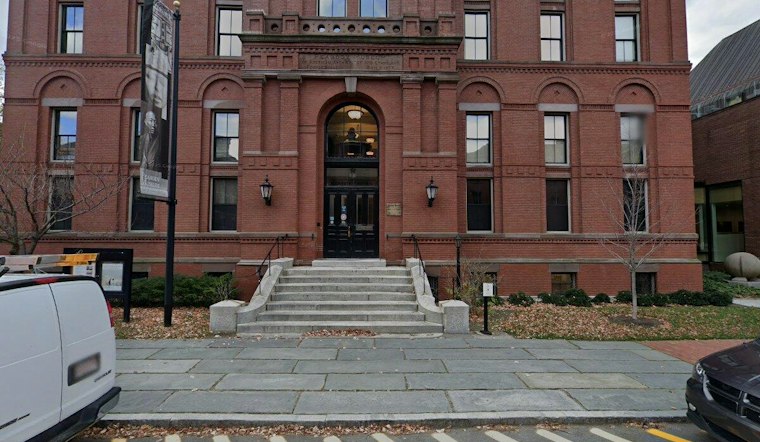
Two sets of human remains taken from Brazil in the 19th century have finally come home, received at ceremonies this month by museums in Rio de Janeiro and Salvador after sitting in a Massachusetts collection for more than 150 years. One skull belonged to an adult woman and had been held at Harvard's Peabody Museum since 1870. The other belonged to a man of African descent whose remains are tied to one of Brazil's most significant 19th-century slave uprisings.
The Brazilian government held two ceremonies this month to mark the handover, according to The Art Newspaper. The remains were transferred from Harvard's Peabody Museum of Archaeology and Ethnology in Cambridge, Massachusetts, as part of a university initiative launched in 2019 to review historical records tied to people of African descent from Brazil and the Caribbean. That review, the outlet reports, identified one of the two individuals as recorded as having been enslaved, while finding strong evidence that the other person was enslaved as well.
The effort gained new momentum after a 2022 report on Harvard's museum collections documented the presence of thousands of human remains, prompting broader scrutiny of how they had been collected and studied, per the same account. Brazil's federal government formally joined the repatriation process in 2024 through the Ministry of Foreign Affairs and the Ministry of Human Rights and Citizenship, according to G1.
A Skull Possibly Linked to Rio's Burial Ground for Enslaved Africans
The Museu Nacional/UFRJ in Rio de Janeiro received the skull of an adult woman that had sat in Harvard's collection since 1870, after being transferred from the university's Museum of Comparative Zoology. The skull was reportedly obtained by Walter Hunnewell, a Harvard graduate and expedition photographer who accompanied naturalist Louis Agassiz on an 1865-66 expedition to Brazil, per The Art Newspaper's reporting. Peabody Museum records described the skull using a racialized term and noted it had been exhumed in the streets of Rio de Janeiro, with the circumstances surrounding its removal still under investigation.
The remains may have come from the Cemitério dos Pretos Novos, a Rio burial ground that served as a resting place for enslaved Africans who died after arriving in Brazil during the 18th and early 19th centuries, the outlet notes. The cemetery was rediscovered during construction in Rio's port district in 1996. The Museu Nacional/UFRJ will hold the skull only temporarily; it will not be publicly displayed nor used for research, reproduction, or other purposes while researchers undertake further work to establish the woman's origins, with a final destination to be decided only afterward.
Juliana Sayão, speaking in Rio de Janeiro, said the return represents a historical responsibility for the museum. She added that the museum will treat the history of enslavement and the removal of the woman's body with respect and responsibility, according to The Art Newspaper.
A Man Tied to the 1835 Malê Revolt
The Federal University of Bahia, in Salvador, received the remains of an enslaved African man described by The Art Newspaper as of Nagô origin, who is believed to have participated in the Malê Revolt in Salvador in January 1835. The uprising was led by enslaved and freed Africans against slavery and religious persecution in Brazil. The man was reportedly wounded during the revolt and subsequently died in a hospital in Salvador, per that same account.
Not every outlet agrees on the man's ethnic background. G1 reports that historical documents indicate the skull belonged to someone who died in Bahia but that his ethnic origin cannot yet be established. Accounts also diverge on exactly when his remains left Brazil: O Globo reports the skull was taken from Brazil in 1841 without consent, while Estadão reports it was taken between 1835 and 1836, allegedly by Gideon Theodore Snow.
Officials Call the Return a Milestone
Janine Mello, Brazil's minister of human rights and citizenship, said the repatriation marks a milestone in acknowledging the historical violence that resulted from enslavement. She said the remains are returning to Brazil more than a century after they were taken, allowing for dignified treatment, according to The Art Newspaper's reporting. Harvard's museum and the university did not return the outlet's requests for comment.
Brazil was the largest destination for the forced migration of Africans across the Atlantic, with more than four million enslaved Africans disembarked in the country, per the same source. Brazil abolished slavery in 1888, the last country in the Americas to do so. The case echoes other recent repatriations to Brazil, including the Tupinambá Mantle, returned by Denmark in mid-2024 after more than 300 years on display at the National Museum of Denmark, and the Ubirajara jubatus dinosaur fossil, restituted in June 2023 after being removed from the country, as reported by Estadão.





