

























































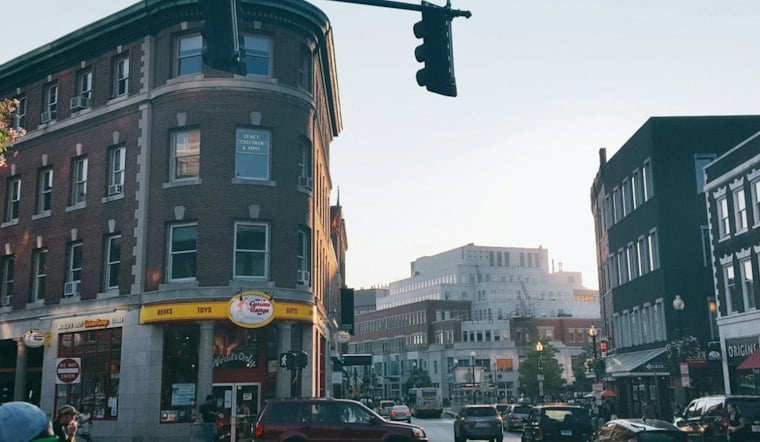
At Source, a Harvard Square pizzeria, people who are not customers can use the restroom for $3. Owner Daniel Roughan told The Boston Globe that the policy, adopted about two years ago, was intended to keep the restroom available to diners after concertgoers waiting for shows at The Sinclair began using it. The Globe reported that diner complaints, including waits in a line of as many as 10 people, preceded the policy.
The fee’s proceeds go to Y2Y, a Harvard Square shelter. Roughan told the Globe the policy had raised about $200 for the shelter to date. Y2Y describes its shelter as serving young adults ages 18 to 24 experiencing homelessness, according to the organization. Roughan said the fee was not intended to target unhoused people; after a photo of the sign circulated, some observers interpreted it that way, the Globe reported.
A private restroom is not the same as a public one
The dispute points to a distinction between restrooms inside businesses and facilities maintained for general public use. Historian Bryant Simon has described restaurant and café bathrooms as conditionally accessible, while defining a truly public restroom as one generally maintained by a public entity and open to anyone, according to The Boston Globe. Source’s policy is one business’s approach to managing its restroom; it does not, by itself, establish what public alternatives are available nearby.
Cambridge’s participatory-budgeting proposal says the Portland Loos in Harvard and Central Squares see substantial use from residents and visitors. The proposal does not specify their hours or whether use is free, so it cannot settle how they compare with Source’s restroom for someone seeking access at a particular time.
Cities use different approaches
Public programs elsewhere offer a different model from a business-set fee. San Francisco Public Works says its municipally managed Pit Stop program operates at 16 sites in nine neighborhoods. In New York City, the City Council says the “Ur In Luck” initiative, launched in 2024, plans to build 46 public restrooms and renovate 36 more over five years. Those programs show municipal investment in restroom facilities, but do not establish the availability, cost or operating arrangements of Cambridge’s facilities.
The local information leaves practical questions unresolved: Cambridge’s proposal does not say whether the Portland Loos are free or list their hours, while the Globe’s account does not quantify how often Source’s fee is used or how much it currently raises. What is documented is a private restaurant charging noncustomers $3, a stated goal of prioritizing diners, and a reported donation to a shelter serving young adults.




