

























































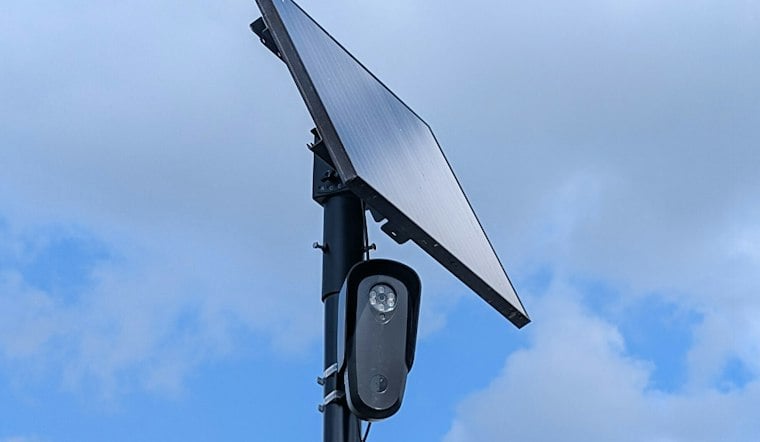
Haverhill has pulled the plug on its automatic license plate reader cameras, telling Flock Safety to remove the devices even as the city's own police force credited them with helping solve crimes. The decision, confirmed on Nov. 5, makes Haverhill the latest of roughly two dozen Massachusetts communities to walk away from the surveillance technology, while state lawmakers continue to sit on a bill that could set uniform privacy rules statewide.
The city had contracted with Flock Safety since 2023, and WHAV reports that Haverhill asked the company to remove its cameras after an internal review concluded the technology itself does not provide enough safeguards to protect residents' privacy. That review reportedly found no evidence the cameras had been misused. Haverhill's mayor said Flock's technology had helped police investigations but still did not offer sufficient privacy protections, according to CBS Boston.
Police in Haverhill maintained that the readers assisted officers in identifying suspects, developing investigative leads and solving crimes, per the same WHAV report. Under the system being phased out, the department said it had already tightened protections by limiting historical data retrieval to a maximum of two weeks and ending the sharing of camera data with other communities and outside agencies. The city, according to its own announcement, is now working on an ordinance and internal policy to govern license plate readers going forward.
Residents Pushed for a Seat at the Table
The cancellation followed pressure from Haverhill residents who packed a city council public safety subcommittee meeting to raise concerns about the cameras, CBS Boston reports. Among them was Annie Ryan, who had organized against the technology locally and told the outlet that speaking to the council directly made a difference in getting privacy fears addressed. Ryan and a local grassroots group celebrated the contract's cancellation as a win, but she isn't done: she is now calling for an ordinance that would require a council vote before the city or its police department adopts any new surveillance technology.
Haverhill is far from alone. The ACLU of Massachusetts has said 25 municipalities statewide have canceled Flock contracts or discontinued pilot programs, a figure cited in MassLive's reporting on the broader pullback. The Boston Globe separately reported that more than two dozen Massachusetts cities and towns have opted out of using the surveillance technology altogether. Yet the ACLU's Data for Justice Project has also found that more than 80 Massachusetts police departments have entered into Flock contracts, underscoring how split local governments remain on the technology.
A Stalled Bill on Beacon Hill
Kade Crockford, with the ACLU of Massachusetts, told CBS Boston that the scope of the surveillance and the tracking of everyone — not just suspects — raises serious accountability and oversight concerns, and argued that Massachusetts needs state laws regulating police use of Flock-like technology. That debate has been simmering in the State House for nearly two years. State Rep. Steven Owens filed legislation in January 2025 imposing guidelines and restrictions on how law enforcement can use the readers and the data they collect, the station's report notes. The House Transportation Committee endorsed the bill 11-0 in March, but it has been sitting in the House Ways and Means Committee ever since.
Owens's bill would generally cap ALPR data retention at 14 days, bar use of the cameras to monitor activity protected under the Massachusetts Declaration of Rights or the First Amendment, and require a warrant for certain access to data held by other entities, per the same account. The bill's actual text, available through the Massachusetts Legislature, specifies that persons acting under color of state law shall not use an ALPR system to track or monitor constitutionally protected activity. Owens told CBS Boston that police searches and tracking should have clear reasons behind them, and that road users should not be tracked and commodified by a third party. He said he plans to introduce a bill addressing public concerns in the next legislative session.
Flock itself has been engaging with the regulatory push. Andrea Korb, the company's senior director of policy, spoke about state regulation at a virtual meeting with the R Street Institute and said Flock supports strong state-by-state legislation to establish safeguards and address public concerns, according to CBS Boston. The company has also recommended that customers adopt a default seven-day data-retention period, down from a previous 30 days, MassLive reported. CBS Boston said it contacted Flock Safety for comment on Haverhill's cancellation but did not receive a response.
Other Cities Are Taking Their Own Paths
Massachusetts State Police have defended their own use of the technology, telling MassLive that less than 2% of department members can query ALPR data and that those queries are monitored, reviewed and audited. Elsewhere in the state, responses to the technology have varied sharply. Springfield Police currently operate 25 Flock cameras throughout the city and say photographs are automatically deleted after 30 days unless retained for an investigation, according to WWLP, even as the City Council considers an ordinance that would ban the devices outright; no final decision has been announced.
Quincy has taken a middle path, approving an ordinance that gives its City Council more oversight of surveillance technology, including ALPRs, and that requires a public hearing before the city signs a contract with any new surveillance technology company, Boston 25 News reported. Quincy's police chief said the city's existing Flock cameras remain in place but have been deactivated. In western Massachusetts, The Shoestring has reported that Easthampton stopped using its Flock devices after city councilors cut funding for the company's software, one of at least 13 western Massachusetts municipalities that had used the technology within the year its report covered.
That same Shoestring reporting flagged a structural concern fueling much of the local pushback: law enforcement departments can search any other department's Flock devices nationwide for a hit, so long as those departments haven't restricted access. Pew Research Center, drawing on OpenStreetMap data, counted 109,577 Flock camera nodes nationwide as of Sept. 17, though it cautioned that the crowdsourced total should be read as a lower-bound sample rather than a complete inventory. With Haverhill's cancellation now part of that statewide tally and Owens's bill still parked in committee, the question of whether Beacon Hill will set uniform rules — or leave each city and town to fight it out on its own — remains unresolved.




