

























































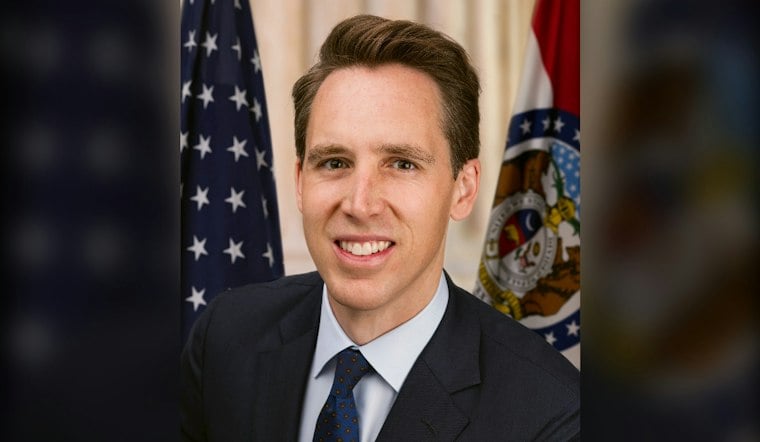
Missouri Senator Josh Hawley says he would support a new Democrat-led Congress repealing restrictions on medical provider taxes that help fund Medicaid, even though he voted for the very bill that created those limits. The provider tax, which funds state Medicaid programs, is slated to fall in Missouri from 5% to 3.5% by 2032 under the law, and Hawley has warned that the reduction could cause a major budget crisis and threaten rural hospitals in the state.
Hawley voted for President Donald Trump's One Big Beautiful Bill when Republicans passed it in 2025, a bill that included limits on medical provider taxes for hospitals and other health care facilities, according to KCUR. Before the bill passed, Hawley had unsuccessfully introduced legislation to prevent the limits on the medical provider tax from taking effect at all. He now says he is hopeful the Senate could still repeal the restrictions, and that he supports doing so.
Why the Provider Tax Matters So Much to States
Provider taxes are not a Missouri quirk — they are a load-bearing part of how nearly every state pays for Medicaid. All states except Alaska use at least one provider tax to finance part of their share of the program, and 41 states have three or more such taxes in place, according to KFF. In federal fiscal year 2024, the federal government covered 65% of total Medicaid costs while states paid the remaining 35%, and provider taxes made up 18% of that non-federal share in states' enacted budgets for fiscal year 2026, per the same KFF analysis.
Nationally, the dollars involved are enormous. CMS has estimated states would collect $98.6 billion in provider-tax revenue in calendar year 2026 alone, including $61.8 billion from hospital taxes and $28.1 billion from taxes on managed care organizations, KFF reports. The 2025 reconciliation law bars all states from establishing new provider taxes or raising existing ones, while also phasing down existing taxes specifically in states that adopted the Affordable Care Act's Medicaid expansion — Missouri among them.
A Partisan Divide Over What the Tax Really Is
The fight over provider taxes breaks down along familiar lines. Some GOP officials have characterized the taxes as akin to money laundering that helps states bilk the federal government, and Mehmet Oz, administrator of the Centers for Medicare and Medicaid Services, has been a vocal critic of the mechanism, according to KCUR's reporting. Hawley rejects that framing, arguing that voters do not want to see rural hospitals close and predicting that Trump himself would be happy to see full funding preserved for rural hospitals. Hawley has also noted that Trump told Republicans not to touch Medicare or Medicaid and to instead focus on tax relief.
At least 25 Medicaid expansion states have one or more provider taxes above the new federal threshold and will need to adjust their financing as a result, according to the Commonwealth Fund. KFF warns the changes could make it harder for states to sustain current Medicaid spending without tapping general funds, potentially forcing lower provider payment rates or cuts to benefits and coverage.
The Math Behind a Potential Repeal
Any repeal effort faces a steep climb. The Senate Democratic caucus has 56 members, but overcoming a filibuster requires 60 votes, meaning three additional Republican senators would need to support a repeal alongside Hawley, per KCUR's accounting. Incoming Democrats, including Senator-elect Abdul El-Sayed of Michigan, have made rescinding cuts of this kind a priority, though it remains unclear whether enough Republicans would join them.
The stakes extend well beyond Missouri's borders. KFF estimates that Medicaid spending in rural areas nationwide will decrease by $137 billion over the next decade under the 2025 law. The Commonwealth Fund projects that rural hospitals' Medicaid revenue could drop by as much as 9.6% on average while their uncompensated care costs climb by 35.4%. CMS issued guidance on November 14 explaining how it intends to implement the provider-tax restrictions, according to Georgetown University's Center for Children and Families, which also cites a Congressional Budget Office estimate that the provider-tax provisions will cut gross federal Medicaid spending by $225.7 billion over ten years and increase the number of uninsured people by 1.2 million by 2034.
How Other States Are Responding
Not every state faces the same squeeze. Kansas, which has not adopted Medicaid expansion, recently raised its maximum hospital provider assessment from 3% to 6% of hospital net inpatient and outpatient operating revenue through SB 126 — and because Kansas never expanded Medicaid, that assessment is not subject to the future reductions built into the federal law, according to CSG Midwest. The same law also created a Rural Health Transformation Program offering $50 billion to states, though CMS has capped directed payments to providers at 15% of total state program funds, the Commonwealth Fund notes.
Hawley's Other Priority: Radiation Compensation
Provider taxes are not the only unfinished business Hawley is tracking. He helped add the Radiation Exposure Compensation Act to the One Big Beautiful Bill, a program that compensates people affected by exposure to radioactive waste left over from the Manhattan Project. The program has paid out $300 million to people in the St. Louis region, Hawley says, but its authorization expires in just over a year.
Hawley has called reauthorizing the act a top priority in the upcoming Congress and says he is optimistic the program can be renewed. He has argued that benefits should remain available in the St. Louis and St. Charles regions for as long as nuclear radiation remains present in the area.





