

























































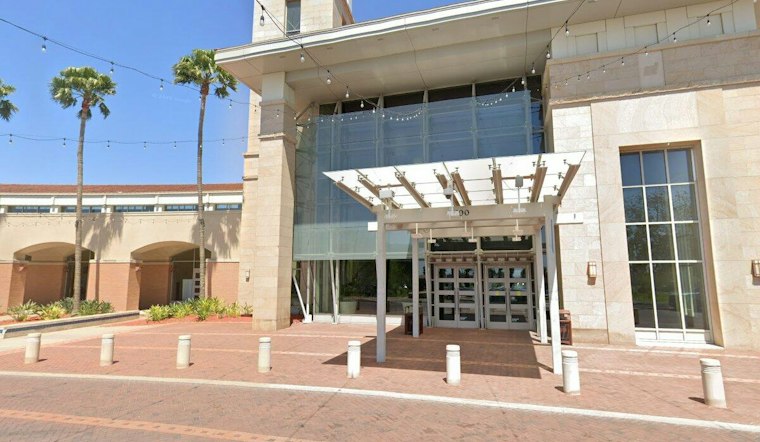
Eligible first-time offenders in Hidalgo County now have an option that didn't exist before: trade community service hours for college coursework. South Texas College and Hidalgo County launched the Rebuilding Futures initiative, a program designed to connect people affected by the criminal justice system with higher education and career opportunities instead of the usual probation requirements.
The partnership brings together South Texas College, the Hidalgo County District Attorney's Office and District Court Judge Marla Cuellar, integrating post-secondary studies directly into judicial probation options, according to the seed facts behind this report as detailed by Rio Grande Guardian. Hidalgo County District Attorney Terry Palacios has voiced support for offering higher-education certificates and degrees in lieu of traditional community service requirements in certain probation-related cases, according to South Texas College. Palacios said that just last week he had a room full of 90 people trying to get into the pretrial diversion program, and added that many first-time offenders could see their cases dismissed after completing education opportunities at the college, the same STC announcement states.
A Program Born From Personal Loss
Olivia Gomez, director of external affairs at South Texas College, spearheaded the initiative in memory of her late brother, Rene E. Tamez, a former STC student. Gomez said her brother was given a second chance through the college and was on a positive trajectory through higher education, and that he was scheduled to graduate this year before his death, according to the college's announcement. She has described Rebuilding Futures as a first-of-its-kind Texas collaboration among a higher education institution, a district attorney's office and local judicial leadership.
Gomez has said higher education can reduce employment barriers for people affected by the justice system and can support upward economic mobility for participants and their families, helping them land higher-wage jobs. She's also said the institution can guide people to resources and help them move forward. Participants in specialty DUI court may enroll in STC certificate or degree programs instead of mandatory community service, and initiative participants are paired with STC academic and career advisors who help build educational pathways tailored to local industry needs.
Certificates, Dismissals And Still-Evolving Details
Local station KRGV reported that the arrangement allows eligible individuals on probation to complete college certificates or degrees instead of traditional community service, and that many first-time offenders could have their cases dismissed after finishing the educational requirements, per KRGV. ValleyCentral reported separately that Gomez said certificates from colleges other than STC could also qualify participants for dismissed charges, not just credentials earned at STC, according to ValleyCentral. That outlet also noted that, at the time of its report, the exact details of the partnership and changes to the existing pretrial diversion program were still being finalized.
Participation in the program hinges on approval from each participant's assigned probation officer and court judge, and the dismissal of charges is described as a possible outcome for those who successfully complete their academic programs and probation terms rather than a guarantee for every participant. People curious about eligibility in Hidalgo County can learn more by contacting the Hidalgo County District Attorney's Office or STC's Office of External Affairs.
STC's Academic Footprint And Wider Advocacy
South Texas College offers more than 130 academic certificate and degree programs, including workforce training in advanced manufacturing, culinary arts and business management, and the college is the only community college in Texas authorized to offer five distinct bachelor's degree programs. The college also coordinates with regional employers seeking STC graduates as part of its broader workforce pipeline.
McAllen Mayor Javier Villalobos has advocated for reentry and second-chance programs more broadly. In April, community leaders gathered at the McAllen Convention Center Ballroom for an event titled “Rebuilding Futures, Advancing Second Chances through Policy, Partnership, and Purpose,” hosted by South Texas College and the City of McAllen, according to Texas Border Business.
The Scale Of The Problem Behind The Program
The push toward education-based alternatives comes against a backdrop of large numbers moving through the state's justice system. South Texas College's announcement cites Prison Policy Initiative figures showing that 709,000 people in Texas are in the criminal legal system, a rate of 751 per 100,000 people. Under Texas law, successful completion of the terms and conditions of deferred adjudication results in dismissal of the charges against a defendant, according to a Texas Legislature bill analysis, though that source does not spell out the specific legal terms or outcomes that apply to Rebuilding Futures participants specifically.





