

























































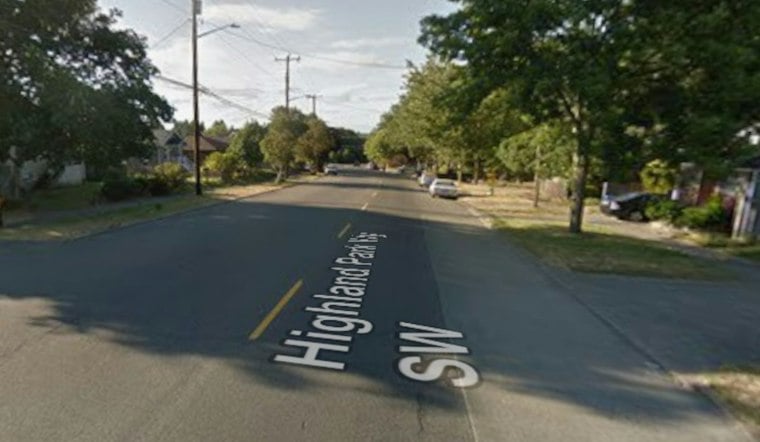
Seattle's Department of Transportation has landed a federal grant to add skid-resistant pavement to four stretches of city streets with histories of frequent crashes, including a segment of Highland Park Way SW between SW Holden Street and West Marginal Way SW. The money is meant to fund high-friction surface treatment, a pavement upgrade designed to cut down on rainy-weather skids that send out-of-control vehicles into people walking, biking, rolling, or living nearby.
The size of the award has been described differently across sources. SDOT said in a SDOT Blog post that “the City of Seattle has been selected for a $9.7 million ‘Safe Streets and Roads for All’ federal grant from the USDOT,” while Congresswoman Pramila Jayapal's office said in a statement that SDOT “was awarded $9,675,459 through the United States Department of Transportation Safe Streets and Roads for All grant.” West Seattle Blog reported the figure as a $10 million federal grant to improve traction on four road stretches around Seattle. The dossier does not reconcile these three numbers, so all three are presented here as reported.
Four Stretches, Two in West Seattle
Two of the four project locations are in West Seattle. Beyond the Highland Park Way SW segment, the grant covers SW Roxbury Street/Olson Place SW between 5th Avenue SW and SW Cambridge Place. The other two stretches are outside West Seattle: Westlake Avenue N between the Aurora Bridge and Halladay Street, and Rainier Avenue S between S Fisher Place and Sturtevant Avenue S. SDOT told the outlet that all four locations have a history of frequent crashes of the kind the treatment is meant to prevent.
SDOT also told the publication that the grant will fund an innovative safety analysis using emerging techniques to identify likely crash locations, helping the city plan safety investments before crashes happen rather than after. Federal grants of this kind require ongoing coordination with USDOT, and SDOT said the approval process typically takes a few years from the award announcement to final federal approval to the start of construction.
Why High-Friction Pavement
High-friction pavement works by reducing the risk of hydroplaning on wet roads. The Federal Highway Administration says a research report it published shows the treatment is estimated to reduce wet-pavement crash risk by 83 percent and reduce total crashes by 57 percent. The agency's figures come from a broader research report on the treatment rather than from an evaluation specific to these four Seattle locations.
This isn't the first time high-friction treatment has been floated for the Highland Park Way SW corridor. Back in May 2020, SDOT's Highland Park Way SW and SW Holden Street Safety project team told the Westside Seattle that it would evaluate the treatment for the corridor, noting that such pavement work had typically been used where crashes occurred when roadway conditions were slippery.
A Separate Project Already Heading to Bid
SDOT told West Seattle Blog that the new traction project on Highland Park Way SW is separate from another SDOT project on the same hill that is already moving forward: a lane-conversion project that recently went out to bid. That project, also located on Highland Park Way SW between West Marginal Way SW and SW Holden Street, would widen the existing asphalt path and install a downhill protected bicycle lane with concrete barriers, along with other bicycle and pedestrian connection improvements.
The lane-conversion project's engineer's estimate runs between $1.7 million and $1.8 million. Bids on that project were expected to open Wednesday, and SDOT has said construction could begin as soon as February 2027. No comparable schedule has been established yet for the new traction-focused grant work on the same stretch of road.





