

























































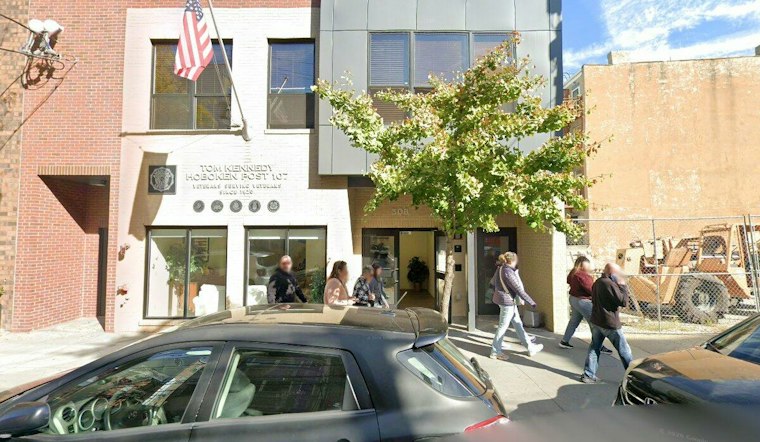
The Veterans Center of Hoboken broke ground on an 18-apartment expansion that organizers say will quadruple the organization's capacity to house and support homeless veterans in Hudson County. The project, built onto the existing American Legion Tom Kennedy Hoboken Post 107 building, will grow the center's housing stock from six apartments to 24 once finished, according to the published subtitle of the announcement.
The new five-story addition will run roughly 20,000 square feet and connect internally to each floor of the existing American Legion building, according to TAPinto Hoboken. The ground floor will house a large social hall and restrooms, the second floor will include a lounge, kitchen, offices, meeting rooms and counseling rooms, and the top three floors will provide the 18 new apartments — 15 studios and three one-bedroom units, each with its own kitchen and access to shared laundry facilities, per the same report. The expansion also incorporates flood-proofing improvements and a 1,945-square-foot rooftop solar array, a detail corroborated by Jersey Digs.
From Sandy's Wreckage to a Second Phase
The project sits on ground with history. Post 107's former headquarters was submerged in more than six feet of water during Superstorm Sandy in 2012, which destroyed much of the building, per the TAPinto Hoboken account. The organization completed reconstruction and opened the first phase of the Veterans Center in 2019, placing the American Legion headquarters, meeting hall and library on the second floor and adding six furnished apartments for veterans experiencing homelessness.
Those six units have remained at full capacity in the years since, Post 107 Commander John P. Carey has said, with the apartments having stayed at maximum occupancy according to The American Legion. The new second phase extends the existing building onto a former municipal parking lot that the City of Hoboken made available through a ground lease for affordable veterans housing, the TAPinto Hoboken report states. Carey said the expansion can end veteran homelessness in Hudson County.
Funding Pieced Together From Multiple Sources
The project is funded through a mix of state and federal housing programs, local government investments and private contributions, according to the TAPinto Hoboken article. The New Jersey Affordable Housing Trust Fund, administered by the state Department of Community Affairs, provided $3 million for the project — funding that had reportedly been removed by the Murphy administration before Carey recognized state Sen. Raj Mukherji for leading an effort to restore it. The Veterans Center of Hoboken Phase II Project also appears on the state's 2026 Affordable Housing Trust Fund awards list, with Hoboken World War Veterans Corp. listed as the recipient, according to NJBiz.
Hudson County Executive Craig Guy said the county invested $1.5 million to help make the expansion possible, provided through the county-administered Federal Home Investment Partnerships Program. The Federal Home Loan Bank of New York's Affordable Housing Program contributed $1.44 million through member BCB Community Bank, while the City of Hoboken is administering $25,000 in federal Community Development Block Grant funding for demolition work, per the same TAPinto Hoboken account. Organizers said private contributions remain essential as construction proceeds, and the center is inviting individuals, businesses and community organizations to support the effort with a gift at hobokenlegion.org/give.
Officials and Advocates Weigh In
The groundbreaking was attended by Hoboken Mayor Emily Jabbour, Guy, Mukherji and Hudson County Commissioner Anthony Romano. Jabbour said honoring veterans must involve meaningful action, while Mukherji — a former U.S. Marine and chairman of the Senate Military and Veterans' Affairs Committee — said honoring veterans must extend beyond symbolic gestures of gratitude. Romano urged building another 80 or 100 units beyond the 18 planned and said he hoped the groundbreaking would not be the last of its kind.
Vincent Solomeno, commissioner of the New Jersey Department of Veterans Affairs, said the Sherrill administration aims to make veteran homelessness rare, brief and non-recurring. He said the state's Bringing Veterans Home initiative, which provides services to veterans experiencing homelessness or at risk of losing housing, has helped house 3,000 veterans since January 2025. Monarch Housing Associates, a nonprofit dedicated to expanding affordable housing opportunities, also supports the project; its CEO, Taiisa Kelly, said housing is a human right and everyone deserves a safe, stable home.
Soldier On, a nonprofit dedicated to ending veteran homelessness, will provide case management, veterans-benefit access, health services, transportation, education and employment support at the completed center. Soldier On CEO Bruce Buckley said ending veteran homelessness requires support that helps veterans build stable, independent lives. Veterans Center of Hoboken Finance Officer Mark Luis Villamar said housing alongside an active American Legion post gives residents a built-in community of fellow veterans.
A Regional Push With Mixed Numbers
Hoboken's groundbreaking lands amid uneven progress on veteran homelessness across the region. Hudson County's counted homeless-veteran population fell 45% between 2021 and 2025, according to a Monarch Housing Associates point-in-time report, which recorded 11 homeless veterans in the county on January 28, 2025 — about 1% of the counted homeless adult population. Statewide, however, the picture moved the other way: New Jersey's 2025 count found 543 veterans experiencing homelessness, a 4.8% increase from 2024, per Monarch Housing's results release.
Elsewhere in New Jersey, Bergen County approved an additional $200,000 in October for a six-apartment veterans-housing project in Mahwah, bringing that project's total county funding authorization to $450,000 after rising construction costs led the developer to seek more financial assistance, Jersey Digs reported. The Mahwah apartments are intended to provide affordable rental housing with a preference for veterans with disabilities, offering a smaller-scale comparison to Hoboken's larger expansion.
Hoboken's own ties to military history run deep — the city was associated with the World War I-era expression “Heaven, Hell, or Hoboken,” a reference to American soldiers who were expected to be home by Christmas 1917. More than a century later, the Veterans Center's organizers are betting that a five-story addition with flood-proofing and solar power can make good on a more modern promise: permanent, supportive housing for the veterans still waiting.




