

























































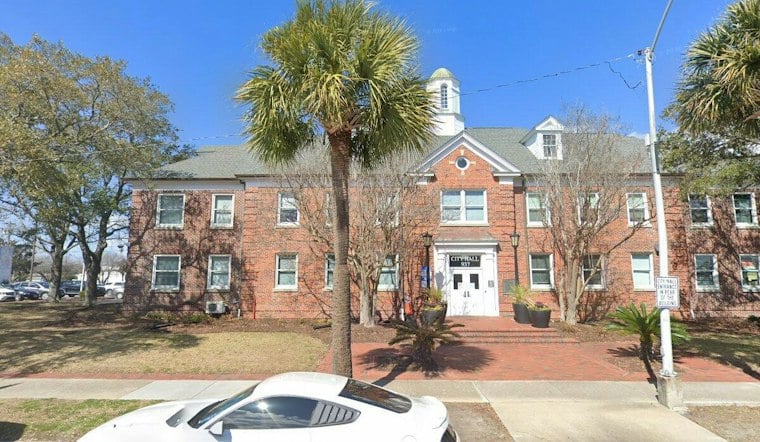
The South Carolina Judicial Merit Selection Commission has found Horry County Master-in-Equity Judge Alan D. Clemmons not qualified to continue serving. The commission’s report page lists nine candidates in this screening cycle; Clemmons was the only one not found qualified.
The finding was first reported by Myrtle Beach News. Clemmons, a former Myrtle Beach state representative, is the only Horry County candidate on the list. His current six-year term expires July 31, 2027, and public hearings for this screening cycle were set to begin November 16.
From State House to the Bench
Clemmons, a Myrtle Beach native and real estate attorney, represented Horry County's House District 107 as a Republican from 2002 to 2020. He chaired the House Rules Committee and served on the Ways and Means Committee. He also served on the Judicial Merit Selection Commission from 2008, later becoming its vice chairman and chairman.
Clemmons resigned from the State House on July 17, 2020, about five weeks after winning the GOP primary over Case Brittain, citing his business as the reason. After sitting out the year required by law, he applied for the Horry County master-in-equity seat and was nominated by the county delegation. Gov. Henry McMaster appointed him, and Clemmons took the bench on February 28, 2022.
A Low Bar Clearance in 2021
The commission found Clemmons qualified in 2021, though he was the lowest-rated of three candidates in South Carolina Bar reports at the time. Masters-in-equity typically handle real-estate matters such as foreclosures, partitions and contracts. Horry County's equity court is a circuit court division that hears non-jury matters referred by circuit judges, including mortgage foreclosures and other property cases.
The Chamber-Backed Tax He Wrote
As a state representative, Clemmons wrote the legislation known as the Tourism Development Fee for the Myrtle Beach Area Chamber of Commerce, per the same Myrtle Beach News report. The TDF, established in 2009, is a one-percent sales tax on purchases within the City of Myrtle Beach, including accommodations, as detailed by MyHorryNews. It passed without a voter referendum.
State law directs 80 percent of TDF revenue toward tourism advertising and promotion aimed at non-South Carolina residents, according to MyHorryNews, while the remaining 20 percent may fund property-tax credits or tourism-related capital improvements. The fee generated roughly $43.25 million during the 2025-2026 fiscal year. Myrtle Beach City Council plans to ask the state legislature in Columbia in 2027 to change that split so the city would collect 40 percent of the fees.
What the Law Says Happens Next
Under South Carolina law, the Judicial Merit Selection Commission screens candidates as if a seat had no incumbent, and the commission has stated that no person found not qualified may be appointed to the office of master-in-equity. The law also provides that an incumbent found not qualified shall cease serving once the current term expires — in Clemmons's case, July 31, 2027.
Separately, the South Carolina Code of Laws lays out what happens once the commission finishes its reports: it submits findings on qualified master-in-equity candidates to the relevant county legislative delegation, which may then forward a nominee's name to the governor, according to the South Carolina Code of Laws Unannotated. For Horry County, that process will now have to start over with new candidates once Clemmons's term runs out.
A separate example, not a parallel to Clemmons’s not-qualified finding, appears in the South Carolina House Journal: in March 2025, the commission found Aiken County Judge M. Anderson Griffith qualified, and the Aiken County Legislative Delegation submitted his name for reappointment.
An earlier account from The State noted that Clemmons and two other candidates, Charles B. Jordan Jr. and Douglas M. Zayicek, were all found qualified by the commission in the 2021 screening that preceded his appointment. At that time, Clemmons said he had worked on more than 2,900 cases, with most of them handled in the master-in-equity courtroom.
Reporting on Clemmons's path to the bench has also produced conflicting dates for when his predecessor's term, and his own, would end. Myrtle Beach Online reported in 2021 that his predecessor's successor would serve through June 30, 2027, while Grand Strand Daily has reported that a 2021 commission release listing a June 30, 2027 end date for the Horry County seat was an error, with the correct date being July 31, 2027 — the date Myrtle Beach News also cites for the current term's expiration.



