

























































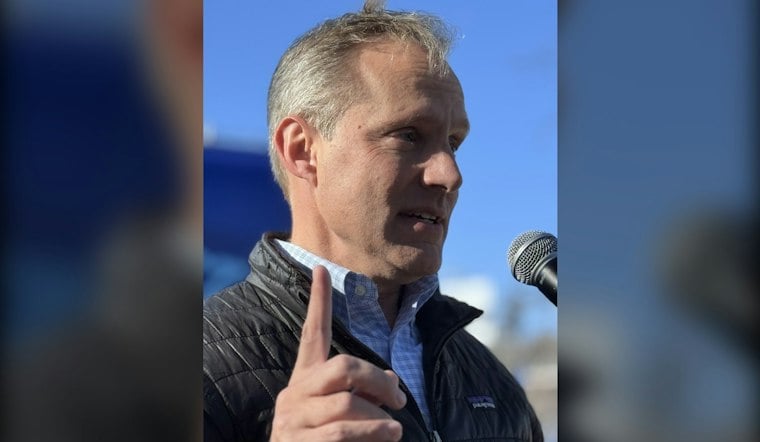
Two congressional election observers are headed to Minnesota polling places on Election Day, with one assigned to Hennepin County and one to Olmsted County. The U.S. House Minority Caucus is sending the pair, while the U.S. House Majority Caucus had declined to send its own observers so far.
The deployment was first reported by MPR News, which noted that Minnesota Secretary of State Steve Simon confirmed the observer assignments. Olmsted County, home to Rochester, is part of U.S. Rep. Brad Finstad's district, which is considered among the country's most competitive congressional races, according to the outlet's reporting. Separately, the Minnesota News Network reported that the monitors from the House Minority, sent by the Democratic Party, were expected to observe polling places in both Hennepin and Olmsted counties on Election Day, according to Minnesota News Network.
Paul Linnell, elections director for the secretary of state's office, said sending observers to competitive districts has historically been common practice when congressional races look close heading into Election Day. He also said the Constitution allows the House caucuses to send observers to congressional districts, and that the caucuses chose to send two observers in this particular case.
Justice Department Monitors Return to the Same Counties
The congressional observers aren't the only outside monitors showing up at Minnesota polls this week. The U.S. Department of Justice is sending election monitors to some polling places in Hennepin and Ramsey counties, according to Simon. The Minnesota News Network reported that those DOJ monitors would arrive Tuesday but would not be allowed inside polling places, instead required to remain behind a 100-foot boundary.
This isn't the department's first visit to those counties this year. The DOJ sent election monitors to polling places in Hennepin and Ramsey counties during the August primary, and according to NPR, those monitors were denied close access to polling locations at that time. A spokesperson for the Minnesota secretary of state's office told NPR it was too soon to know whether a different decision would be made for this fall's general election.
The August episode prompted its own layer of oversight. The Minnesota Secretary of State's Office partnered with the Attorney General's Office to monitor the Justice Department monitors, and the state plans to do so again, per the MPR News report. Fox 9 quoted the arrangement directly, noting officials said they were working with the Minnesota Attorney General's Office to observe the observers.
Who the Monitors Are and What the Law Allows
Simon has described the DOJ's monitors as lawyers, or people who work with Justice Department lawyers, who arrive in plain clothes. He has said they carry no badges and no guns. The DOJ's Civil Rights Division, led by Harmeet Dhillon, has said the department planned to send 1,000 observers nationwide this cycle, which Dhillon called the largest monitoring effort in the department's history, per NPR. By comparison, the department monitored 64 jurisdictions in 24 states on Election Day during the 2022 midterms, the outlet reported. For the August primary, the DOJ sent roughly two-person teams to about 40 polling places overall, according to an earlier MPR News report.
Minnesota law draws clear lines around who can watch the voting process up close. Under state statute, only representatives of the secretary of state's office, the county auditor's office, and the municipal or school district clerk's office may be present at a polling place to observe election procedures. The Minnesota Secretary of State's office has also said on its website that state law does not authorize poll watchers, a distinction that helps explain why DOJ monitors have been kept at arm's length from the polling places themselves.
Congress, for its part, has sent election observers to polling places in previous elections, a practice Linnell framed as routine when a race is tight. With Finstad's district drawing national attention, Tuesday's dual layer of congressional and federal monitoring puts Hennepin and Olmsted counties squarely in the spotlight as Minnesotans head to the polls.



