

























































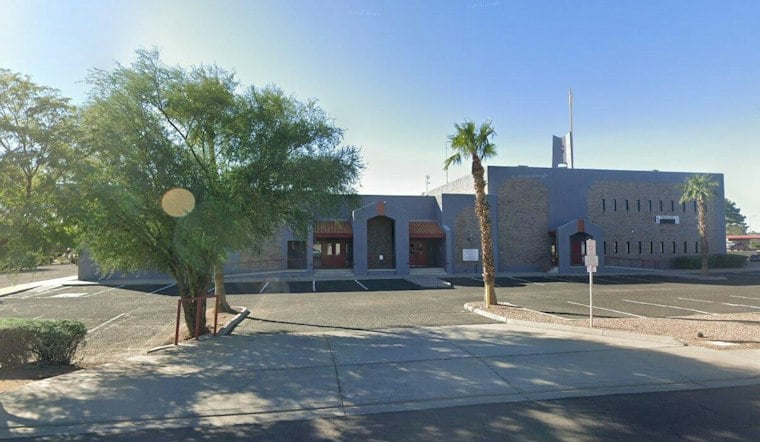
Finding places to vote
Maricopa County’s search for voting locations begins with the previous election’s site list and an assessment of where facilities are needed, then goes to the Board of Supervisors for approval, Deputy Elections Director Jennifer Liewer told The Arizona Republic. She said the county has limited options because of constraints such as building size, accessibility and logistics, and receives few unsolicited offers to host voting.
That shortage coincides with a change in how some hosts handle campaigning. The Republic’s analysis of county data found that the number of Maricopa County voting sites barring electioneering rose 64% from 2022 to 2026, while the total number of sites grew 14%. Nearly half of the county’s polling locations are at houses of worship; about half of church sites plan to bar campaigning in 2026, compared with roughly a third in 2022. The Republic also reported that about a third of all sites will prohibit electioneering this year, versus roughly one in five nonreligious locations.
Rules vary by property
Arizona law permits electioneering outside a 75-foot buffer around a voting-center entrance and limits when counties can extend restrictions beyond that zone, according to The Arizona Republic. Against that legal backdrop, individual property owners have chosen whether to allow campaign activity on their grounds.
The Church of Jesus Christ of Latter-day Saints bars political campaigning on its Arizona properties. Its broader policy says church buildings and other church resources cannot be used for political purposes, while encouraging members to vote and take part in civic life, according to the church’s official statement. Arizona communications director Candice Copple told the Republic the property rule could be reconsidered. In 2024, the church provided 30 polling locations statewide, more than in previous election cycles, KJZZ reported.
Hosts cite different concerns
Some churches have emphasized security or the practical demands of sharing their grounds with voters and campaigners. Lois Beberniss, campus affairs director at Shadow Rock United Church of Christ, told the Republic that the presence of preschool children was a security concern and that campaign activity could complicate parking and traffic. At St. Peter Lutheran Church in Mesa, Lead Pastor Andre Miller said the congregation wanted to offer voters a safe, comfortable place and saw limiting electioneering as a way to reduce the possibility of friction. The church sought to become a polling site without a county request, the Republic reported.
Other churches have focused on avoiding the appearance of partisan alignment. Living Word Ahwatukee had allowed campaigning and political signs before changing its policy after the 2020 election, when the signs prompted public criticism on social media, Pastor Jeff Zubeck told the Republic. Desert View Bible Church, hosting a polling site for the first time in 2026, chose to keep campaigning off its property as it began the role; Pastor Ben Rounds described the decision as a way to avoid being associated with a political side, according to the same reporting.
Questions about religious settings
The concentration of religious sites also raises concerns for some voters. Alex Zygmunt, president of the Humanist Society of Greater Phoenix, told the Republic that some humanists worry voters could feel pressure to vote in keeping with a church’s teachings. The society considered offering its own building as a voting site but decided against it because of space and liability concerns.
Research has examined whether a polling place’s setting can affect voting choices. The Conversation summarized an analysis of Arizona’s 2000 general election that found school-site voters were more likely to support an education sales-tax increase than similar voters elsewhere, as well as a study of 2016 Virginia voting data that found voters at churches were more likely to support Republican candidates than comparable voters at secular sites. Those findings address possible effects of location; they do not establish why Maricopa County churches adopted their individual policies.




