

























































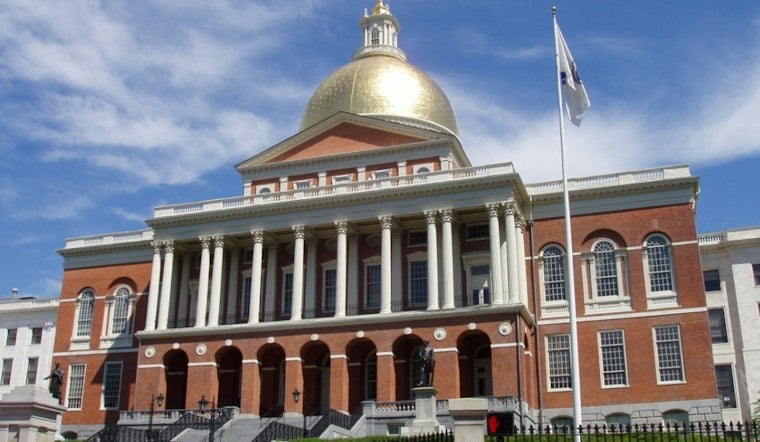
Hundreds of Massachusetts public college employees boarded buses and piled into cars Friday, converging on the State House in Boston to demand contracts that include a 30% pay raise over three years. Around 700 people crowded Beacon Street in what organizers called the first system-wide demonstration of its kind, bringing faculty, advisors, librarians and administrative staff from campuses across the state together in a single, unified push for higher wages.
The rally was reported by MassLive, which detailed how workers describe low pay colliding with soaring workloads. Amanda Berthiaume, a faculty member at Springfield Technical Community College who works as a full-time dental sciences professor, biology adjunct and workforce-development worker, said employees earn low wages at a time when their workloads have only increased because of the influx of students drawn to free-tuition programs. Berthiaume said she currently advises 40 students, more than double the contractual limit of 18.
Debt, Bankruptcy Advice and a Decade of Sacrifice
Berthiaume, who dropped out of high school in Springfield and later earned her GED, carries $80,000 in student debt. Despite interest from private institutions, she said she wants to remain at the community college, telling the outlet her heart remains in community college work.
Caitlin Bogue, a mother of three who has worked at Quinsigamond Community College for 12 years, described an even starker reckoning. She earns $69,000 base pay for one of her two jobs, lives an hour from work because she cannot afford to live closer, and said childcare consumes half her salary. Per the same MassLive account, Bogue was advised that bankruptcy might be her best option, even as she insisted community college is where she wants her career and the numbers simply do not add up.
Juggling Jobs Just to Stay Afloat
Lisa Van Cott, a professor at Cape Cod Community College, works full time as a nursing professor while also taking shifts at Beth Israel Deaconess Hospital in Plymouth, often running from 3 p.m. to midnight with double shifts on weekends. At the rally, she brought a cutout of a colleague, James Morgan, joking he was her date for the day, according to the report.
Judith Aquino, an administrative assistant at the University of Massachusetts Lowell, said she worked nearly seven days a week across two jobs to support her two children before reducing to one job while earning her MBA. She told MassLive that fair wages would give her time to be a mother, not only a provider. Emmy Cooper, an academic advisor at UMass Amherst, said dedication does not justify exploitation and that she does not know how much longer she can continue. Katie Riel, a librarian and union leader at the Massachusetts College of Art and Design, said some union members live out of state in Rhode Island or New Hampshire. Matthew Black, a staff member at Bridgewater State University, took a $5,000 pay cut when he moved from a private company to the university, saying he took the job because he believed in its mission.
State Points to Bargaining Table and Looming Study
A Massachusetts Department of Higher Education spokesperson said the state is committed to supporting its faculty and staff and continuing discussions through the collective bargaining process, adding that rising living costs continue to cause financial strain for many faculty and staff. The department is conducting a wage equity study on the sector that is expected to be completed in the spring. Gov. Maura Healey has made historic investments in higher education that support full- and part-time faculty and staff, according to the same statement.
The push for raises is tied to a broader campaign: the Massachusetts Teachers Association has urged Gov. Healey and legislative leaders to direct more revenue from the state's 4% income tax on incomes above $1 million, often called the millionaires tax, toward boosting wages for the higher education workforce. The MTA says the goal is for unions to settle contracts that raise wages by 30% over three years, and the group contends that Massachusetts wages, when adjusted for cost of living, are substantially below those of colleagues at public colleges in nearby states.
A Sector Already Showing Strain
Phillip Levine, an economics professor at Wellesley College, said higher education is at a boiling point, with college and university budgets tighter than ever as federal pressures cut research dollars, tax endowments, and fewer traditionally college-aged students enroll. Levine said rising living costs are adding fuel to the fire, causing more demonstrations and unionization to occur. The Boston rally follows a similar demonstration in October, when hundreds of UMass Amherst union members rallied, as MassLive reported at the time, urging Healey to respond to the rising cost of living with a pay increase. Unionized employees and students have also been striking and demonstrating at private universities including Harvard University and Boston University, the outlet noted.
Thomas Kochan, a faculty member at the MIT Institute for Work and Employment Research, said college administrations must balance diligent negotiations with board and donor expectations against the need to reach good-faith agreements with workers. He said non-tenured faculty and employees have long been undervalued across the sector.
Research Points to a Widening Gap
Earlier findings support the workers' complaints. A preliminary study found that recruitment, more than retention, has become the dominant challenge for community college and state university leaders, with compensation-related factors cited as the most notable driver, according to the State House News Service. That same study found take-home pay for professors, instructors and lecturers at Massachusetts public four-year institutions insufficient to cover the state's cost of living, and that pay for professors and assistant and associate professors at two-year institutions lags behind most competitor states, though consultants recommended further research to resolve methodological issues.
The strain is compounding amid enrollment growth tied to free community college. An editorial in the Sentinel & Enterprise noted that average community college enrollment rose 14% from 2023 to 2024, even as the complement of full- and part-time workers, including adjunct professors, fell to around 13,000 from 16,600 between 2014 and 2022. Massachusetts Bay Community College President David Podell told the paper that pay for new faculty starts in the low $50,000s and that it can take months to fill open jobs. Separately, Inside Higher Ed has reported that many of the state's 15 community colleges are struggling to hire enough workers to keep pace.
A wage-equity study prepared for the Commission on Higher Education Quality and Affordability, which submitted its final report and recommendations to the Legislature in December 2025, compared 2022-23 average faculty salaries adjusted for cost of living across Massachusetts, peer states and the national average. That analysis, obtained by Hoodline, examined faculty salaries adjusted for cost of living. The commission recommended a timely, comprehensive review of faculty and staff compensation structures, complete with recommendations and an implementation plan, though the evidence does not establish what the pending spring study will ultimately find or how contract negotiations will resolve.




