

























































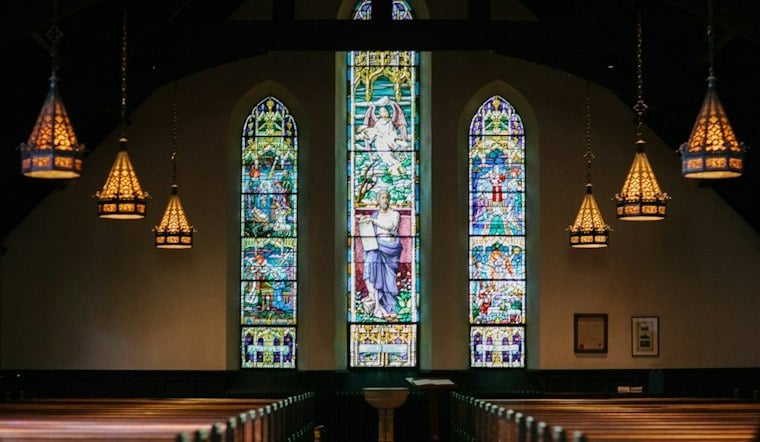
A 1949 Norman Gothic church that sat empty in Detroit's Indian Village neighborhood for 15 years is becoming someone's home. Rachel Nelson, CEO of the Detroit interior design firm Concetti, is leading the renovation, preserving the building's bones while reimagining it as a place to live.
Nelson and her husband, Joe Trobaugh, purchased the church for $390,600 after securing approval from the Detroit Land Bank Authority and the Detroit Historic District Commission, according to WXYZ. The building has a layered past: it was originally St. Luke's Evangelical Lutheran Church before later becoming Mount Olive East Missionary Baptist Church, the station reports.
As ClickOnDetroit reports, Nelson has been thoughtfully transforming the space while preserving much of its original character rather than stripping it down. The renovation was nearing completion at the time of that report.
Sanctuary Space Becomes Library and Meditation Room
Rather than erasing the building's sacred history, Nelson's plans lean into it. Per the same WXYZ account, she intends to transform part of the former sanctuary into a library and a meditation room, giving the quiet, soaring spaces a new daily purpose. Concetti's own project page describes the finished home as restored with the building's original arched windows and vaulted ceilings intact.
Nelson is also documenting the process publicly, sharing daily updates on the transformation on Instagram at @divinelydetroitshowhouse. One recent post on the account describes the project simply as adaptive reuse of a Detroit church, crediting Concetti for design and Nelson for ownership, with a build timeline pointing toward spring 2027.
A Future Showhouse With a Charitable Mission
The renovation isn't just about one family's address. The ClickOnDetroit report notes that Nelson's larger vision is to eventually turn the finished home into a showhouse featuring Detroit designers, makers and artisans, transforming the church into her home and eventually a community-benefiting showcase. Concetti's project listing shows the first annual Divinely Detroit Designer Showhouse slated for 2027, though the exact date has not yet been announced.
Proceeds from that showhouse are intended to support Detroit Deserves Good Design, according to Concetti, which describes the initiative's educational programming as a way of opening doors into creative career paths for students and aspiring designers.
Part of a Broader Shift for Vacant Church Buildings
Nelson's project reflects a pattern playing out well beyond Indian Village. A report from cleveland.com notes that one growing solution nationally is to repurpose church properties instead of leaving them vacant, as fewer people attend services and some congregations can no longer keep their buildings open. That same report found that such closures can ripple outward, affecting local charities, food programs and community connections that once relied on the buildings.
Elsewhere, cleveland.com reports that former churches have been transformed into affordable housing, apartments, community centers and social service hubs, while faith organizations in Northeast Ohio are exploring similar uses for church-owned land. Detroit's Indian Village now has its own entry in that broader story — one where a vacant sanctuary becomes a family's home, and eventually, a stage for the city's design community.




