

























































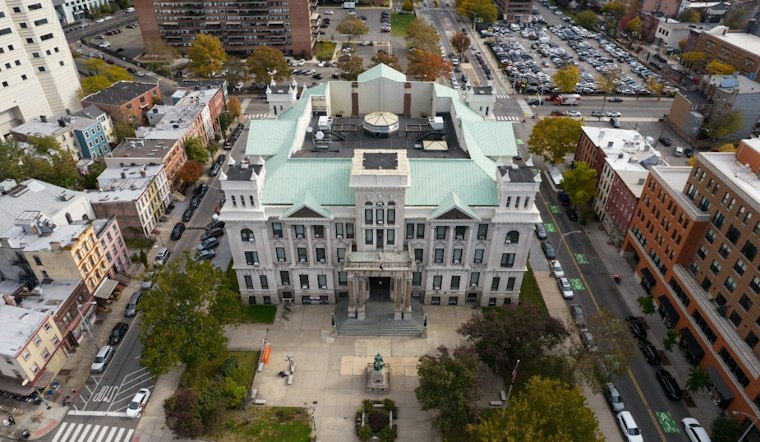
Jersey City’s Municipal Council voted unanimously, 9-0, on Thursday to create a standing finance committee charged with keeping a closer eye on the city’s budgets, audits and debt as officials work through a large reported structural deficit. Mayor James Solomon approved the ordinance the following day, cementing a new layer of fiscal oversight for a city whose 2026 budget totaled approximately $886.4 million.
The vote, reported by TAPinto, gives the council a dedicated body to review annual operating and capital budgets, borrowing and bond obligations, cash reserves and tax collections, state and federal grants, and the city’s compliance with state financial oversight requirements. The committee will also examine multiyear revenue forecasts, fund balance, outstanding debt and financial reporting, according to the same report. Its jurisdiction stops short of rent control, redevelopment plans and individual tax abatement agreements, which remain outside its scope.
What the Committee Can and Cannot Do
The new panel can make recommendations to the full council and must report back at least twice a year, but per TAPinto’s reporting it cannot approve or block legislation, delay council action, or replace the full council’s own line-by-line budget review. Council President Denise Ridley will appoint three council members and two alternates to serve, with at least one ward representative and one at-large representative required among the three voting members. The committee must also hold public meetings, publish agendas, maintain written minutes and accept public comment.
Council members offered mixed notes of caution and resolve. Rolando Lavarro Jr. said residents have a right to ask who is watching city finances and how closely the council is doing so, the outlet reported. Thomas Zuppa Jr. acknowledged the city’s financial challenges and said the council inherited responsibility for fixing them, while Jake Ephros cautioned that the committee does not relieve other council members of their own responsibility to scrutinize city finances.
A Longtime Budget Watcher’s Warning
Yvonne Balcer, who said she has attended city budget hearings since the 1970s, told the council that the budget is members’ main job and urged them to take a more active role in overseeing municipal finances. She identified bond debt as the city’s biggest problem and volunteered to serve on the new committee herself. Balcer noted the city’s budget has grown from roughly $90 million when she began attending hearings to more than $800 million today, according to TAPinto’s account of the meeting.
The panel’s creation comes as Jersey City works through a $105 million state loan secured in September, which requires a five-year fiscal recovery plan and state review of annual budgets from 2027 through 2031, per the same report. The city’s 2026 budget also included a substantial increase in the municipal tax rate.
Audit Findings and a Looming Deadline
The oversight push follows a rocky stretch of city audits. A 2025 independent audit identified 17 material weaknesses and findings requiring a corrective action plan, TAPinto reported, while Jersey City’s finance director was separately quoted by Hudson County View as describing the plan as containing 17 findings, two of them material weaknesses. The council approved that corrective action plan on Sept. 23 in a recorded 9-0 vote, according to city records filed with CivicWeb.net.
Those records show the 2025 audit found the city had spent more than its available appropriations in previous years. Under state rules, Jersey City must submit its corrective action plan to the state Division of Local Government Services no later than 60 days after receiving an audit report.
The city’s lack of a complete fixed-asset inventory has been flagged in annual audits since 2014, while issues with internal controls have been noted since 2022, according to Gothamist. The outlet also quoted the city’s finance director pledging follow-through on the fixes, saying, “The difference is we intend to actually do it.”
Conflicting Numbers on the Size of the Gap
Just how deep the city’s fiscal hole runs depends on which account you read. The Hudson Reporter reported Solomon faced a roughly $254.8 million structural deficit when he took office, while the New Jersey Monitor reported the mayor disclosed a $250 million budget deficit in February — figures that don’t match but both point to a budget shortfall in the hundreds of millions. The Solomon administration has said it has since reduced the deficit by about $55 million, leaving a structural gap of roughly $199.6 million, the Hudson Reporter reported.
The same outlet reported that the city used about $667 million in one-time revenue from 2019 through 2025 — including reserve drawdowns, land sales and borrowing — to help cover operating costs. Those figures underscore why council members like Lavarro and Balcer pushed for more structured oversight rather than relying solely on annual budget hearings.
What Happens Next
The new committee is scheduled to submit an operational review by September 30, 2028, and its authorization is set to expire on December 31, 2028, unless the council renews it by ordinance. Ridley is to appoint the committee members. For now, the council has given itself a new tool to track Jersey City’s finances — even as questions about the ultimate size of the deficit, and who bears responsibility for closing it, remain unresolved.




